
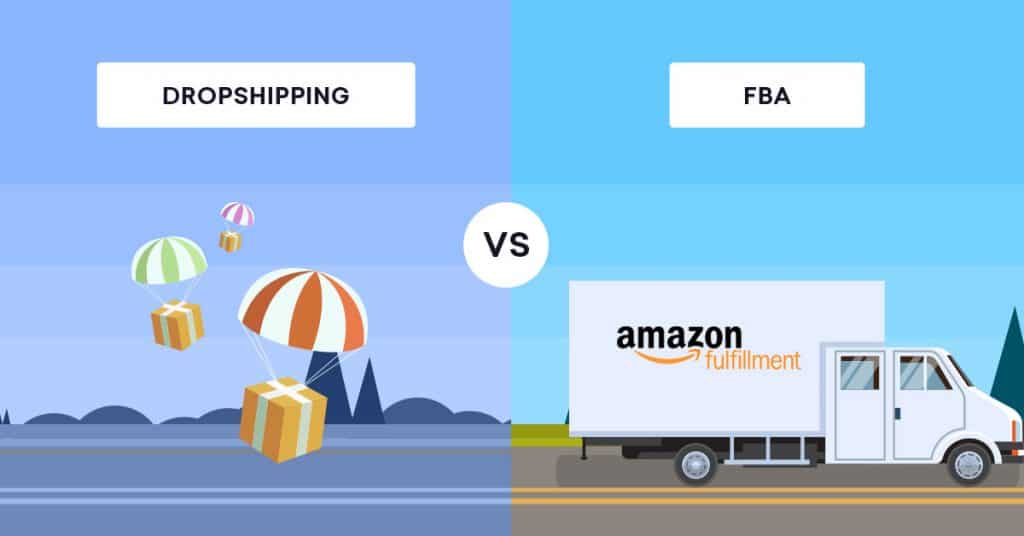
Are you wondering about the biggest differences between Amazon FBA vs dropshipping? Then in this article, you’ll learn what you need to know about the similarities and differences between two of the biggest e-commerce business models on the planet. You can succeed with each of these, but you can choose the best one for your preferences after a detailed comparison.
E-commerce estimates project to reach $8.1 trillion in sales by 2026, which is a massive amount of sales. Therefore, you can get in on the action by taking advantage of Amazon FBA or dropshipping. There are many successful people with both models, but one of them might be the better choice for you. Read to the end of this article to find out which one.
Amazon FBA vs Dropshipping – The Similarities
Let’s start by looking at the biggest similarities between Amazon FBA vs dropshipping. Understanding these allows you to see what you won’t be missing by switching from one model to the next.
Don’t Have To Touch Your Products
With both strategies, there is no need to manually handle your inventory to package and send to your customers. In the case of Amazon FBA, you can send the entire batch of inventory from your suppliers to Amazon FBA warehouses. However, you may first want to inspect the products yourself for the first batch or hire a quality inspection company.
In the case of dropshipping, your products are sent to the customer straight from the manufacturer or distributor. Therefore, you don’t need to touch the stock in this case either.
The advantage of not having to touch your stock is the ability to scale your business rapidly. That’s because there is no bottleneck from manual labor. It doesn’t matter if you order 100, 1,000, or 10,000 units of stock. It’s all possible by a single person if they have scaled their business.
Scalability
Both business models allow you to scale your business without restrictions. That’s because you can always add more products to the roster. The biggest obstacle for both business models is the amount of time it takes to find products in demand with low competition and good profitability.
It’s exciting being able to start a business where you can scale to any level that you set your sights on. Also, e-commerce is so large that there’s always a new product category to tackle.
Flexibility
Both business models allow you to work while traveling the world and set your own schedule. Therefore, you aren’t missing out on creating the life you want with each business model. This is perfect for those businesses who want to concentrate on creating a good quality lifestyle while enjoying the fruits of their business.
Amazon FBA Vs Dropshipping Differences
Now let’s turn our attention toward the differences of Amazon FBA vs dropshipping. This section will help you decide between them so that you end up with the business format that matches your preferences.
Upfront Cost
To start an Amazon FBA business, you’ll need to invest around $2,000 to $5,000. This is required for the product costs, which include manufacturing and shipping. You’ll also need to spend money on getting professional photos, brand registry and much more to increase your chances of success. This is the biggest barrier to entry, but it’s not so big that the average person can’t save up enough money to get started.
On the other hand, you need a small budget to get started with dropshipping. That’s because you only pay for products once customers place their orders. Therefore, you’re never in a position where a big lump sum of money is required to pay for a batch of inventory upfront. This might feel like a lower-risk business model for most people.
Amazon Brand Reputation
Choosing to sell on Amazon has the advantage of their brand name. Customers worldwide trust Amazon and for that reason, you will not need to convince customers to trust your products. Also, the large volume of traffic the website drives to your product pages does the hard work for you.
In comparison, if you choose to sell on your own website by using dropshipping, the biggest problem you’ll face is driving traffic to your website. Also, you’ll need to create a sense of trust, which can be tricky depending on your niche. In a very competitive niche, driving traffic can be expensive. Hence, you’ll need to compare Amazon FBA vs dropshipping with this in mind.
Restrictions And Rules
The number of rules and restrictions on Amazon are massive. That’s because they want to preserve their good brand name by ensuring that sellers don’t go wild on their platform. The rules can be good since it ensures scammers and rogue sellers are removed from the platform. However, it can also be problematic when your legitimate listings are suspended for no good reason.
Whereas when setting up your own dropshipping website, there are no big rules or restrictions you need to overcome. Therefore, you have more freedom to set up your business in a manner that makes sense for your business.
Fees
Expect a long list of fees for using Amazon FBA. For example, storage fees apply and they increase drastically when you don’t sell stock fast enough. However, the fees for dropshipping are much lower, so generating a profit might be easier.
Amazon FBA vs Dropshipping – What One Should You Choose?
To summarize, your choice depends on the preferences given the differences outlined above. Also, you should take a closer look at each model to better understand the small differences beyond the scope of this article.
Also, you can try both models for yourself to end up with the best model. By using first-hand experience, you’ll be equipped with the best information to make the right choice.
Finally, for Amazon FBA or dropshipping, you’ll need a good business structure to increase your chances of success. Therefore, we recommend setting up an LLC, which you can do here at Business Anywhere.