

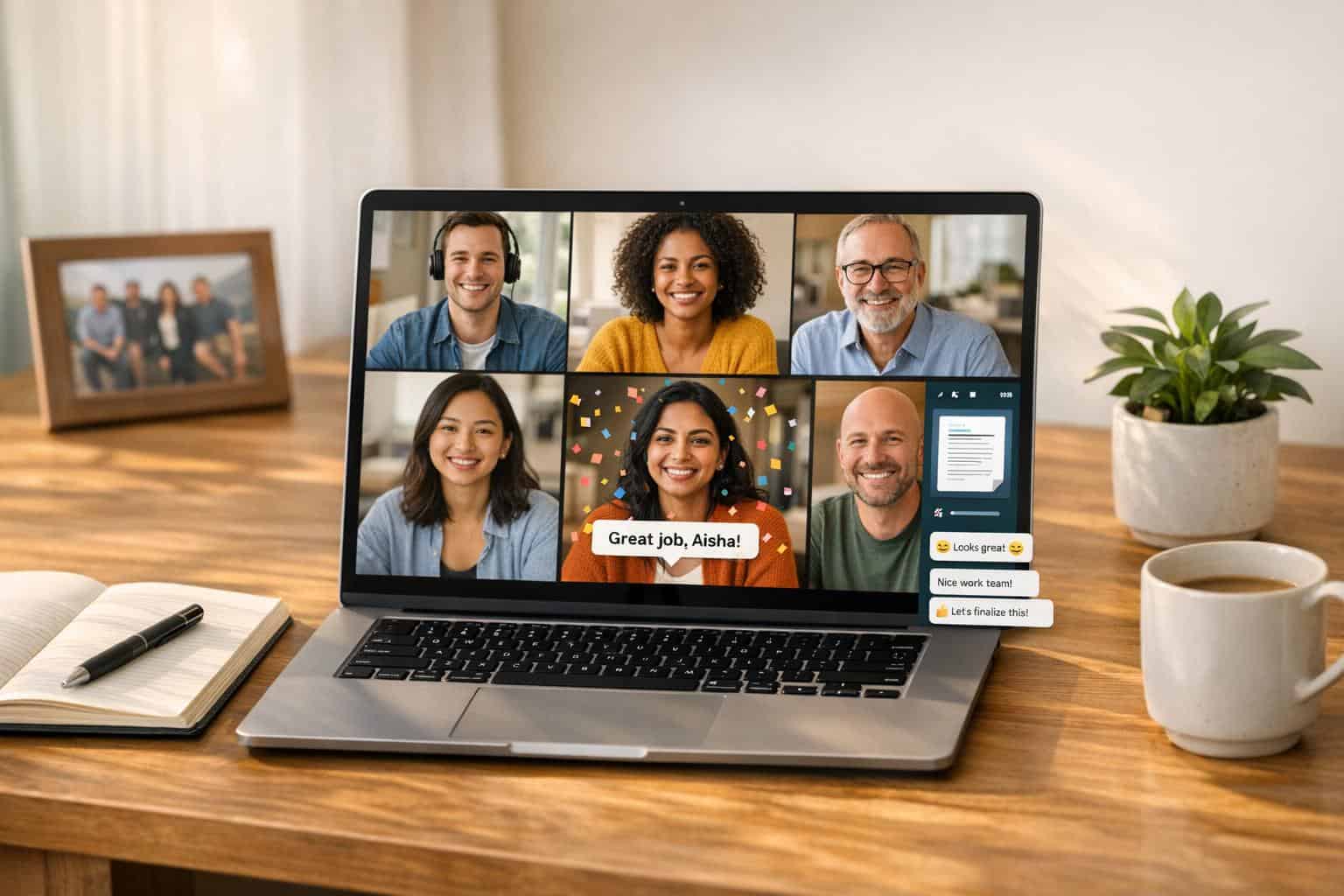
Remote work has changed how teams connect, but it doesn’t mean company culture has to take a backseat. The key is being intentional about communication, engagement, and recognition. Here’s how you can keep your remote team motivated and connected:
- Streamline Communication: Assign clear purposes to free collaboration tools like Slack, email, and project management platforms. Balance live discussions with asynchronous options to respect time zones and work styles.
- Engage Through Virtual Activities: Host team-building events like trivia games or photo contests, or leverage AI collaboration tools to streamline engagement. Offer both live and flexible options to suit everyone’s schedule.
- Recognize Achievements: Use tools like HeyTaco or Recognize to celebrate milestones and contributions. Regular acknowledgment boosts morale.
- Provide Feedback Regularly: Hold one-on-one meetings, share actionable feedback, and create safe spaces for open dialogue.
- Plan In-Person Gatherings: Annual retreats or local meetups help build trust and strengthen relationships beyond screens.
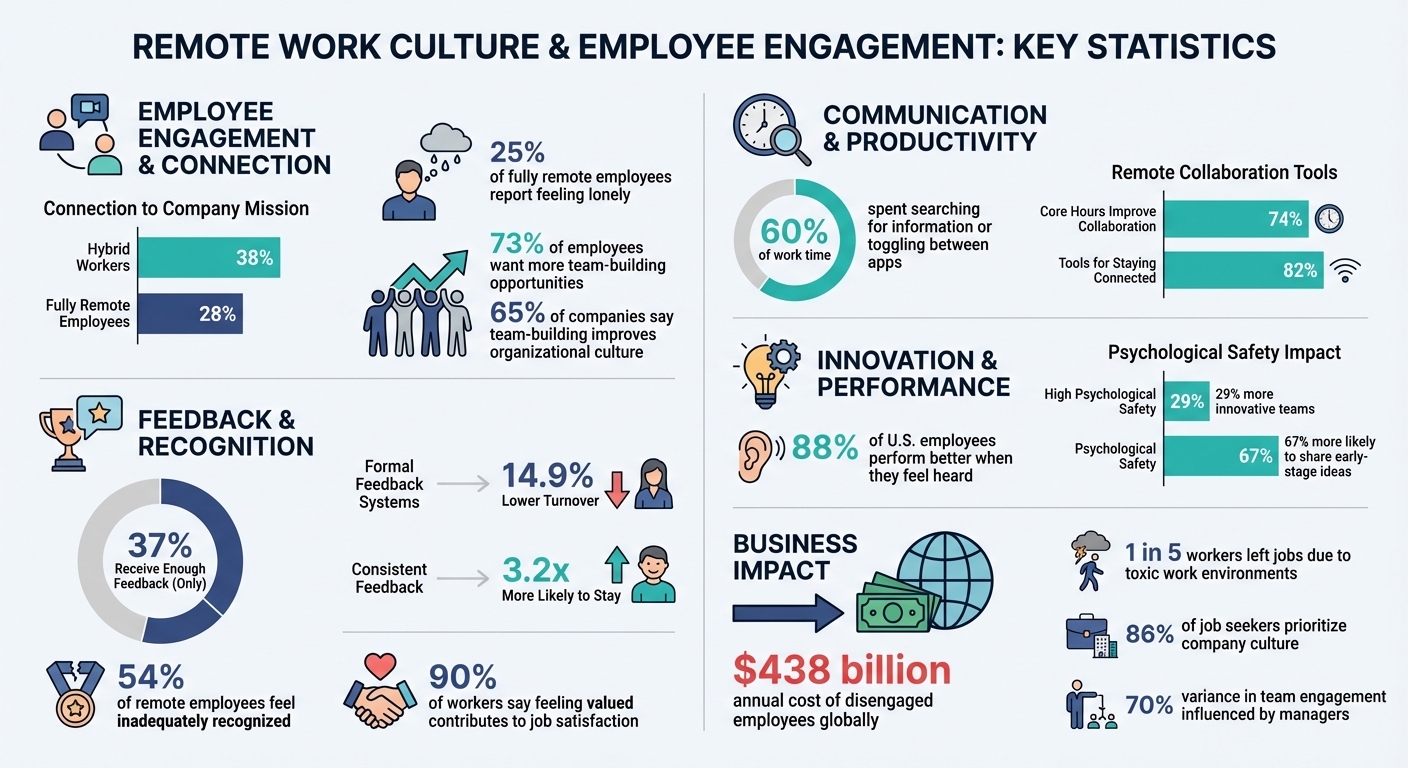
Remote Work Culture Statistics: Engagement, Recognition, and Team Connection Data
Set Up Clear Communication Systems and Practices
Without the physical proximity of an office, communication becomes the glue that holds a remote team together. It’s the difference between a cohesive, engaged team and one that feels disjointed. With 60% of work time often spent searching for information or toggling between apps, having well-defined communication systems isn’t just helpful – it’s a must.
Assign Specific Purposes to Each Communication Channel
Each communication tool should serve a clear, distinct purpose. For example:
- Use instant messaging platforms like Slack or Microsoft Teams for quick check-ins, urgent issues, or casual chats.
- Choose video conferencing for brainstorming, one-on-one feedback, project launches, or discussions that require a personal touch.
- Stick to email for formal communications, external conversations, or detailed updates that don’t need immediate attention.
- Rely on project management tools like Asana, Trello, or Jira for task-specific updates and to keep project information centralized and easy to find.
Public channels are key for project updates. Sharing updates in open forums helps reduce silos and keeps everyone informed. To ensure clarity, pin communication guidelines in relevant channels so team members know which tool to use for each purpose.
"Often people will just assume that everybody knows what the process is, but without documentation of established processes, things can get really hairy." – Elizabeth Brochhausen, Director of Partnerships and Experiential Marketing, Pandora
Once channel roles are clear, it’s essential to strike a balance between real-time and delayed communication to accommodate different work styles and time zones.
Balance Real-Time and Delayed Communication
Live discussions are ideal for urgent matters, but asynchronous communication is better for deep work and accommodating diverse schedules. Reserve real-time interactions for critical moments like troubleshooting, sensitive feedback, or decisions that benefit from immediate input.
To create structure, establish core hours – a shared window when everyone is online. Research shows that 74% of workers believe this approach improves remote collaboration. A three-to-four-hour overlap (e.g., 11:00 AM to 3:00 PM) offers a balance of collaboration and individual focus. For globally distributed teams, rotate meeting times to prevent the same group from being inconvenienced repeatedly. GitLab, with team members in over 65 countries, exemplifies this by fostering a documentation-first approach, allowing asynchronous work without delays.
Record live meetings and provide transcripts so team members in different time zones can stay informed without sacrificing their personal schedules. Additionally, consider introducing meeting-free days – one day a week with no scheduled calls – to allow for uninterrupted, focused work. This strategy supports productivity while respecting time zone differences.
Set Clear Expectations for Communication Etiquette
With tools and timing in place, the next step is to define communication etiquette. Clear expectations reduce misunderstandings and build trust. Establish response-time guidelines, such as replying to Slack messages within two hours during work hours and responding to non-urgent emails within 24 hours. These boundaries help manage availability and reduce anxiety about unanswered messages.
Encourage team members to use status indicators like "Do Not Disturb" to signal focus time. This practice protects against burnout from constant notifications while respecting individual work preferences. Pair this with meeting-free days to provide uninterrupted periods for high-concentration tasks.
"People can’t be afraid, when they speak up and say something, that the reaction from the room is gonna be ‘Wow, that was a stupid idea’ or ‘How do you not know that?’" – Ariel Hunsberger, Head of Learning and Development, Slack
Well-defined norms encourage participation and trust. When everyone understands the rules of engagement, team members feel more comfortable contributing and staying connected to the team’s culture.
sbb-itb-ba0a4be
Run Virtual Team-Building Activities
Virtual team-building activities are key to fostering emotional connections within remote teams. With 73% of employees expressing a desire for more team-building opportunities and 65% of companies noting that such activities improve organizational culture, the value of these initiatives is clear. Real-time options like virtual escape rooms or trivia games encourage immediate interaction and collaboration, while asynchronous activities – such as photo contests or book clubs – cater to teams spread across time zones. For instance, in December 2021, the Trello Android engineering team introduced monthly virtual lunch dates, allowing members to expense up to $25 for a shared meal experience over video conferencing.
Schedule Real-Time Team-Building Sessions
Live activities energize teams and create shared moments of connection. Virtual escape rooms, online trivia games, and workshops are excellent ways to foster teamwork and camaraderie through shared challenges. In December 2025, Salesforce Engineering successfully brought together a team spanning three time zones with a "Virtual Arcade" session featuring the free game bonk.io. This 60-minute session, which required no downloads or prior skills, earned a 4.8 out of 5 satisfaction score for its accessibility and engagement.
To keep things fresh, use well-known platforms like Zoom, Slack, or Microsoft Teams to reduce technical barriers. Rotate hosts and experiment with different formats to avoid "Zoom fatigue" and keep the activities engaging. You might also try incorporating "Fika" breaks – short, casual coffee breaks inspired by Swedish culture that focus on personal conversation rather than work topics. These unstructured moments can help strengthen personal bonds.
Offer Flexible Activities for Different Time Zones
While live sessions provide immediacy, asynchronous activities ensure inclusivity. These options allow everyone to participate, no matter their location. Photo contests, book clubs, fitness challenges, and collaborative Spotify playlists are great ways to engage team members who may not share overlapping work hours.
Help Scout, a fully remote company, launched a virtual version of "MTV Cribs" in February 2026, where employees shared short video tours of their home offices. This initiative gave colleagues a glimpse into each other’s personal lives, creating stronger connections despite physical distance. Other ideas include gratitude walls on platforms like Miro or team playlists where members contribute songs that reflect their mood or current projects.
Design Activities That Build Specific Skills
Team-building doesn’t have to be just for fun – it can also enhance professional skills. Choose activities that support both personal growth and business objectives. Atlassian, for example, uses a "Health Monitor" framework. This 30-60 minute session helps teams evaluate their performance across eight key attributes, addressing minor issues before they escalate.
In February 2026, the Norwegian AI startup Memory used Kahoot! to host interactive interview sessions. By asking increasingly humorous questions, team members not only bonded but also improved their public speaking skills. Another effective tool is the "Personal User Manual," where employees outline their work preferences, communication styles, and peak productivity times. This fosters better collaboration and mutual understanding.
"Understanding each other on a personal level means we can communicate more effectively and have an easier time distributing roles and responsibilities across the team." – Sarah Goff-Dupont, Contributing Writer, Atlassian
To respect personal time, schedule these activities during work hours. You can also integrate small team-building moments – like 5-10 minute icebreakers – into regular meetings to keep engagement high without adding to workloads.
Use Technology to Improve Connection and Recognition
Technology has become a crucial part of strengthening relationships and celebrating accomplishments within remote teams. While 82% of remote employees state they already have the tools needed to stay connected, the real challenge lies in how these tools are used. When used thoughtfully, technology can transform remote teams into thriving communities where employees feel valued and connected. This approach aligns with the broader goal of keeping remote workforces engaged and unified.
Use Collaboration Platforms Effectively
Collaboration tools like Slack, Zoom, and Microsoft Teams can do more than just facilitate work – they can recreate the camaraderie of an office environment. For instance, creating social channels such as #watercooler, #pet-photos, or #bakelove allows team members to bond over shared interests outside of work. These spaces foster a sense of community that often gets overlooked in remote settings.
Many platforms also offer features that encourage spontaneous interactions. Slack Huddles, for example, enable quick, informal audio or video chats that mimic the casual desk-side conversations of an office. For teams spread across time zones, asynchronous tools like Slack clips or recorded videos let employees share updates on their own schedule, accommodating diverse work styles.
GitLab, with its entirely remote workforce, takes this a step further by maintaining a "Random Room" on Google Hangouts. This always-open space allows team members to drop in for unscheduled conversations, replicating the chance encounters that happen naturally in physical offices. Beyond fostering connection, technology can also amplify how teams celebrate success.
Add Recognition Tools to Celebrate Achievements
Recognition is a powerful motivator, but it often gets overlooked in remote work environments. In fact, 54% of remote employees feel they aren’t adequately recognized for their efforts. By integrating recognition tools into communication platforms, teams can make appreciation more visible and frequent.
A great example comes from Immunefi, a fully remote Web2 engineering team. In February 2026, they introduced HeyTaco in their Slack workspace, spearheaded by Technical Project Manager Klavdija Janc. This tool allowed team members to award each other "tacos" (limited to five per day) for meaningful contributions. Within months, daily recognition participation jumped from 33% to an impressive 88.9%.
"We all want to be cool. And tacos made it cool to show appreciation." – Klavdija Janc, Technical Project Manager, Immunefi
Tools like HeyTaco, which costs around $3 per user per month, can also automate celebrations for birthdays and work anniversaries, ensuring no milestone is forgotten. Similarly, Visions Federal Credit Union achieved remarkable results by using the Recognize platform. With over 750 employees across 50 locations, they recorded 13,000 recognitions annually, with 88% of staff receiving monthly acknowledgments over a seven-year period.
Create Opportunities for Casual Interactions
Once communication and recognition systems are in place, the next step is encouraging casual, organic interactions. Structured meetings can’t replace the spontaneous conversations that help build genuine friendships. Tools like Donut, which integrates with Slack and Microsoft Teams, automatically pair colleagues for virtual coffee chats. This removes the awkwardness of scheduling social time and ensures connections are made across departments and time zones.
Help Scout offers another example, hosting monthly "Troop Talks" on Zoom. These themed social hours, like a "recipe party", bring together groups of 10+ employees. To accommodate global time zones, sessions are recorded, ensuring at least 25% of the team can participate. Themes provide a shared focus, helping to break the ice and avoid awkward silences.
Some companies go even further. Clevertech, for instance, integrated online gaming into their team-building efforts. CEO Kuty Shalev introduced the game Factorio, which requires intense collaboration and problem-solving. This shared challenge helped employees bond through teamwork and learning from failures, ultimately boosting retention and engagement. While gaming might not suit every team, the principle is universal: shared experiences outside of work tasks strengthen relationships.
Small rituals can also go a long way. Consider starting a "Rose-and-Thorn" channel where team members share one positive and one challenging update each week to build empathy. Or encourage employees to create "Show and Tell" videos, offering a quick tour of their home offices. These glimpses into each other’s lives foster understanding and connection.
Create Feedback Systems and Schedule Regular Check-Ins
Feedback is the lifeline of remote engagement. Without regular check-ins, employees can feel disconnected from their team and unclear about their performance. The numbers speak for themselves: only 37% of remote workers believe they receive enough feedback in virtual settings. On the flip side, organizations with formal feedback systems experience 14.9% lower turnover, and employees who get consistent feedback are 3.2 times more likely to stay with their company.
Four key factors make feedback effective: frequency (how often it’s given), structure (the format used), documentation (keeping a written record), and psychological safety (building trust). Without trust, feedback loses its authenticity and impact.
Set Up Structured Feedback Channels
To make feedback effective, you need reliable systems in place. Remote teams thrive on a mix of feedback types, including:
- Continuous feedback: Real-time input to keep things on track.
- OKR-based feedback: Tied to specific, measurable goals.
- 360-degree feedback: Insights from managers, peers, and direct reports.
For remote teams, flexibility is key. Managers can share written feedback, giving employees 24–48 hours to process it before a follow-up conversation. Using AI feedback tools or frameworks like the SBI Model (Situation, Behavior, Impact) or "Start, Stop, Continue" ensures feedback is clear and actionable. For instance, instead of saying, "Your communication needs work", you might say: "During yesterday’s client call (Situation), you interrupted twice (Behavior), which frustrated the client and shortened the meeting (Impact)."
Psychological safety is just as important. Aim for a ratio of 3:1 or 5:1 positive to developmental feedback. Also, encourage upward feedback by using anonymous surveys or dedicated one-on-one sessions where employees can share their thoughts on management.
Hold Regular One-on-One Meetings
Weekly one-on-ones are a cornerstone of remote team management. These meetings help maintain personal connections and provide a space to focus on growth. A 2024 survey found that only 28% of fully remote employees felt strongly connected to their company’s mission, underscoring the importance of these intentional conversations.
A helpful structure for these meetings is the "5-5-5-15" approach:
- 5 minutes for wins or celebrations.
- 5 minutes for discussing challenges.
- 5 minutes for feedback and development.
- 15 minutes for open discussion or pressing items.
Share agendas in advance to give employees time to prepare thoughtful responses. After the meeting, follow up with written action items to ensure accountability.
Video calls are essential for these interactions. As Ben Balter, Senior Product Manager at GitHub, puts it:
"Feedback is inherently human, and as such, it deserves a human face. When working remotely, it’s on you to take that extra step to be able to connect on a human level, so don’t forget to turn on your camera."
For global teams, consider setting "overlap" hours for synchronous meetings or use asynchronous tools to keep the rhythm of one-on-ones consistent across time zones.
Run Team Retrospectives and Social Events
Team-wide reflections are just as important as individual feedback. Retrospectives help identify engagement gaps and give everyone a voice. Studies show that 88% of U.S. employees perform better when they feel heard, and teams with psychological safety are 29% more innovative. During retrospectives, techniques like the "Disagree and Commit" strategy ensure that even unselected ideas are acknowledged, keeping employees aligned with the team’s direction.
Social events also play a critical role in fostering connection. Atlassian’s engineering team, for example, replaced mandatory social events with a "marketplace of activities" where employees could suggest and join sessions based on their interests. This approach boosted participation by 47% and satisfaction with team connections by 62%. Middleware Technologies saw similar success with 5–10 minute technical lightning talks, which led to a 43% improvement in cross-team collaboration within a quarter.
When planning social events, flexibility is key. Make participation optional to avoid "forced fun" and screen fatigue. Rotate event times weekly to accommodate different time zones. Slack’s London office introduced "Gather Hours", featuring digital pub quizzes, workshops, and games like "Through the Keyhole", where employees guessed whose home was in shared photos. For teams experiencing video burnout, asynchronous social channels for pet photos, travel tips, or casual games can keep connections alive without requiring live participation.
Plan Occasional In-Person Gatherings
While virtual tools keep remote teams connected, nothing beats the impact of face-to-face interactions. In-person meetings build trust much faster than months of video calls. These gatherings encourage organic conversations and shared experiences, which can significantly strengthen team bonds. For example, only 28% of fully remote employees feel deeply connected to their company’s mission, compared to 38% of hybrid workers.
These events are more than just social meetups – they’re strategic opportunities to align on goals and build cohesion. Retreats create dedicated time for discussing company objectives and ensuring everyone is on the same page. For new team members who’ve only interacted via Zoom, these gatherings can be a game-changer in forming authentic connections.
As one expert on remote teams put it:
"Remote teams communicate differently… While efficient, this creates gaps in trust, context, and human connection. A remote team retreat helps fill those gaps."
- SquadTrip
Balancing cost, frequency, and impact is key. Companies often allocate $1,000 to $3,000 per person for multi-day retreats, covering essentials like travel, lodging, food, and activities. While this may seem expensive, the investment often pays off in stronger collaboration and what Expensify calls "positive currency".
Organize Budget-Friendly Local Meetups
Not every gathering needs to be a large-scale retreat. Regional meetups offer a more affordable way to maintain team culture between bigger events. These smaller meetups are perfect for employees in the same city or region, allowing them to connect without the need for extensive travel.
Swap virtual happy hours for casual in-person activities like breakfast gatherings, lunch outings, or after-work meetups. The focus should be on fostering genuine connections rather than hosting formal, structured events.
To encourage participation, empower employees to organize their own meetups. Provide clear budget guidelines and an easy approval process. For instance, allocate $30 to $50 per person per quarter, letting teams decide how to spend it. Some might choose coffee shop meetups, while others might prefer a hike or a museum visit. Keeping these gatherings short – 2 to 4 hours – and scheduling them monthly or quarterly ensures they strengthen relationships without disrupting work.
Plan Annual Team Retreats
Larger retreats require more effort to organize but deliver unmatched benefits for team trust and alignment. Start planning 9 to 11 months in advance to secure venues and manage logistics. Early planning can also save 10–20% on travel and accommodation costs.
A great example: In April 2025, Omnipresent brought 350 employees from over 50 countries to Panama for a five-day retreat. Activities ranged from ziplining to sloth spotting, with a focus on connection and celebration. They also provided pre-trip DEI training and simplified visa processes for employees from regions like India. Co-Founder Guenther Eisinger shared:
"We set out to celebrate all our successes, foster stronger connections, and share a unified vision for the future… It was incredibly rewarding to see colleagues building on the relationships they’ve created remotely."
When planning retreats, choose neutral locations that offer fresh, shared experiences for everyone. Nature-based destinations near major international airports are ideal, as they provide a distraction-free environment for both work and relaxation. Safety and inclusivity are essential – ensure venues are welcoming to all team members, including LGBTQ+ employees, and have straightforward visa requirements.
Design a 3–5 day agenda that blends work and play. Mornings can feature short, focused sessions (no longer than 90 minutes without breaks), while afternoons are reserved for informal bonding activities. Evenings should center around shared meals. Include activity options for different energy levels – like mountain biking for the adventurous or yoga for those seeking a quieter experience. For example, Close hosted a retreat in Park City, Utah, where 80 team members used relationship-building card games to spark meaningful conversations.
For those unable to attend in person, offer virtual alternatives. Record key sessions and send gift cards for local meals to help remote participants feel included. After the event, send out anonymous surveys to gather feedback and improve future gatherings.
| Company Size | Recommended Frequency | Primary Focus |
|---|---|---|
| <25 Employees | Quarterly | Team connection and sharing |
| 25–100 Employees | Quarterly + Biannual Events | Goal-setting and bonding |
| 101–500 Employees | Quarterly + Annual Retreats | Workshops and planning |
| 500+ Employees | Departmental + Annual Global Offsites | Multi-level alignment |
Integrating these in-person moments with digital tools ensures that the benefits carry over into daily remote work.
Combine Digital and Physical Interactions
To maximize the impact of in-person gatherings, integrate them with digital tools. Use platforms like Slack or a company Wiki to prepare for retreats and keep the momentum alive afterward. For example, share logistics, agendas, and Q&A sessions in advance.
Record sessions so they can be referenced later or used to onboard new hires. Close, for instance, stored retreat recordings in a shared Dropbox folder, ensuring the energy and ideas from the event remained accessible long after it ended.
You can also replicate successful in-person rituals in digital formats. If your retreat featured morning coffee chats, consider starting virtual "Breakfast Clubs" on Zoom for casual weekly conversations. Tools like Donut or Polly can facilitate daily prompts and virtual coffee meetups, helping maintain the trust built during in-person events. Middleware Technologies, for instance, introduced rotating 5–10 minute technical talks in 2024, which boosted cross-team collaboration by 43% in just one quarter.
The idea is to create a continuous culture loop where digital interactions build excitement for in-person events, and the stories from those events fuel ongoing conversations. Dropbox’s "90/10" rule is a great example: 90% of work happens remotely, but 10% – about 25 days a year – is dedicated to face-to-face meetings. This balance preserves the efficiency of remote work while capturing the benefits of in-person connections.
Finally, keep the energy alive by sharing photos and videos from retreats in centralized digital folders. These shared memories often become conversation starters in Slack or during video calls, extending the positive impact of each event. As Poll Everywhere puts it:
"In-person engagements are irreplaceable and often a source of connection… These gatherings generate connections that end up creating stories and memories to reshare and talk about when we return back to our home offices."
Conclusion
Building a strong remote work culture requires purposeful effort, guided by clear standards, effective communication habits, and proactive leadership behaviors. Incorporating strategies like asynchronous communication, engaging virtual team-building activities, leveraging technology for recognition, structured feedback systems, and occasional in-person meetups can foster "intentional visibility".
These practices collectively create a connected and engaged team. Disengaged employees cost the global economy an estimated $438 billion annually in lost productivity, and toxic work environments have driven one in five workers to leave their jobs. On the flip side, teams with high psychological safety are 29% more innovative and 67% more likely to share early-stage ideas. Companies that implement mentoring programs see a 57% boost in employee engagement and retention. Additionally, 86% of job seekers prioritize company culture when choosing where to apply, making it a key factor in attracting top talent.
By addressing the unique challenges of remote work, you can create a culture that unites and inspires your team. Asynchronous communication respects deep focus time and accommodates global time zones. Virtual team-building helps foster connections, especially as 25% of fully remote employees report feeling lonely. Recognition systems ensure employees feel appreciated, which is crucial since 90% of workers say feeling valued contributes significantly to their job satisfaction. Structured feedback channels amplify employee voices, with 88% of U.S. workers performing better when they feel heard. Finally, in-person gatherings build trust and alignment in ways that digital tools alone cannot achieve.
"As organizations adapt to hybrid work environments, culture becomes the thread that holds everything together. Tools and services help, but it’s the everyday practices – recognition, communication and care – that create belonging."
These efforts not only strengthen engagement but also fuel productivity and innovation. Start with one strategy that addresses your team’s most pressing challenge, then expand your approach over time. Keep in mind that managers influence 70% of the variance in team engagement levels. Your leadership and dedication to these practices will set the foundation for a thriving remote team.
FAQs
What are the best first steps to improve remote culture fast?
To strengthen a remote work culture, prioritize building connection, ensuring clarity, and aligning around shared values. Start by establishing clear communication guidelines and operational principles that everyone can follow. Introduce a well-structured onboarding process to help new team members feel welcomed and part of the team from day one.
Incorporate connection-focused activities like virtual team-building exercises or casual online meetups to foster relationships. Use asynchronous tools for routine updates, but save live meetings for discussions that require deeper collaboration or nuanced conversations. These actions can quickly boost engagement and create a stronger sense of belonging within your remote team.
How can we build culture across multiple time zones?
Building a strong sense of connection and trust across different time zones takes deliberate effort. One way to bridge this gap is by setting up collaboration windows – specific times when team members can interact in real-time. At the same time, prioritize asynchronous communication so everyone has the flexibility to contribute at their own pace.
Fostering shared values can be as simple as hosting virtual coffee chats, implementing recognition programs to celebrate achievements, and ensuring everyone feels included through thoughtful practices. It’s also important to honor local holidays and respect cultural differences, showing your team that their unique backgrounds are valued. Consistent communication is key to creating a sense of unity and trust among your remote team members.
How do we measure remote employee engagement?
To understand how engaged your remote employees are, you need to assess their sense of connection, motivation, and commitment to their work and team. Start by using regular surveys and feedback tools to measure their feelings of belonging and overall satisfaction.
Beyond surveys, keep an eye on participation in virtual activities, how often they communicate, and how responsive they are. Pair this with performance data, like meeting deadlines and maintaining high work quality, to get a well-rounded picture.
By combining these insights, you can pinpoint areas that need attention and take steps to strengthen engagement.