

If you’re forming an LLC, the short answer is no – you don’t need a lawyer. You can handle the process yourself, use an online service, or hire an attorney depending on your needs and budget. Here’s a quick breakdown:
- DIY: Most affordable option ($50–$500 in state fees). Best for simple, single-member LLCs. Requires research and has a higher risk of errors.
- Online Services (e.g., BusinessAnywhere): Low-cost and convenient. You only pay state fees, and some services include extras like free registered agent services for the first year. Ideal for straightforward LLCs.
- Hiring a Lawyer: Most expensive ($500–$5,000+), but offers personalized legal advice. Recommended for multi-member LLCs, complex agreements, or regulated industries.
Each option has trade-offs in cost, time, and complexity. Choose based on your business structure and comfort level with legal tasks.
1. DIY LLC Formation
DIY LLC formation means handling the process of setting up your business directly with your state. There’s no middleman, and you avoid paying additional service fees. Most states provide online tools or templates to guide you through the steps for basic business setups, making it relatively straightforward. Let’s break down the key points of this approach.
Cost
One of the biggest perks of the DIY route is its cost-effectiveness. State filing fees range from $35 to $500, depending on where you’re filing. For example, Montana charges $35, while Massachusetts comes in at $500, with the national average hovering around $132. You can save even more by acting as your own registered agent, which cuts out an additional $100 to $300 per year. As Matt Horwitz, Founder of LLC University, explains:
You can get an LLC cheaply by filing your formation documents yourself.
Time
Filing online is quick and can usually be done in an afternoon. However, the time it takes for state approval varies. Some states process applications in just a few business days, while others may take several weeks.
Complexity
For single-member LLCs or simple partnerships, the process is relatively straightforward. However, some states add extra steps. For instance, New York requires you to publish a notice of formation in a local newspaper, which adds both time and expense.
Suitability
This method works best for simpler business structures like single-member LLCs or basic partnerships. But if your business involves multiple investors or complex profit-sharing agreements, handling it yourself might leave you exposed to legal or financial risks.
Error Risk
The DIY approach comes with its share of risks. Common mistakes include incomplete operating agreements, selecting the wrong tax classification, or failing to separate personal and business finances. Christine Mathias, an attorney, highlights the importance of maintaining clear boundaries:
When you draft and follow an operating agreement, you’re demonstrating to anyone who’s interested (such as a creditor of the business) that the LLC is separate from your personal assets.
If you don’t maintain this separation, you risk "piercing the corporate veil", which could remove your liability protection. Additionally, missing deadlines for annual reports can result in your LLC being dissolved by the state.
2. BusinessAnywhere LLC Formation Service

BusinessAnywhere offers a middle ground between doing it yourself and hiring a lawyer for LLC formation. This service caters to straightforward LLC setups, handling tasks like checking name availability and filing Articles of Organization with the Secretary of State. While it simplifies the process, it also keeps costs much lower than hiring a lawyer.
Cost
BusinessAnywhere’s pricing is refreshingly simple: $0 in service fees, with only state filing fees to cover (ranging from $35 to $500). They also throw in the first year of registered agent service for free (a $147 value). Optional extras, like obtaining an EIN for $97 or drafting an operating agreement, are available. The upfront pricing gives you clarity, so there are no surprises down the road.
Time
The platform’s user-friendly interface guides you step by step, making it easier than slogging through government websites on your own. While state processing times still vary – anywhere from a few days to several weeks – the service’s automated tools ensure submissions are made promptly.
Complexity
BusinessAnywhere simplifies the entire LLC formation process by bundling all essential steps into one platform. For those unfamiliar with state-specific requirements, the guided approach is a big help. However, keep in mind that the service often relies on standard templates for documents like operating agreements. These templates might not fully address the unique needs of your business.
Suitability
This service works best for straightforward LLCs – think single-member LLCs, simple partnerships, or companies with uncomplicated ownership setups. But if your business involves multiple investors, complex profit-sharing, or industry-specific legal requirements, you might need custom legal documents that go beyond what automated services can provide.
Error Risk
Even with automated checks, errors specific to your state can lead to filing rejections. Generic documents may not cover your unique business needs, and some state-specific requirements – like New York’s publication mandate – could be missed. These oversights could result in compliance issues. To avoid problems, it’s essential to review all documents carefully and ensure they meet your business’s specific requirements.
Next, we’ll explore the pros and cons of hiring a lawyer for LLC formation.
3. Hiring a Lawyer
Bringing a lawyer on board offers personalized legal advice tailored to your business’s unique needs. Attorney fees can range anywhere from $600 to $5,000, depending on the complexity of your situation. Unlike DIY methods or automated services, lawyers craft customized operating agreements that address specific details like member roles, profit-sharing arrangements, and dispute resolution processes.
Cost
Lawyers typically offer a variety of pricing options, including flat-fee packages, hourly rates, or monthly retainers. Initial consultations may cost nothing or up to $500. These fees often include services such as preparing paperwork, ongoing support, and additional legal assistance. Beyond formation, lawyers can also help with employment contracts, intellectual property issues, and reviewing tax returns. Many law firms even act as your registered agent for an annual fee of $100 to $300, ensuring your home address stays private and that you never miss important legal notices. This approach is especially beneficial for businesses that need continuous legal guidance.
Time
While hiring a lawyer may take more time upfront, it can simplify future legal tasks. Attorneys handle responsibilities like verifying name availability, securing federal and state permits, and meeting specific state requirements, such as New York’s publication rule. This allows you to concentrate on growing your business rather than navigating government databases or tax ID processes.
Complexity
Lawyers excel in managing intricate legal matters that go beyond the scope of automated services. Whether you’re forming a Series LLC, a Professional LLC (PLLC), or a multi-member LLC with varied capital contributions, legal expertise is essential. They also help ensure your LLC complies with annual reporting and other ongoing requirements, which are crucial for maintaining personal asset protection. As Jade Yeban, Esq., from FindLaw explains:
A business attorney can save time and money when business owners create a new business.
Suitability
Legal counsel is particularly beneficial for multi-member LLCs, businesses in regulated industries, or those operating across multiple states. If your business involves bank financing, complex assets, or partners with different investment levels, a lawyer can draft buy-sell agreements to clarify what happens if an owner leaves, becomes disabled, or passes away. Attorneys are also invaluable for navigating licensing requirements in fields like healthcare, finance, or food service, as well as managing compliance across state lines.
Error Risk
Hiring a lawyer significantly reduces the risk of costly mistakes. As Nolo points out:
The cost of hiring an experienced lawyer to help out with more complicated situations will be more than offset by the costs you may incur if you make a mistake.
Attorneys help prevent issues like piercing the corporate veil, which can occur if business owners fail to maintain proper records or mix personal and business funds. They also ensure compliance with state-specific rules, helping you avoid filing rejections, administrative dissolutions, and disputes that could cost upwards of $5,000 to resolve due to inadequate documentation.
sbb-itb-ba0a4be
Pros and Cons of Each Method
Here’s a quick breakdown of the key trade-offs for different LLC formation methods. Each option varies in cost, time commitment, and the level of legal security it offers.
The DIY approach is the most budget-friendly, with expenses ranging from $50 to $500 in state filing fees. However, it demands significant research and comes with a higher risk of mistakes. Errors can lead to application rejections or compliance issues down the road.
BusinessAnywhere’s LLC formation service strikes a balance between affordability and convenience. With $0 service fees (you only pay state fees) and free registered agent services for the first year, this option simplifies the process. The platform guides users through filing with easy-to-follow questionnaires and ensures accuracy, making it a great fit for small businesses that don’t require extensive legal customization.
On the other hand, hiring a lawyer is the priciest option, costing anywhere from $500 to $5,000 or more. But this route offers tailored legal advice and fully customized documents. This often includes drafting LLC operating agreement templates tailored to your specific needs. As Fareed Kaisani, Attorney at Platt Cheema Richmond PLLC, explains:
Often, small business owners do not understand the sophistication of what they are trying to accomplish with their company agreement terms. I always recommend consulting with a licensed attorney… when considering forming a new company.
This method is ideal for businesses with multiple members or those operating in regulated industries.
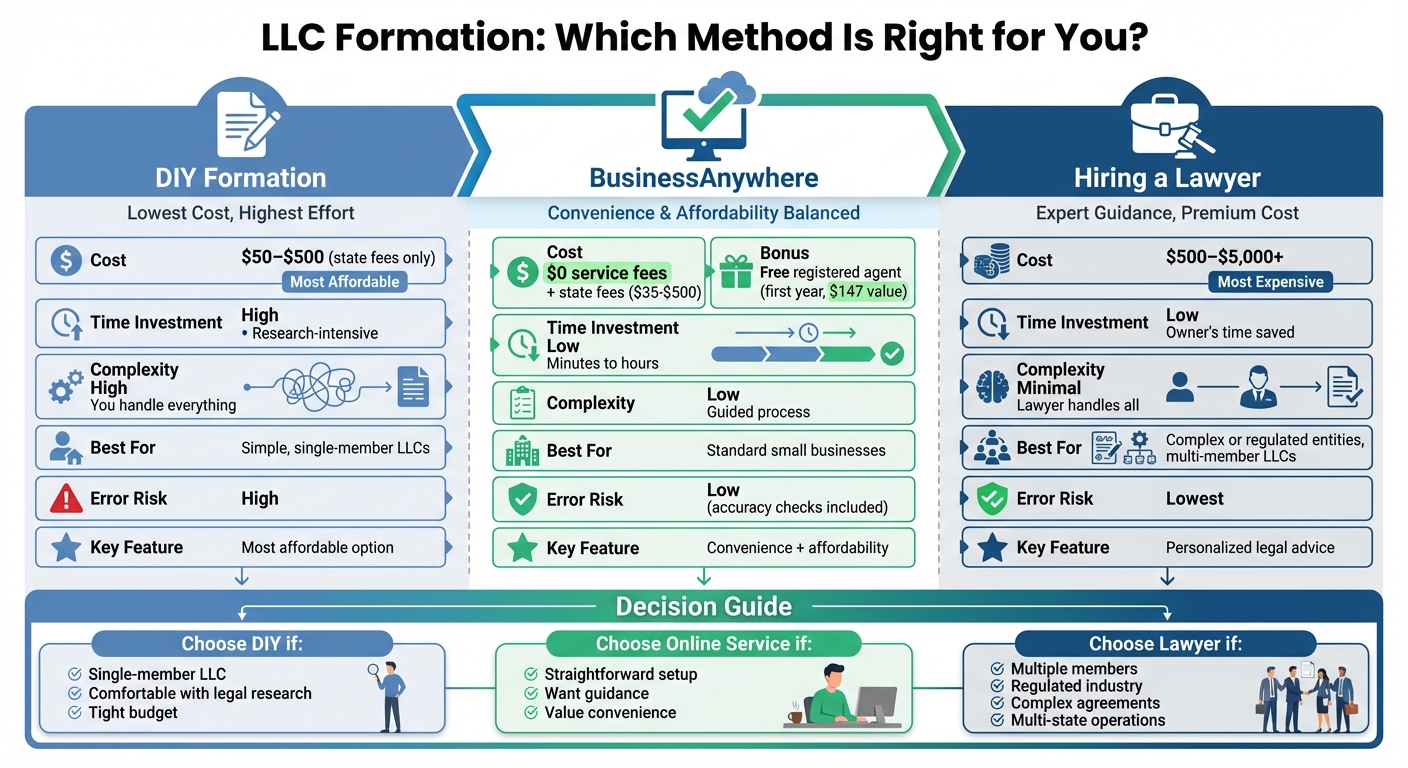
Here’s a quick comparison to help you decide:
| Feature | DIY Formation | BusinessAnywhere | Hiring a Lawyer |
|---|---|---|---|
| Cost | $50–$500 (state fees only) | $0 + state fees (first year agent free) | $500–$5,000+ |
| Time Investment | High (research-intensive) | Low (minutes to hours) | Low (owner’s time saved) |
| Complexity | High (you handle everything) | Low (guided process) | Minimal (lawyer handles all) |
| Best For | Simple, single-member LLCs | Standard small businesses | Complex or regulated entities |
| Error Risk | High | Low (accuracy checks included) | Lowest |
Your choice should depend on your business’s complexity, industry regulations, and how comfortable you are handling legal tasks. For simple, single-member LLCs operating within one state, DIY or online services often work well. But if your business involves multiple owners, complex agreements, or regulatory challenges, professional legal guidance is the safer bet.
Conclusion
Your choice for forming an LLC should reflect both your business’s needs and your budget. If you’re a solo founder, the DIY approach can cost anywhere between $50 and $500 in state fees. While this option saves money upfront, it demands significant research and comes with a higher risk of errors.
For many small business owners, BusinessAnywhere’s LLC formation service strikes a good balance. With no service fees (you’ll only pay state filing costs), you get guided filing, compliance checks, and a free registered agent for the first year. This is a great fit for businesses with straightforward legal requirements, offering convenience and peace of mind. On the other hand, legal counsel provides tailored solutions but is better suited for more complex situations.
Speaking of complexity, multi-member LLCs, businesses in regulated industries, or those operating across multiple states often require the expertise of an attorney. Legal fees in these cases can range from $500 to over $5,000, but they help avoid costly mistakes. As Jade Yeban, Esq. from FindLaw explains:
Choosing a DIY approach to many of these services will save you money upfront. Finding out you made a mistake… is a concern for new business owners.
Whichever path you choose, staying compliant is non-negotiable. This includes setting up a dedicated business bank account, drafting an operating agreement, and ensuring timely filings. These steps are essential for protecting your limited liability status and keeping your LLC in good standing.
FAQs
What are the potential risks of setting up an LLC without a lawyer?
Skipping legal assistance when forming an LLC can open the door to several potential pitfalls, especially when it comes to meeting legal requirements and structuring your business correctly. For instance, filing errors or failing to satisfy specific state regulations might lead to delays, fines, or even outright rejection of your LLC application. On top of that, without expert advice, you could miss important steps like creating a clear operating agreement or fully understanding the scope of liability protections. This could leave your personal assets vulnerable in certain situations – something no business owner wants.
Another challenge is keeping up with ongoing legal obligations. Tasks like filing annual reports or maintaining accurate records might seem straightforward, but overlooking them can lead to penalties or, worse, the dissolution of your LLC. While many entrepreneurs do manage to form LLCs independently, the legal and tax complexities can vary significantly based on your business type and location. With these risks in mind, it’s worth carefully weighing whether hiring a lawyer is the right move for your specific situation.
How do online services make forming an LLC easier?
Online LLC formation services streamline the process of starting an LLC by taking care of much of the paperwork and procedural tasks for you. These platforms assist with essential steps like choosing a business name, preparing and filing the Articles of Organization, and meeting your state’s specific compliance requirements.
With easy-to-use tools, they simplify what could otherwise be a time-consuming and complicated process. This makes them a great option for those without a legal background who want to ensure their LLC is set up properly and without unnecessary delays.
Is hiring a lawyer necessary to set up an LLC?
You don’t have to hire a lawyer to set up an LLC. Most states let you handle the filing process directly through the secretary of state’s office. That said, a lawyer can be helpful if you want to ensure everything is done correctly or if your business has more complex needs – like multiple owners or customized operating agreements.
For simpler setups, many people either file on their own or use professional services to streamline the process. However, if you’re unsure about legal requirements or need tailored advice, working with a lawyer could save you time and help you avoid expensive errors.