


Filing Articles of Organization is the first step to officially form your LLC in Oklahoma. This process establishes your business as a legal entity, protecting your personal assets and enabling you to operate within the state. Here’s a quick overview:
- Cost: $100–$125 depending on filing method.
- Processing Time: 1 hour (in-person), 2–3 business days (online), or 5–7 business days (mail).
- Methods: Online, by mail, or in person.
- Key Requirements:
- LLC name with "LLC" or similar designation.
- Physical address for the business.
- Registered agent information.
- Management structure (member-managed or manager-managed).
After filing, you’ll receive a Certificate of Organization, which allows you to open a business bank account, hire employees, and handle contracts. You’ll also need an EIN from the IRS and must file an annual certificate ($25) to maintain compliance. Choose the filing method that suits your timeline and budget.
What Are Articles of Organization?
Articles of Organization are the official documents that establish your LLC by registering it with the Oklahoma Secretary of State. This step is essential for giving your business legal status and recognition within the state.
By filing these articles, your LLC becomes a distinct legal entity, which provides liability protection and ensures state acknowledgment. Without this registration, your business wouldn’t have legal standing. Additionally, these documents act as a public record, letting government agencies and business partners know they’re dealing with an LLC rather than a sole proprietorship or partnership.
Grasping this foundational step is key to understanding the legal significance of these documents.
Legal Purpose of Articles of Organization
Filing the Articles of Organization with the Oklahoma Secretary of State gives your LLC official legal recognition and the authority to operate as a separate business entity. This filing creates a formal record that establishes your LLC as distinct from you, the owner.
This distinction is crucial because it provides liability protection. If your LLC faces legal claims or debts, your personal assets – like your home or car – are generally shielded. Only the LLC’s assets are at risk. This protection is often referred to as the "corporate veil".
However, this protection isn’t automatic. To maintain it, you must clearly separate personal and business matters. Courts can set aside the LLC’s separate status if you don’t treat it as a legitimate independent entity. This means keeping separate bank accounts, maintaining detailed records, and observing business formalities. While Oklahoma doesn’t legally mandate an operating agreement, having one can further demonstrate this separation.
The Articles of Organization must include specific details as required by Oklahoma law, such as:
- The LLC name, including "Limited Liability Company", "LLC", or "L.L.C."
- The physical principal address
- Registered agent information
- Management structure
- Business purpose
Each of these elements serves a legal role. For instance, the registered agent acts as the official contact for receiving legal documents and correspondence during standard business hours.
These components not only establish your LLC’s legal identity but also lay the groundwork for its future operations.
What Happens After You File
After the Oklahoma Secretary of State approves your Articles of Organization, you’ll receive three key documents: a stamped and approved copy of your Articles of Organization, a receipt, and a Certificate of Organization.
The Certificate of Organization is your official proof that your LLC has been legally formed and is authorized to conduct business in Oklahoma. Along with your Federal Tax ID Number (EIN), this document is essential for taking the next steps, such as opening a business bank account. It also serves as verification of your LLC’s legal status when signing contracts, hiring employees, or handling other official business matters.
The timeline for receiving these documents varies based on your filing method:
- Online filings: Typically approved within 2–3 business days
- Mail filings: Take 5–7 business days, plus mailing time
- In-person filings with expedited processing: Approved in roughly one hour
Your Articles of Organization also establish your LLC’s effective date, which determines when your business officially comes into existence for legal and tax purposes. You can choose an effective date up to 90 days after your filing date. This flexibility can be helpful for tax planning. For example, if you file in October, November, or December but don’t need the LLC to operate until the new year, you can set the effective date to January 1st to avoid filing taxes for the previous months.
The effective date also impacts your annual compliance requirements. Oklahoma mandates that LLCs file an annual certificate by the anniversary of their creation, with a $25 filing fee. Missing this deadline could result in penalties and potentially harm your LLC’s good standing with the state.
Information and Requirements Before Filing
Before you file your LLC’s Articles of Organization in Oklahoma, it’s essential to gather all the necessary details. The Oklahoma Secretary of State requires specific information, and being prepared can help your filing process go smoothly and avoid unnecessary delays. Here’s what you need to know about Oklahoma’s requirements.
Business Name Requirements in Oklahoma
Your LLC’s name must comply with Oklahoma’s legal standards. According to Oklahoma Statutes §18-2008, every LLC name must include the words "limited liability company" or an appropriate abbreviation like "LLC", "L.L.C.", or "Ltd Liability Co." For example, both "Smith Consulting, LLC" and "Smith Consulting L.L.C." are acceptable options.
The name you choose must also be unique and distinguishable from any other active business name registered in the state. To ensure your name is available, use the OK Corporate Entity Database to perform a search before making your final decision. If your name is too similar to an existing business or doesn’t include the required designation, the Secretary of State will reject your filing, forcing you to make corrections.
Additionally, certain restricted words – such as "bank", "insurance", or "university" – require proper licensing to be included in your LLC name. Keep in mind that the state will preserve the exact capitalization you submit, so double-check your entry. If you’re not ready to file immediately, you can reserve your chosen name for 90 days by paying a $10 reservation fee. It’s also a good idea to check for domain name availability and conduct trademark searches to protect your business’s identity.
Registered Agent Requirements
Every LLC in Oklahoma is required to appoint a registered agent. This individual or entity is responsible for receiving legal documents, tax notices, and other official correspondence on behalf of your business.
If you choose an individual, they must be at least 18 years old, reside in Oklahoma, and be available during standard business hours. Their name and physical address (not a P.O. box) will also be publicly listed. Alternatively, you can select a business entity that is registered in Oklahoma, in good standing with the state, and operating from a physical address within the state.
You can act as your own registered agent if you meet these requirements. However, many business owners opt for professional registered agent services to maintain privacy and ensure timely handling of important documents. Once you’ve chosen your registered agent, you’ll be ready to move forward with filing.
Other Required Information
When filing your Articles of Organization, you’ll need to provide additional details about your LLC:
- Principal Place of Business: You must list a physical street address for your business. This address can be outside Oklahoma and may be your home, office, or even your registered agent’s address.
- Management Structure: Specify whether your LLC will be member-managed or manager-managed. In a member-managed LLC, all owners actively participate in daily operations and decision-making. In a manager-managed LLC, members appoint managers to handle operations while they take a more passive role.
- Term of Existence: Decide whether your LLC will have a "perpetual" term, meaning it continues indefinitely until you file dissolution paperwork, or a specific end date (up to 90 days from filing).
- Email Address: Provide an email address to receive annual report notices and other official communications.
Although Oklahoma does not require you to file an operating agreement along with your Articles of Organization, it’s strongly recommended to create one. An operating agreement outlines operational procedures, member roles, and responsibilities. It also helps protect personal assets by reinforcing the separation between the business and its owners.
3 Ways to File in Oklahoma
Now that we’ve covered the basics, let’s dive into the three ways you can file in Oklahoma. Each method comes with its own costs, processing times, and advantages, so you can pick the one that works best for your situation.
Online filing is the go-to option for most people. The total cost is $104, which includes a $100 filing fee and a $4 processing fee. It’s fast, too – approvals usually happen the same day or within 2–3 business days. You can complete the process on the Oklahoma Secretary of State’s website using a credit or debit card.
Mail filing is a budget-friendly choice, with a base fee of $100. Processing takes about 5–7 business days, plus mailing time. To file by mail, send a check or money order payable to "Oklahoma Secretary of State" along with your completed Articles of Organization. If you choose to pay by credit or debit card, note that there’s an extra 4% processing fee. This method is great if you’re not in a hurry and want to save a few dollars.
Walk-in filing is the fastest option, costing $125. This includes the $100 filing fee and a $25 expedited fee. Approvals are processed within an hour, making it ideal for urgent situations where you need your LLC formed immediately. To use this method, visit the Oklahoma Secretary of State office during business hours and pay with cash, check, or money order.
No matter which method you choose, you’ll receive the necessary documents upon approval. Check out the "What Happens After You File" section for more on what to expect after filing and additional options.
Filing Method Comparison
| Filing Method | Total Cost | Processing Time | Payment Options | Best For |
|---|---|---|---|---|
| Online | $104 | Same day to 2–3 business days | Credit or debit card | Quick approval and digital convenience |
| $100 | 5–7 business days plus mail transit time | Check or money order | Cost-conscious filers with flexible timelines | |
| Walk-in | $125 | Within 1 hour | Cash, check, or money order | Urgent LLC formation needs |
For most business owners, online filing strikes the perfect balance between speed and cost. Spending an extra $4 to get approval in 2–3 business days instead of waiting over a week is well worth it. Walk-in filing is best saved for emergencies, like when you need to finalize contracts or open accounts on the same day.
Up next, we’ll walk you through the step-by-step process for filing your Articles of Organization.
sbb-itb-ba0a4be
How to File Articles of Organization in Oklahoma
Here’s a breakdown of how to file your Articles of Organization in Oklahoma, whether you prefer filing online, by mail, or in person.
Filing Online
Filing online is the quickest and easiest option. Begin by visiting the Oklahoma Secretary of State’s online filing portal. Navigate to the "Domestic Limited Liability Company" section under "Domestic organizations" and select "Start New" to get started.
Follow the Special Instructions and proceed by clicking "Next." On the main form, input your LLC name exactly as you want it to appear, including the correct designator like "LLC" or "L.L.C." Then, provide the physical address of your principal business location and an email address for receiving notifications, such as annual report reminders.
Next, enter your registered agent’s name and street address in Oklahoma. Indicate your LLC’s management structure – whether it’s member-managed or manager-managed – and, if desired, include a general purpose for the company. For the term of existence, most people opt for "perpetual", meaning the LLC will remain active indefinitely. If you plan to start operations later, you can forward-date the filing to January 1 to avoid additional taxes.
Once you’ve reviewed your information for accuracy, pay the $104 filing fee using a credit or debit card. Online filings are generally approved the same day.
If you’re looking for a slightly cheaper option, consider filing by mail.
Filing by Mail
Filing by mail takes more time but costs less – $100 instead of $104. Start by downloading the Articles of Organization form from the Oklahoma Secretary of State website.
Fill out the form with the necessary details: your LLC name (including the appropriate designator), the physical address of your principal business location, your registered agent’s information, your management structure, and your chosen term of existence.
Prepare a check or money order payable to "Oklahoma Secretary of State." If you prefer paying by credit or debit card, note that a 4% processing fee will be added. Mail the completed form along with your payment to the Secretary of State’s office. Processing typically takes 5–7 business days, plus mailing time.
Once approved, you’ll receive three important documents by mail: a stamped and approved copy of your Articles of Organization, a receipt, and an official Certificate of Organization. Keep these safe – you’ll need them, along with your Federal Tax ID Number, to open a business bank account.
For those in a hurry, filing in person is the fastest route.
Filing in Person
If time is of the essence, filing in person is your best choice. Complete the Articles of Organization form and bring it to the Oklahoma Secretary of State’s office during business hours. The total cost is $125 – this includes the $100 filing fee plus a $25 expedited processing fee. Payments can be made via cash, check, or money order payable to "Oklahoma Secretary of State."
Your filing will be processed in under an hour. You’ll leave with a stamped and approved copy of your Articles of Organization, a receipt, and an official Certificate of Organization. With these documents in hand, along with your Federal Tax ID Number, you can open a business bank account immediately.
This option is perfect if you need your LLC approved as quickly as possible – the extra $25 is worth it when time is critical.
What to Do After Filing
Your LLC is officially approved – congratulations! Now it’s time to take the next steps to ensure your business runs smoothly and stays compliant. These tasks will help protect your personal assets and set your business up for success.
Here’s what you need to do to complete your LLC setup and maintain compliance.
Get an EIN from the IRS
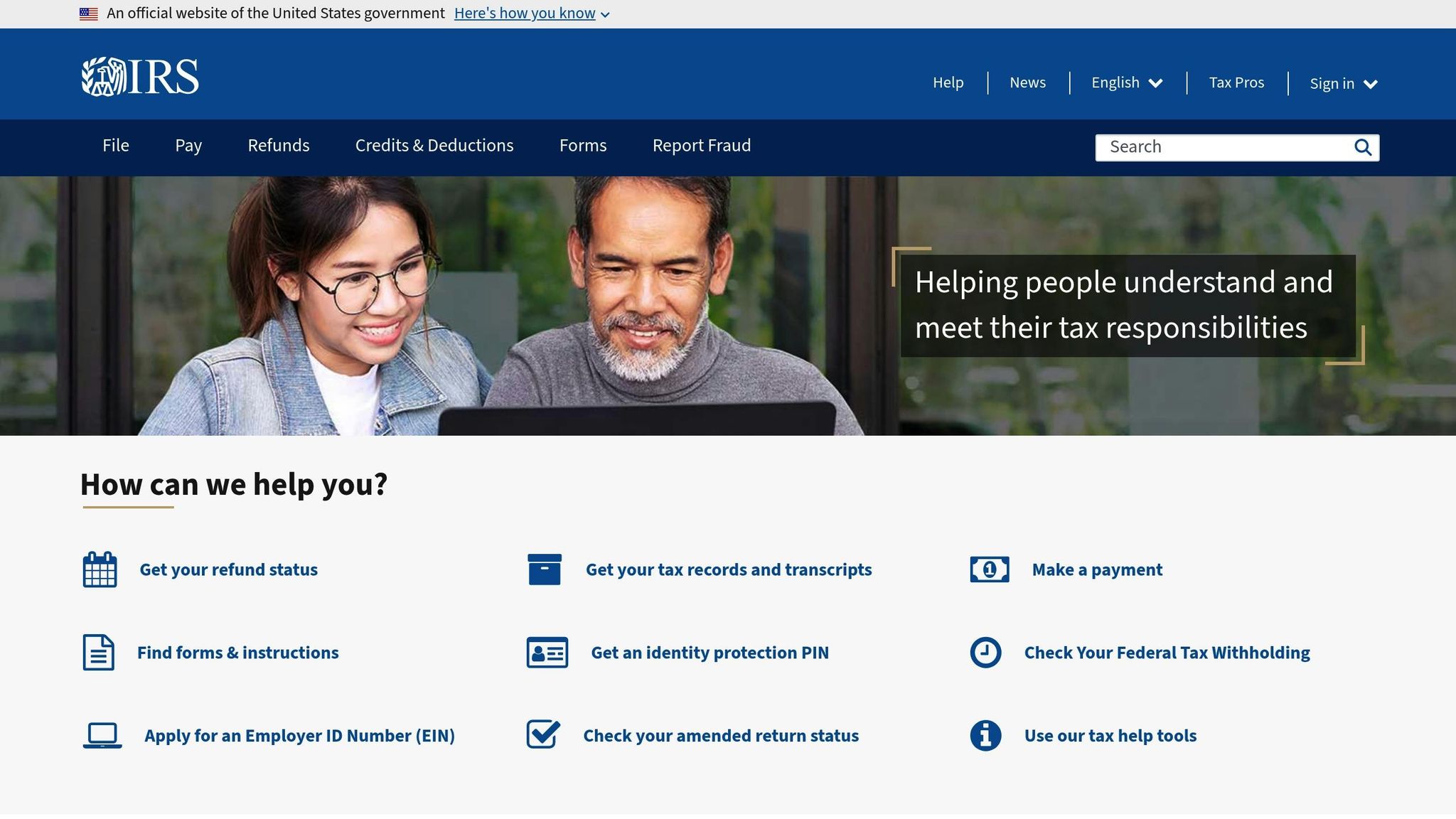
An Employer Identification Number (EIN) is like a Social Security number for your LLC. It’s essential for tax purposes and allows you to open a business bank account, hire employees, file federal taxes, and establish business credit.
The quickest way to get an EIN is through the IRS website. The online application is free, takes about 15 minutes, and requires your LLC’s legal name, business address, and the names and Social Security numbers of members or managers. Most applications are approved immediately, so you can move forward with opening a bank account right away.
If navigating IRS procedures feels overwhelming, BusinessAnywhere offers a service to process EIN applications for a one-time fee of $97. This option is available for both U.S. and non-U.S. residents.
It’s best to apply for your EIN as soon as you receive your Certificate of Organization. Completing this step early ensures you can open your business bank account without delay.
With your EIN in hand, the next step is setting up a business bank account.
Open a Business Bank Account
Keeping your personal and business finances separate is critical for protecting your personal assets. A dedicated business bank account ensures there’s a clear boundary between your LLC and your personal life. Mixing personal and business funds can lead to “piercing the corporate veil,” which could put your personal assets at risk if your business faces legal or financial trouble.
To open a business bank account, you’ll need the following documents:
- Certificate of Organization (your LLC’s approval document)
- EIN letter from the IRS
- Government-issued photo ID
Some banks might also ask for your LLC’s operating agreement, though this isn’t always required.
Once your account is open, make sure all business income is deposited into it and all expenses are paid from it. This separation not only protects your liability shield but also makes tax filing much easier. To stay organized, reconcile your account monthly, categorize income and expenses, and keep receipts and invoices. If your LLC handles a lot of transactions or has multiple members, consider using accounting software or hiring a bookkeeper.
With your finances sorted, it’s time to create an operating agreement for your LLC.
Create an LLC Operating Agreement
Although not mandatory, an operating agreement is a smart move. It’s an internal document that outlines how your LLC operates, including ownership percentages, member responsibilities, decision-making processes, profit and loss distribution, and procedures for adding or removing members.
Without an operating agreement, state law will dictate how your LLC is managed, which might not align with your preferences. By creating one, you can define clear roles and expectations, avoid disputes, and strengthen the separation between your personal and business activities. This separation helps protect your personal assets and reinforces your LLC’s credibility with banks, creditors, and the IRS.
Your operating agreement should cover:
- Ownership percentages
- Member roles and responsibilities
- Profit and loss distribution
- Procedures for adding or removing members
- Steps to take if a member leaves or if the LLC dissolves
Documenting major decisions in your operating agreement provides evidence of proper governance, which can be helpful if disputes arise later.
Once your operating agreement is in place, turn your attention to staying compliant with ongoing requirements.
Annual Certificate Filing and Compliance
To maintain your LLC’s legal protections, you’ll need to stay on top of compliance requirements. In Oklahoma, LLCs are required to file an annual certificate with the Oklahoma Secretary of State by the anniversary of your LLC’s formation date. The filing fee is $25 per year and ensures your business information stays up to date with the state.
Set a reminder at least 30 days before your formation anniversary to avoid missing the deadline. Failure to file on time can result in the state revoking your LLC status, which could lead to loss of liability protection and additional penalties.
If you change your registered agent, notify the Oklahoma Secretary of State immediately. Keeping this information current ensures you don’t miss important legal notices, tax documents, or regulatory updates. Using a professional registered agent service can simplify this process. For example, BusinessAnywhere provides registered agent services for $147 per year after the first year (the first year is free with business registration). A professional service ensures compliance, protects your privacy, and keeps you informed of key deadlines.
Lastly, consult a tax professional to understand your federal and state tax filing obligations. Staying organized with your filings and records will help keep your LLC in good standing and safeguard your personal assets.
Conclusion
Filing your Articles of Organization officially establishes your LLC and locks in your business name. To ensure a smooth process, gather all necessary information ahead of time. Check the state database to confirm your business name is available, prepare your principal business address, and appoint a qualified registered agent with an Oklahoma address. These initial steps lay the groundwork for a compliant and successful business.
When it comes to filing, you have options: online filing offers speed, mail filing can save you money, and in-person filing is ideal if time is critical. Most entrepreneurs find that online filing strikes the best balance between convenience and processing time.
Once your LLC is formed, the next priority is protecting your business and staying compliant. Key steps include obtaining an EIN, opening a dedicated business bank account, and drafting an operating agreement. While Oklahoma doesn’t legally require an operating agreement, having one can help prevent disputes and reinforce the separation between your personal and business activities.
Don’t forget about ongoing compliance. Your annual certificate is due every year on the anniversary of your LLC’s formation, with a $25 filing fee. Missing this deadline could lead to penalties or losing your good standing. To stay on track, set reminders at least 30 days before the due date. Also, keep your registered agent information updated with the state to ensure you receive important legal and tax documents.
Platforms like BusinessAnywhere can simplify the process by managing both formation and compliance remotely. They offer $0 business formation (you only pay state fees), a free first-year registered agent service, and compliance reminders through an intuitive dashboard.
FAQs
What are the benefits of filing Articles of Organization online in Oklahoma compared to filing by mail or in person?
Filing your Articles of Organization online in Oklahoma offers a quicker and more convenient alternative to traditional methods. By skipping the need for physical paperwork or office visits, you can handle everything from the comfort of your home – or anywhere with an internet connection.
Another big advantage? Online submissions are processed faster than mailed or in-person filings, meaning your LLC can be officially established sooner. It’s a straightforward, time-saving way to kick off your business journey.
Why should my LLC have an operating agreement if it’s not required in Oklahoma?
While Oklahoma doesn’t mandate an operating agreement for LLCs, having one in place can make a big difference for your business. It lays out the ownership structure and defines the roles and responsibilities of each member, reducing the chances of future misunderstandings or conflicts.
Beyond that, an operating agreement adds credibility to your LLC. It helps establish a clear distinction between the business and personal assets, which can be crucial for both legal protection and financial organization. Think of it as a practical step to keep your business running efficiently and aligned with professional standards.
What do I need to do to keep my LLC in good standing in Oklahoma?
To keep your LLC in good standing in Oklahoma, you’ll need to stay on top of a few ongoing requirements. One of the key tasks is filing an Annual Certificate with the Oklahoma Secretary of State. This filing comes with a $25 fee and is due every year on the anniversary of your LLC’s formation date.
You’ll also need to maintain a registered agent with current contact information on file. On top of that, be sure to meet any applicable state and federal tax obligations. Keeping up with these responsibilities helps you avoid penalties and ensures your LLC remains active.