

Registering a Trademark for Your LLC Business Name: 4 Things to Consider

Table of Contents

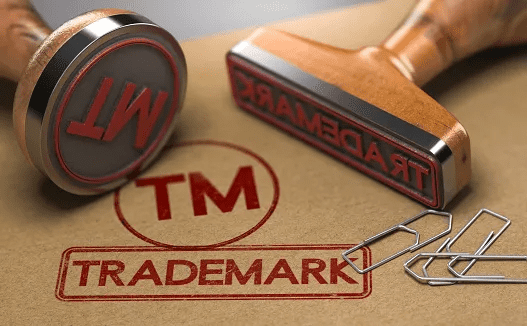
Close-up of a "TM" trademark stamp and a "TRADEMARK" rubber stamp on a document with paper clips, emphasizing intellectual property and brand protection.

Share This Post

So, you’ve started an LLC and you want to register a trademark for your business name. Before you dive in and file for a trademark, there are a few things you should consider. In this blog post, we’ll cover what a trademark is, what you can register a trademark for, the benefits of registering a trademark, and the process for registering a trademark.

What is a Trademark?

A trademark is a word, phrase, symbol, or design that identifies and distinguishes the source of the goods of one company from those of others. A service mark is a type of trademark that identifies and distinguishes the source of a service rather than a product. You can register trademarks and service marks with the USPTO.

What Can I Register a Trademark For?

You can register a trademark for anything that is used to identify and distinguish your goods or services. This includes words, phrases, symbols, designs, logos, sounds, smells, colors, and product packaging.

The Benefits of Registering Your Trademark

There are several benefits to registering your trademark including:

  • The ability to sue for infringement in federal court.
  • The presumption that you own the mark nationwide.
  • The ability to use ® in connection with your mark.
  • The ability to record your U.S. registration with customs authorities to prevent imported goods from infringing your mark.
  • You will have exclusive rights to use your mark on or in connection with the goods/services listed in your registration.
  • Others will be prevented from using confusingly similar marks if it would damage your business.

How Do I Register My Trademark?

Registering your trademark is not required but it is recommended. It offers stronger legal protection than common law rights. You can register online or through mail/fax with the USPTO.

To register online, you will need to provide the following:

  • A completed application form (TEAS).
  • Your fee ($275-$325 per class of goods/services).
  • A non-refundable deposit consisting of 1 specimen per class for each good/service identified in the application OR 2 specimens per class if specimens are not available for all goods/services (specimens show how you are actually using the mark on or in connection with the sale of goods or rendering of services). Specimens may include tags or labels; packaging; advertisements; photographs; website printouts;components; instructions; brochures; flyers.
  • An executed declaration (if filing TEAS RF) OR
  • A Power of Attorney form if someone else will be corresponding with us on your behalf (not required if filing electronically).

Once you have all these items ready, you can begin the online application process here: www.uspto.gov/trademarks-application-process/applying-online. The whole process takes about 6 months on average but it could be faster or take longer depending on how many office actions are involved.

If you decide to file by mail or fax instead, forms and instructions can be found here: www.uspto.gov/trademarks-application-process/filing-traditional-application. Mailing addresses and fax numbers can be found here: www.uspto.gov/contact/office-locations. Keep in mind that registering your trademark is only the first step. You also need to actively police your mark by monitoring compliance and taking action against infringers.


Or, you can hire a firm to help  you with trademark registration and monitoring. We’d suggest our partner firm, Trademarkings.  They can assist you with every step of the process.  You can also get a $50 discount using the coupon code BA50 at checkout.   You can find them online here.

Conclusion:

Deciding whether or not to register your LLC business name as a trademark is not a decision to be made lightly. There are many things to consider including what a trademark is, what you can register one for, the benefits of registration, and how do to go about registering one. However, if you do decide that registration is right for your business, remember that it’s only the first step. You also need to actively police your mark by monitoring compliance and taking action against infringers.

About Author

Picture of Rick Mak

Rick Mak

Rick Mak is a global entrepreneur and business strategist with over 30 years of hands-on experience in international business, finance, and company formation. Since 2001, he has helped register tens of thousands of LLCs and corporations across all 50 U.S. states for founders, digital nomads, and remote entrepreneurs. He holds degrees in International Business, Finance, and Economics, and master’s degrees in both Entrepreneurship and International Law. Rick has personally started, bought, or sold over a dozen companies and has spoken at hundreds of conferences worldwide on topics including offshore structuring, tax optimization, and asset protection. Rick’s work and insights have been featured in major media outlets such as Business Insider, Yahoo Finance, Street Insider, and Mirror Review.
“I’ve used many LLC formation services before, but this one is the best I’ve ever used—super simple and fast!” “Excellent service, quick turnaround, very professional—exactly what I needed as a non-US resident.”
You can read more feedback from thousands of satisfied entrepreneurs on the Business Anywhere testimonials page. As a contributor to Business Anywhere, Rick shares actionable guidance drawn from decades of cross-border business experience—helping entrepreneurs launch and scale legally, tax-efficiently, and with confidence. To learn more about how we ensure accuracy, transparency, and quality in our content, read our editorial guidelines.

Subscribe To Our Newsletter

Get updates and learn from the best

More To Explore

Registered Agent in Alabama: What It Is, How It Works, and Why You Need One
Registered Agent
Registered Agent in Alabama: What It Is, How It Works, and Why You Need One

Alabama requires every LLC to maintain a registered agent at a street address in Alabama where process can be personally served, under Ala. Code 10A-1-5.31. The address may not be solely a mailbox service or answering service, and the statute bars an agent operating only through a virtual office or mail forwarding service. Eligible agents are Alabama-resident individuals and entities registered to transact business in the state. These rules were tightened by Act 2024-413 and Act 2026-495.

Close-up of a businessman in a gray suit adjusting his tie, emphasizing professionalism and business attire. Suitable for themes related to corporate leadership, business strategies, and workplace professionalism.
Business
Delaware Registered Agent: Requirements, Duties and How to Change One

Delaware requires every LLC and corporation to maintain a registered agent with a physical Delaware street address, open during normal business hours to accept service of process, under 6 Del. C. 18-104 and 8 Del. C. 132. Delaware permits a company to act as its own agent but bars any agent from operating solely through a virtual office or mail forwarding service. Agents serving more than 50 entities are commercial registered agents. Delaware does not regulate agents, so vetting is the owner’s responsibility, and losing an agent costs the company its good standing.

A professional woman with glasses greets a business contact at her modern, bright office desk, symbolizing networking and remote business success with Business Anywhere platform.
Registered Agent
What Is a Registered Agent for an LLC? Duties and Costs

Are you a digital nomad or a remote entrepreneur? Understanding the role of a registered agent is crucial for maintaining your business’s legal standing and privacy. A registered agent serves as your official point of contact for receiving important legal documents and government notices, ensuring you never miss critical deadlines. In this comprehensive guide, we’ll explore the essential responsibilities of registered agents, the legal requirements across states, and how to choose the right solution for your unique business needs. Discover how to protect your business while you focus on growth and navigate the challenges of operating without a fixed location.

Do You Want To Boost Your Business?
Two diverse women collaborating in a modern corporate office during a team meeting, with whiteboards in the background displaying business plans and notes, emphasizing remote work and business flexibility.