

Alabama Articles of Organization at a Glance
| Official document name | Certificate of Formation |
| Filed with | Alabama Secretary of State |
| State filing fee | $200 |
| Ongoing state filing | None |
| State tax on the LLC | Business Privilege Tax fully exempt when tax due is $100 or less |
| BusinessAnywhere filing fee | $0 plus the state fee |
| Official fee source | Alabama official fee page |
State fees verified against the official source in 2026. For every state’s form name, fee and filing office, see our guide to articles of organization.
File your Alabama Certificate of Formation with BusinessAnywhere
We prepare and file it for $0. You pay only the Alabama state fee, and your first year of registered agent service is free.
Filing Articles of Organization in Alabama, called the Certificate of Formation, officially establishes your LLC. Here’s what you need to know:
- Step 1: Reserve Your LLC Name
- Cost: $25 by mail or $28 online.
- Must include “LLC” or “Limited Liability Company” in the name.
- Attach the Name Reservation Certificate to your filing.
- Step 2: Appoint a Registered Agent
- Must have a physical address in Alabama.
- You can serve as your own agent or hire a service.
- Step 3: File the Certificate of Formation
- Cost: $200 by mail or $208 online.
- Include your LLC name, registered agent info, and principal address.
- Submit the original form, a copy, and the Name Reservation Certificate.
- Post-Filing Tasks:
- Get an EIN from the IRS.
- File the Initial Business Privilege Tax Return within 2.5 months ($50 minimum).
- Draft an Operating Agreement (optional but recommended).
- Obtain required licenses or permits based on your business type.
Filing online is faster, with approvals within 24 hours. Mail submissions take longer. Services like BusinessAnywhere can simplify the process by handling filings, registered agent services, and compliance tracking.
Costs: Minimum $225 (Name Reservation + Filing Fee). Additional costs apply for licenses, permits, or professional services.
Alabama LLC Formation Requirements
Setting up an LLC in Alabama requires attention to a few key steps and details to ensure everything goes smoothly.
Name Reservation Process
The first step is reserving your LLC’s name. You’ll need to file a Name Reservation Request Form with the Alabama Secretary of State. This costs $25 if you file by mail or $28 if you file online. Online submissions are processed immediately, and the Certificate of Name Reservation you receive will be valid for one year.
Your LLC name must stand out from other entities already registered in Alabama. It also needs to include one of the following identifiers: “Limited Liability Company”, “LLC”, or “L.L.C.” to clearly indicate your business structure. Additionally, the name cannot mislead or imply a different type of business entity.
Before you submit your reservation form, it’s a good idea to check the Alabama Secretary of State’s online database to ensure your preferred name is available. This quick search can save you time and money if your first choice is already taken.
Registered Agent Requirements
Every LLC in Alabama must designate a registered agent. This person or service will handle legal documents and official notices on behalf of your LLC.
The registered agent must meet the following requirements:
- Have a physical street address in Alabama (P.O. boxes are not allowed).
- Be available during regular business hours.
You have three options to fulfill this requirement:
- Act as your own registered agent if you have a physical address in Alabama and can commit to being available during business hours. This option is free but requires your consistent presence at the registered address.
- Appoint someone else, such as a business partner, friend, or family member who meets Alabama’s residency and availability requirements.
- Hire a professional registered agent service like BusinessAnywhere. These services provide a reliable address, ensure someone is always available to receive documents, and help keep your personal address off public records. While there’s an annual fee, many business owners value the privacy and convenience these services offer.
Once you’ve selected your registered agent, you’ll be ready to move on to filing the necessary documents.
Required Documents
To officially form your Alabama LLC, you’ll need to file two key documents with the Secretary of State:
- Certificate of Formation: This document, Alabama’s version of Articles of Organization, must include:
- Your LLC’s name (exactly as it appears on the Certificate of Name Reservation).
- The name and Alabama address of your registered agent.
- Your LLC’s principal office address.
- A statement confirming at least one member.
The filing fee is $200 for mail submissions or $208 for online filings. Be sure to attach your Certificate of Name Reservation to the Certificate of Formation when submitting. Without it, your filing will be rejected. You’ll also need to include the original Certificate of Formation along with one copy.
- Operating Agreement: While not required by the state, having an Operating Agreement is highly recommended. This document outlines how your LLC will be managed, defines member roles, and sets procedures for resolving disputes. Banks require it to open business accounts, and it helps reinforce the separation between personal and business assets. Even single-member LLCs benefit from having one in place.
The minimum cost to form an Alabama LLC is approximately $225, which includes the Name Reservation Certificate ($25 to $28) and the Certificate of Formation ($200 to $208). If you choose to use a registered agent service or need additional documents like a Certificate of Compliance (which costs $14), those will add to your expenses.
Step-by-Step Filing Process
Here’s how to file your Alabama LLC formation efficiently.
Reserve Your LLC Name
Start by checking if your preferred name is available using the Alabama Secretary of State’s Business Entity Search tool. This free online resource lists all registered business names in the state, ensuring you don’t accidentally choose one that’s already taken.
Once you’ve confirmed the name is available, submit a Name Reservation Request Form. You can file online for $28 or mail it for $25. Online filings are processed immediately, while mailed forms may take anywhere from a few days to a couple of weeks.
Make sure your chosen name meets the state’s naming rules, as detailed earlier. Once your name is reserved, you’re ready to move on to the Certificate of Formation.
Prepare the Certificate of Formation
In Alabama, the Certificate of Formation serves the same purpose as Articles of Organization in other states. Download the current form from the Alabama Secretary of State’s website to ensure accuracy.
Fill out the form using your reserved name and registered agent details. Double-check all the information to avoid delays during processing.
Submit the Certificate of Formation
You can file your Certificate of Formation through one of two methods:
- Online Filing:
Submit online for $208, which includes an $8 processing fee. Most online filings are approved within 24 hours. - Mail Filing:
If you prefer mailing, the cost is $200. Include the original Certificate of Formation, a copy, and a check or money order. Processing times vary but may take several days to a couple of weeks, depending on the volume of submissions.
For mail filings, send your documents to:
Alabama Secretary of State Corporations Division
P.O. Box 5616
Montgomery, AL 36103-5616
Post-Filing Tasks
Once your Certificate of Formation is approved, review all your documents to ensure everything is in order. Next, take these essential steps:
- Obtain an EIN (Employer Identification Number): This is required for tax purposes and hiring employees.
- Draft an Operating Agreement: While not mandatory, it’s highly recommended to outline your LLC’s management structure and operating rules.
- File the Initial Business Privilege Tax Return (Form BPT-IN): This must be submitted within 2.5 months of formation. The minimum tax is $50, but it may increase based on your LLC’s net worth.
Lastly, check if your business requires any specific licenses or permits. Requirements vary depending on your industry and location, so consult state and local authorities to ensure compliance.
Post-Filing Compliance and Obligations
Once your Alabama LLC is officially formed, there are ongoing requirements to keep your business in good standing with the state. These obligations are straightforward but essential for maintaining your LLC’s legal status.
Business Privilege Tax and Annual Reporting
After forming your LLC, you’ll need to file the Initial Business Privilege Tax Return (Form BPT-IN) within 2.5 months. This ensures compliance with the Alabama Department of Revenue.
The Business Privilege Tax is based on your LLC’s net worth, with a minimum annual payment of $50. For most newly formed LLCs with limited assets, this minimum amount applies. However, as your business grows and accumulates more assets, the tax amount may increase.
Starting January 1, 2024, LLCs with a tax liability of $100 or less are no longer required to file the Business Privilege Tax return.
You can file and pay the tax online through the Alabama Department of Revenue’s portal or by mail. Online filing is quicker and provides immediate confirmation. Make sure to file annually by your LLC’s fiscal year deadline.
FinCEN no longer requires LLCs formed in the United States to file a beneficial ownership information (BOI) report. Under its interim final rule of March 2025, only companies formed outside the US that register to do business in a state must report, so an LLC formed in Alabama has no BOI filing.
The deadline for this filing is 30 to 90 days after your LLC’s formation, depending on the date of creation. This report includes detailed information about your LLC’s ownership and applies to most small businesses.
Beyond tax compliance, it’s equally important to establish a solid foundation for your LLC’s governance with an operating agreement.
Operating Agreement
While Alabama law doesn’t mandate having an Operating Agreement, creating one is highly recommended. This document serves as the backbone of your LLC’s internal governance, complementing your compliance efforts. It outlines ownership details, management roles, financial arrangements, and procedures for resolving disputes.
Even if your LLC has only one member, an Operating Agreement can help clarify decision-making processes, profit distribution, and responsibilities. It also reduces the likelihood of misunderstandings or disputes down the road.
Your Operating Agreement should address critical areas such as voting rights, member contributions, management structure, and guidelines for handling situations like a member leaving the business. While you can draft a basic version on your own, consulting a business attorney ensures the agreement provides all necessary legal protections.
If you’re looking for assistance, services like BusinessAnywhere can help prepare essential documents like Operating Agreements, giving your LLC a strong governance structure from the start.
Once your tax filings and governance documents are in place, don’t overlook the importance of securing the necessary licenses and permits.
Licenses and Permits
To legally operate in Alabama, your LLC must obtain a Business Privilege License in every county where it conducts business. This requirement applies not only to the county where your LLC is formed but also to any county where business activities occur.
Each county has its own fee structure and application process for Business Privilege Licenses, so costs will vary depending on your location and the nature of your business. These licenses must be renewed annually.
Additionally, your business may need specific permits based on its activities. For instance:
- Retail businesses require sales tax permits.
- Restaurants need health department permits.
- Professional services require industry-specific licenses.
Since requirements vary, it’s essential to check with both state and local authorities to ensure you meet all licensing and permit obligations. The Alabama Secretary of State’s website is a helpful resource for identifying common business licenses, while local municipalities can guide you on city-specific permits.
sbb-itb-ba0a4be
Resources and Support
Getting your LLC up and running in Alabama doesn’t have to be complicated. The Alabama Secretary of State website offers all the essential forms and instructions you’ll need, whether you plan to handle the process yourself or prefer professional assistance. Let’s explore the resources and support available to help you get started.
Official Forms and Guidance
The Alabama Secretary of State is your go-to source for official LLC formation documents. You can download crucial forms like the Certificate of Formation and Name Reservation Certificate directly from their website. Need to make changes down the road? The Business Downloads page also provides amendment forms and dissolution paperwork to keep your LLC compliant with state requirements.
If you’re navigating tax obligations, the Alabama Department of Revenue has you covered with detailed information about the Business Privilege Tax. They offer forms, filing deadlines, and updates, such as the 2024 change eliminating filing requirements for LLCs owing $100 or less. These resources are invaluable for staying informed and avoiding surprises.
When filling out your forms, double-check that your LLC name matches your Name Reservation exactly. Include all required details, like your registered agent’s information, and ensure the organizers sign where needed. Filing online through the Secretary of State’s portal is a great way to speed up the process and reduce errors. These tools perfectly complement the step-by-step instructions we’ve covered earlier.
How BusinessAnywhere Can Help
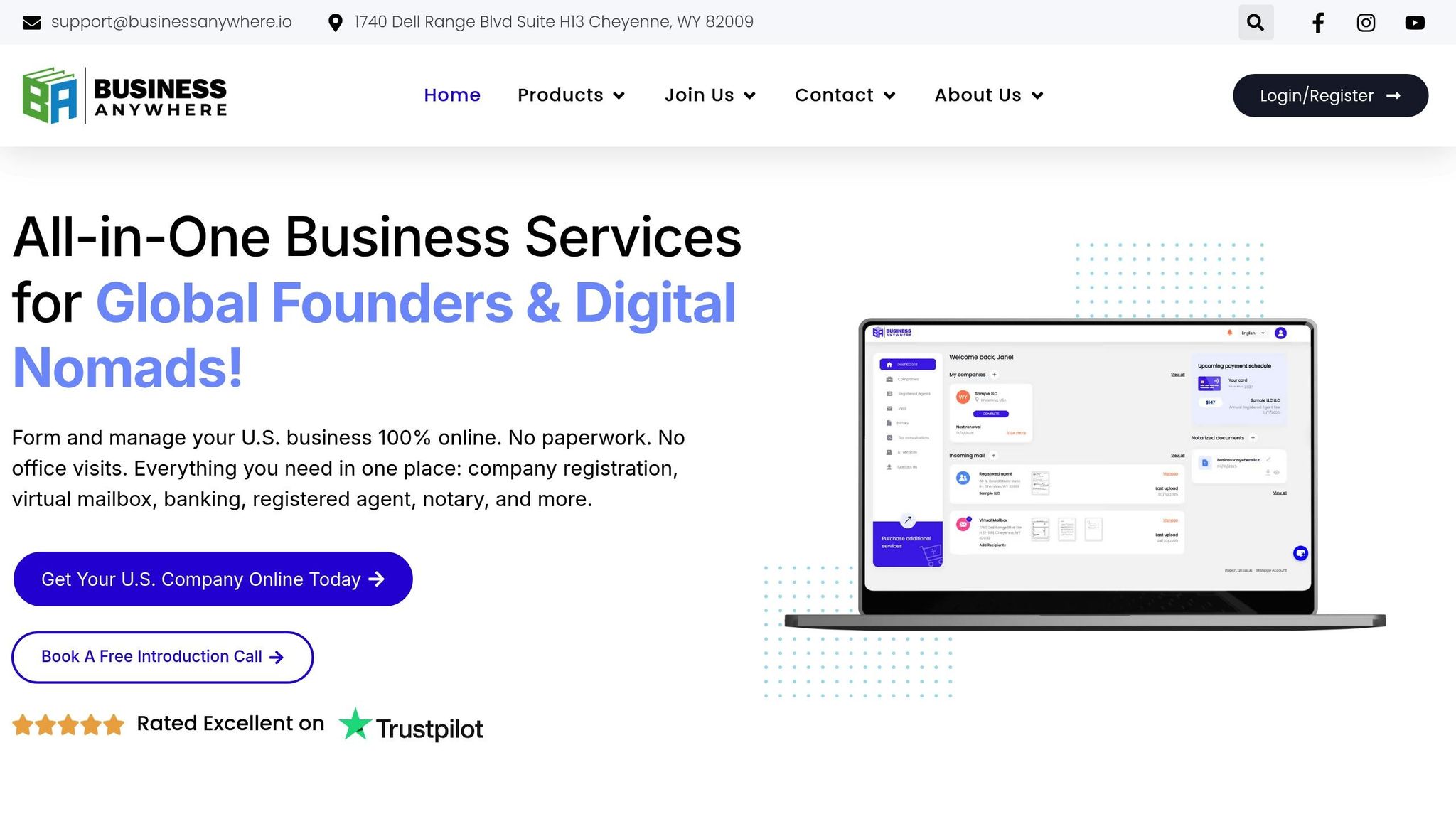
If you’d rather leave the paperwork to the pros, BusinessAnywhere offers a full suite of LLC formation services. They handle everything from filing your Certificate of Formation to securing your Name Reservation, making the process seamless. Their platform also simplifies things by centralizing your documents, mail forwarding, and compliance tracking in one easy-to-use dashboard.
BusinessAnywhere doesn’t stop at formation. Their registered agent services come with privacy protection and compliance reminders, while virtual mailbox options provide a professional U.S. business address with mail scanning and global forwarding.
With BusinessAnywhere, you’ll have peace of mind knowing that both your formation and ongoing compliance needs are handled by experts.
Related Topics
Once your LLC is officially set up, there are additional tools and steps to consider for smoother operations. For example, a virtual mailbox can give your business a professional address while keeping your personal information private.
Alabama’s business entity search tools are another useful resource. They let you verify that your LLC name is unique and even monitor the status of other businesses in your industry. Taking advantage of these resources will help ensure your LLC stays in good standing with both state and federal regulations.
Conclusion
Filing Articles of Organization in Alabama involves several steps that lay the groundwork for your LLC. To get started, you’ll need to reserve your business name, appoint a registered agent with an Alabama address, and file the Certificate of Formation along with the necessary state fees. After filing, there are essential follow-up tasks like obtaining a Business Privilege License, filing the Initial Business Privilege Tax Return within 2.5 months, and staying on top of annual compliance requirements to keep your LLC in good standing.
One unique aspect of forming an LLC in Alabama is the mandatory pre-filing name reservation, which differs from the process in most other states. This extra step, along with county-specific licensing rules, can add a layer of complexity, especially for first-time business owners. Additionally, ongoing responsibilities such as the annual Business Privilege Tax (starting at $50) and various county fees contribute to your administrative workload.
If these steps feel overwhelming, services like BusinessAnywhere can streamline the process. They handle everything from name reservation to compliance tracking through their all-in-one platform. Their $0 business formation service means you only pay state fees, and they include a free first-year registered agent service. With expedited filing options that can have your LLC formed in as little as two business days, plus support for annual reports and tax filings, you can focus more on growing your business. Whichever route you choose, staying on top of these requirements ensures your LLC remains compliant and ready for success.
FAQs
What happens if I don’t appoint a registered agent for my Alabama LLC?
Failing to designate a registered agent for your Alabama LLC can have serious repercussions. Without one, your business can miss critical legal or tax documents, such as service of process notices. This could lead to missed deadlines or even default judgments that harm your business.
Moreover, Alabama law mandates that every LLC must have a registered agent to stay compliant. If your LLC operates without one, it risks penalties, fines, or even administrative dissolution, essentially losing its good standing with the state. To steer clear of these issues, make sure to appoint a dependable registered agent when setting up your LLC and keep their details current.
How does Alabama’s Business Privilege Tax impact my LLC, and what are the consequences of missing the filing deadline?
In Alabama, all LLCs are required to pay an annual Business Privilege Tax. This tax is calculated based on your LLC’s net worth, which means it directly ties into your financial planning. Because it’s a recurring expense, it’s important to account for it in your budget to avoid surprises.
Missing the filing deadline can lead to some serious consequences. Your LLC could face penalties, interest charges, and even legal troubles. On top of that, late filings put your LLC’s good standing with the state at risk. Losing that status could make it harder to operate your business or secure funding. To steer clear of these headaches, make it a priority to file and pay on time every year.
Do I need an Operating Agreement for my Alabama LLC, and what happens if I don’t have one?
While Alabama law doesn’t require LLCs to have an Operating Agreement, creating one is a smart move. This document acts as a blueprint for your LLC, detailing its structure, member responsibilities, and day-to-day operations. It helps set clear expectations and reduces the likelihood of misunderstandings down the road.
If you skip drafting an Operating Agreement, your LLC will automatically follow Alabama’s default state laws. These laws can conflict with how you want your business to function. Plus, without this agreement, resolving disputes, protecting your personal assets, or proving your LLC’s credibility in legal or financial situations can become more challenging. Even if you’re the sole member of your LLC, having an Operating Agreement in place adds an extra layer of protection and clarity for your business.