


Remote work is booming in 2026, with 48% of the global workforce working remotely and 66% of U.S. companies prioritizing location flexibility. AI tools have made it easier than ever to start a business from home, saving entrepreneurs 13 hours and $4,700 monthly on average. Whether you’re interested in AI-powered services, content creation, or e-commerce, there are countless opportunities to build a remote business with minimal investment.
Here are the key takeaways:
- AI Businesses: Roles like AI Workflow Designer and AI Agent Developer can earn $5,000–$50,000 monthly.
- Service-Based Businesses: Options include Fractional Growth Partner or Notion System Architect, with earning potential up to $15,000/month.
- Content Creation: From short-form video strategists to newsletter monetization consultants, creators can make $2,000–$7,000/month.
- E-Commerce: Models like D2C brands, print-on-demand, and high-ticket dropshipping can generate $1,000–$100,000+ annually.
Starting is simple: pick a niche, validate demand, and launch within 30 days. With tools like Stripe and Notion, you can operate professionally from day one. The time to act is now.
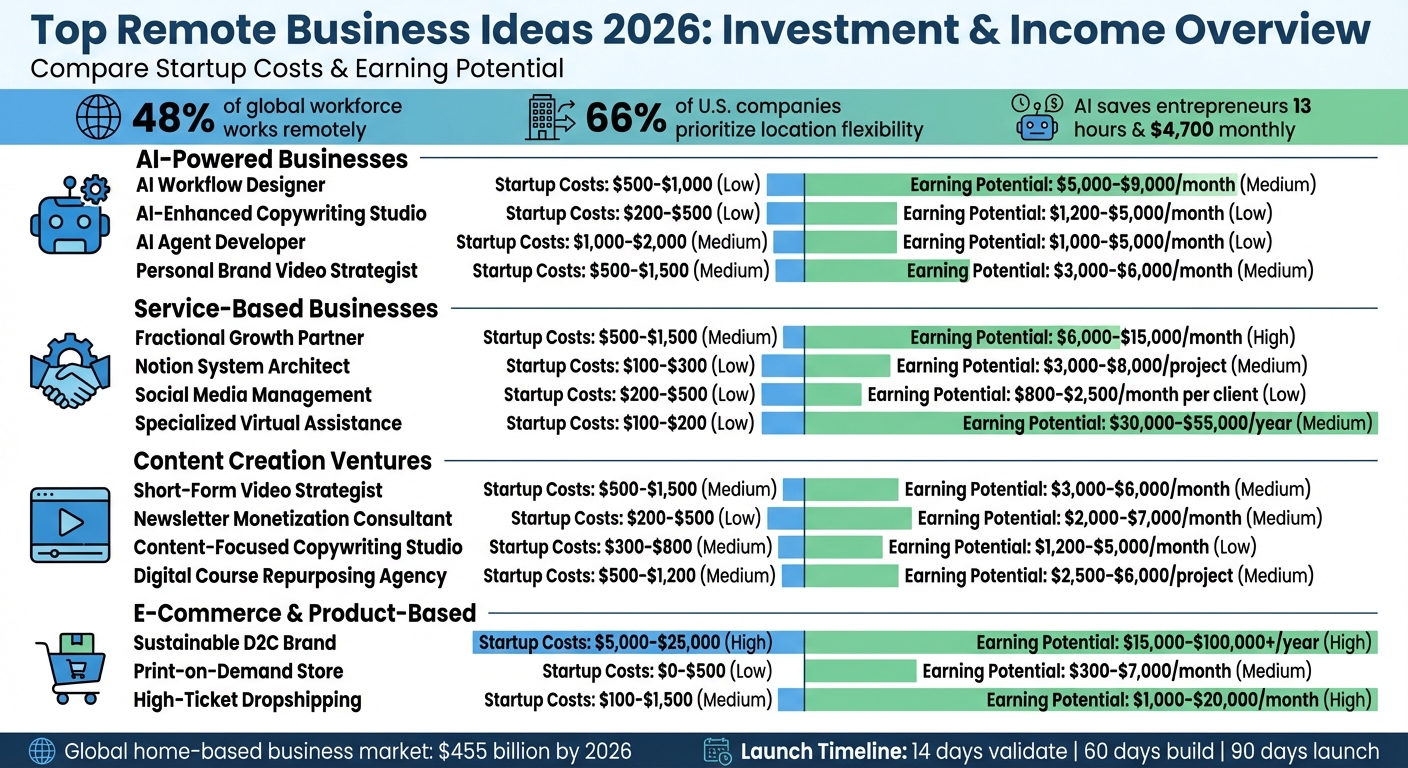
Remote Business Models 2026: Startup Costs vs Earning Potential Comparison
1. AI-Powered Businesses
AI-powered businesses are set to dominate the remote work landscape by 2026. Currently, 76% of small and medium-sized businesses in North America are either using or experimenting with AI tools. This surge in adoption has created a booming demand for professionals who can integrate AI systems effectively. These businesses combine the efficiency of AI automation with human expertise to deliver measurable outcomes.
The financial appeal is hard to ignore. For instance, implementing AI can save business owners about 13 hours of manual work and $4,700 in monthly costs. By 2026, an estimated 40% of companies will outsource tasks to providers leveraging AI. This trend opens up a wealth of opportunities for entrepreneurs who can connect AI’s capabilities with practical business needs. Below are some of the specialized roles emerging in this space.
AI Workflow Designer
Many companies struggle to turn random AI prompts into structured, repeatable workflows. This is where an AI Workflow Designer steps in. They map out team processes, create prompt libraries, and design automated routines using tools like Zapier, Make, and OpenAI APIs. Their work often includes developing a comprehensive manual that documents how AI is used across various departments.
- Startup Cost: $500–$1,000 (for software subscriptions and training materials)
- Earning Potential: $5,000–$9,000 per month through consulting or retainer agreements
- Best For: Those with a background in operations or process mapping who excel at organizing workflows systematically.
AI-Enhanced Copywriting Studio
While 52% of marketing agencies utilize AI tools for copywriting, only 28% manage to maintain a consistent brand tone. This gap presents an opportunity for an AI-Enhanced Copywriting Studio. These studios use AI to draft outlines and initial content, then rely on human expertise to refine the text with storytelling, emotional depth, and brand-specific voice. This approach boosts productivity without compromising quality.
- Startup Cost: $200–$500 (for AI tool subscriptions and a professional portfolio website)
- Earning Potential: $1,200–$5,000 per month on retainer
- Best For: Writers or marketers who excel at editing and understand how to adapt content to align with a brand’s unique voice.
AI Agent Developer
As businesses move away from generic SaaS solutions, the demand for tailored AI agents has grown. An AI Agent Developer creates bots designed for specific tasks like research, customer intake, appointment scheduling, or data analysis. These agents operate around the clock, providing capabilities that small teams can’t achieve with human staff alone.
- Startup Cost: $1,000–$2,000 (for development tools and API access)
- Earning Potential: $1,000–$5,000 per client per month
- Best For: Developers with experience in API integration or tech-savvy individuals comfortable working with no-code platforms.
Personal Brand Video Strategist
Short-form videos are dominating platforms like TikTok and Instagram, yet many entrepreneurs and coaches lack the time or expertise to produce high-quality content consistently. A Personal Brand Video Strategist uses AI tools like Runway ML and Descript to create engaging video content that builds authority and attracts leads. This role involves scripting, recording, and editing videos that transform expertise into attention-grabbing reels.
- Startup Cost: $500–$1,500 (for video editing software and screen recording tools)
- Earning Potential: $3,000–$6,000 per client per month
- Best For: Video editors, social media managers, or creators who understand how to optimize content for platform algorithms and audience engagement.
2. Service-Based Businesses
Service-based businesses in 2026 are thriving by blending technology with specialized expertise, making them an appealing option for remote entrepreneurs. One standout trend is the rise of "productized services" – offering fixed-scope, fixed-price packages based on your expertise. This approach simplifies the sales process and eliminates scope creep. Instead of traditional hourly billing, many successful providers now focus on outcome-based pricing, charging for results rather than time.
The numbers tell a compelling story. The global virtual assistant market is expected to hit $8.6 billion by 2028, and businesses using digital tools for remote teams report a 28% increase in productivity. Specializing in niche areas – like creating "Notion dashboards for freelancers" instead of offering generic "productivity consulting" – allows providers to charge higher rates while reducing competition. This strategy positions you as an expert in a specific field rather than a generalist.
AI plays a key role here, not by replacing expertise but by enhancing efficiency. Service providers are using AI to handle routine tasks, freeing up time for strategic thinking, creativity, and building client relationships. With 76% of businesses adopting AI, the most successful providers are those who combine technology with human insight to deliver tailored solutions.
Fractional Growth Partner
Startups often need top-tier marketing strategies but can’t afford a full-time CMO. Enter the Fractional Growth Partner, a part-time executive who handles go-to-market strategies, conversion funnel optimization, and team management – all without the hefty price tag of a permanent hire. This role is a perfect example of how expertise can be packaged into a scalable service.
- Startup Cost: $500–$1,500 (for CRM tools, analytics software, and branding)
- Earning Potential: $6,000–$15,000 per month on retainer
- Best For: Experienced marketing directors or strategists who excel at scaling businesses.
Notion System Architect
As remote teams juggle scattered tools and information, the demand for Notion System Architects is on the rise. These specialists build centralized workspaces in Notion, creating dashboards, automating workflows, and organizing documentation to keep distributed teams aligned. This role highlights how technical know-how can solve operational challenges.
- Startup Cost: $100–$300 (for a Notion subscription and templates)
- Earning Potential: $3,000–$8,000 per project
- Best For: Operations managers or organization enthusiasts skilled at turning chaos into order.
Social Media Management
Social media management has evolved, with a strong focus on short-form video content. Platforms like TikTok and Instagram Reels are crucial for brand visibility, and 62% of freelancers say short-form videos generate their best leads. Managers combine content creation, audience engagement, and analytics to grow their clients’ online presence, proving how creative content directly impacts business growth.
- Startup Cost: $200–$500 (for scheduling tools, design software, and analytics platforms)
- Earning Potential: $800–$2,500 per client per month
- Best For: Content creators and marketers who understand algorithms and can consistently produce engaging video content.
Specialized Virtual Assistance
The role of virtual assistants has shifted from general admin tasks to specialized services in high-compliance industries like legal, medical, or real estate. These VAs are trained in industry-specific software, regulations, and protocols, enabling them to charge premium rates for their expertise. This shift underscores the value of deep knowledge in niche markets.
- Startup Cost: $100–$200 (for training and certifications in specialized software)
- Earning Potential: $30,000–$55,000 annually, with higher earnings in certain niches
- Best For: Administrative professionals with industry-specific knowledge who can handle sensitive tasks with precision and confidentiality.
sbb-itb-ba0a4be
3. Content Creation Ventures
Content creation ventures thrive by engaging audiences across various media formats. In 2026, these ventures blend SEO-driven blogs, subscriber newsletters, and social media to build multi-layered media brands. Platforms like TikTok and Instagram Reels play a major role in brand discovery, with short-form videos generating top-quality leads for 62% of freelancers. While AI manages outlines and drafts, human creators take charge of storytelling, pacing, and emotional depth.
The affiliate marketing industry is expected to grow to $15 billion by 2027, while the e-learning market is on track to hit $400 billion by 2026. Despite this growth, 70% of newsletters fail to monetize, leaving room for experts to help creators transform audiences into revenue streams. Success hinges on mastering "high-income skills" like UX writing for conversions or crafting SEO content that drives measurable results.
"The best way to thrive is to make something people want, in a place they are already paying attention." – Seth Godin
Specializing in a niche often leads to better engagement and revenue. For instance, focusing on "email marketing for health coaches" can outperform generalist roles. Savvy creators aim to own their audience by using platforms for discovery and then funneling followers into email lists or paid newsletters, ensuring long-term stability. In one case, a Miami-based creator tripled her monthly revenue in early 2026 by launching a paid subscription tier on Beehiiv with guidance from a newsletter monetization consultant. By combining niche expertise and multi-channel strategies, content creators unlock new revenue opportunities.
Short-Form Video Content Strategist for Brand Engagement
This role blends data insights with creative storytelling to enhance audience engagement and drive conversions. Short-Form Video Content Strategists specialize in creating multi-platform videos that connect with viewers. For example, a Lisbon-based digital nomad helped a coaching client grow their TikTok following from zero to 80,000 in just 90 days using tools like Runway Gen-2 and CapCut Pro.
- Startup Cost: $500–$1,500 (for video editing software and AI tools)
- Earning Potential: $3,000–$6,000 per client per month
- Best For: Creators who understand platform algorithms and can consistently produce engaging video content.
Newsletter Monetization Consultant
With most newsletters struggling to generate revenue, Newsletter Monetization Consultants step in to optimize content funnels and implement sponsorship or paid-tier models. This role is key for helping creators turn their email lists into profitable ventures.
- Startup Cost: $200–$500 (for analytics tools and email platform subscriptions)
- Earning Potential: $2,000–$7,000 monthly per brand
- Best For: Marketers skilled in audience segmentation and revenue strategies.
Content-Focused Copywriting Studio
These studios focus on crafting compelling copy tailored for blogs, newsletters, and social media. By ensuring consistent messaging across platforms, they help brands connect with their audiences while adapting to each channel’s unique demands.
- Startup Cost: $300–$800 (for AI tools like Jasper or ChatGPT Plus and design software)
- Earning Potential: $1,200–$5,000 per month on retainer
- Best For: Copywriters adept at maintaining brand voice across diverse formats.
Digital Course Repurposing Agency
These agencies specialize in transforming long-form content, like courses or webinars, into dozens of smaller pieces for various platforms. This strategy allows creators to maintain a consistent presence without constantly producing new material.
- Startup Cost: $500–$1,200 (for transcription services, editing tools, and project management software)
- Earning Potential: $2,500–$6,000 per client project
- Best For: Content strategists and editors who excel at reformatting content for different platforms.
4. E-Commerce and Product-Based Businesses
E-commerce continues to thrive as one of the most promising remote business opportunities in 2026, driven by technological advancements and evolving consumer behavior. Global e-commerce sales are expected to hit $7.4 trillion by 2026. A noticeable trend is the rise of Direct-to-Consumer (D2C) brands, which are gaining ground over broad marketplace strategies. Shoppers are gravitating toward niche stores that reflect their interests and values. AI-driven personalization and a growing focus on sustainability have reshaped the industry, with consumers increasingly seeking "purpose over price" and demanding carbon-neutral shipping as well as transparent supply chains. These shifts present exciting opportunities for entrepreneurs to create tailored D2C models that cater to these preferences.
This evolving landscape also supports flexible, low-risk business models. Concepts like dropshipping and print-on-demand remain popular due to their low startup costs and lack of inventory risks. Additionally, mobile commerce is projected to reach $2.51 trillion globally by 2025, while social commerce adoption is expected to grow by over 30% in 2026. To succeed, entrepreneurs need to validate demand quickly using tools like Google Trends, calculate unit economics early, and focus on retention through loyalty programs or subscription models.
"The home is the new headquarters. Entrepreneurs who leverage low-overhead models in 2026 will have a structural advantage over traditional businesses." – Forbes Business Council
Here are three standout e-commerce models that align with these trends.
Sustainable D2C Brand for Eco-Conscious Consumers
This model targets Millennials and Gen Z, who are prioritizing ethical sourcing and zero-waste packaging. By working with Third-Party Logistics (3PL) providers, businesses can operate entirely remotely while ensuring quality control and fast shipping.
- Startup Cost: $5,000–$25,000 (for initial inventory or private labeling)
- Earning Potential: $15,000–$100,000+ annually
- Best For: Entrepreneurs who can craft strong brand stories that resonate with environmentally conscious buyers.
Print-on-Demand Store with Niche Specialization
This approach enables creators to sell custom products like apparel, home décor, or accessories without holding inventory. Items are produced and shipped only after a sale, minimizing financial risk. Success in 2026 hinges on targeting specific niches, such as "eco-friendly home goods" or creator-branded merchandise.
- Startup Cost: $0–$500 (for design tools and basic store subscriptions)
- Earning Potential: $300–$7,000 per month
- Best For: Designers and artists who can use short-form video platforms to attract organic traffic and build brand visibility.
High-Ticket Dropshipping with US-Based Suppliers
This strategy focuses on selling higher-priced products to maximize profit margins while avoiding issues like international tariffs and long shipping times. Partnering with US-based suppliers allows for quicker delivery and better customer service, which helps build trust and reduces returns.
- Startup Cost: $100–$1,500
- Earning Potential: $1,000–$20,000 per month
- Best For: Entrepreneurs skilled in digital marketing who can identify untapped niches and validate demand before scaling their product lines.
Conclusion
The remote business world in 2026 is brimming with opportunities for entrepreneurs across all experience levels. Whether your interest lies in AI-driven automation, affordable freelance writing, or eco-conscious D2C e-commerce, starting a business has never been more accessible. The global home-based business market is expected to hit $455 billion by 2026, and right now, about 62% of small businesses in the U.S. are already home-based.
What sets 2026 apart is the perfect mix of advanced AI tools, widespread acceptance of remote commerce, and a growing focus on results-driven work. Fancy degrees and large budgets aren’t necessary – what you need are the right skills and a willingness to leverage AI tools. For example, virtual assistants can earn between $15 and $75 per hour with startup costs under $100. Similarly, print-on-demand stores allow creators to get started with as little as $0–$300, potentially generating monthly incomes ranging from $500 to over $10,000.
The roadmap is straightforward: choose a niche, validate demand by conducting problem interviews, and aim to launch within 30 days. Use the first 14 days to confirm demand, spend the next 60 days building your offer, and fully launch by day 90. Starting with a service-focused approach helps you generate revenue quickly, which you can later scale by turning your expertise into products. Tools like Stripe, Calendly, and Notion make it easy to operate professionally from day one.
The ideas discussed here offer clear paths to financial independence and the flexibility to work from anywhere. Choose a model that aligns with your skills and market needs, set a 30-day launch timeline, and take action. The best moment to begin your remote business journey? Right now.