


Starting an online business in 2026 is more accessible than ever. With startup costs as low as $100, you can launch ventures requiring minimal investment and skills you already have. From affiliate marketing to selling digital products, these ideas offer flexibility and manageable financial risk. Many can be started as side hustles and scaled over time.
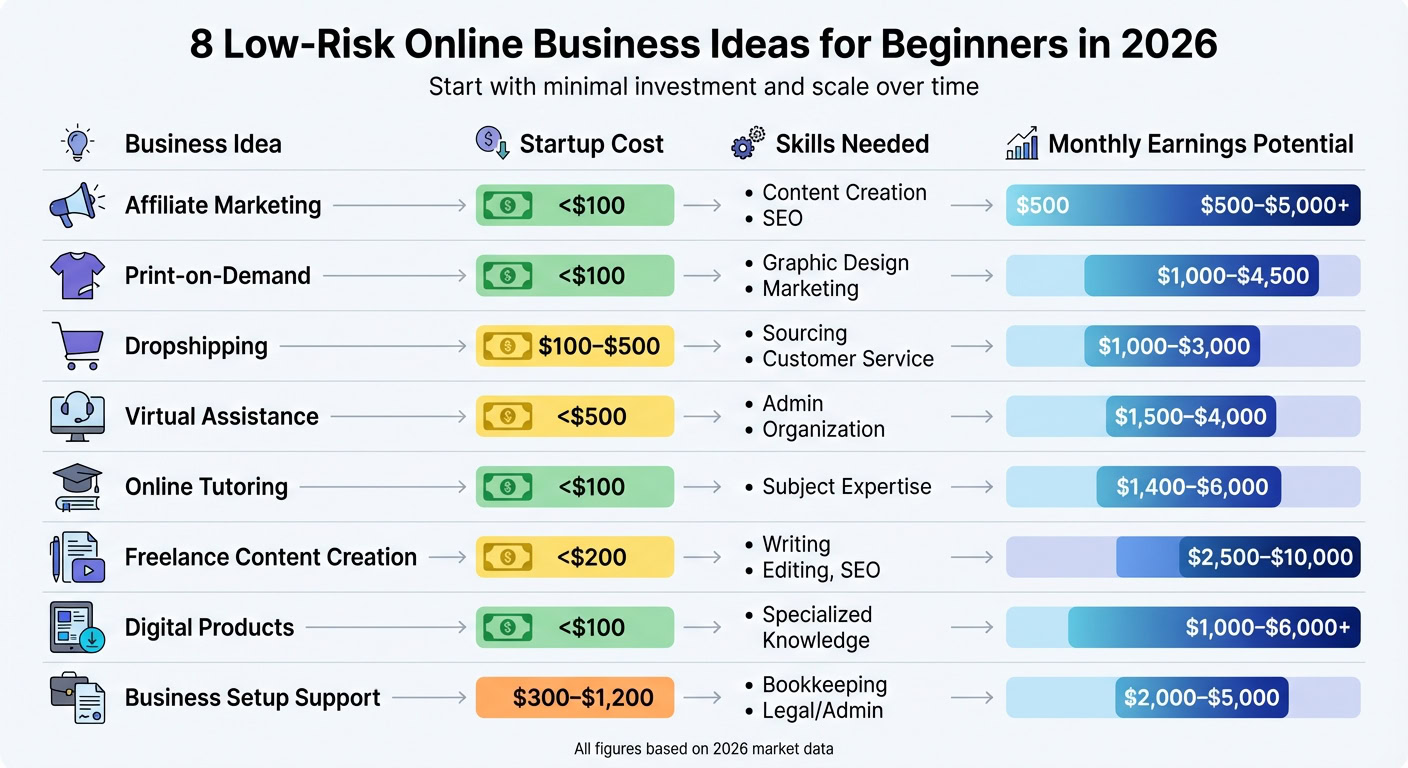
Here’s a quick overview of eight online business ideas:
- Affiliate Marketing: Promote products for commissions using blogs or social media.
- Print-on-Demand: Learn how to start a print-on-demand business to sell custom merchandise without holding inventory.
- Dropshipping: Run an online store where suppliers handle shipping.
- Virtual Assistance: Offer remote administrative or technical support.
- Online Tutoring: Teach subjects or skills you’re knowledgeable in.
- Freelance Content Creation: Write, design, or create user-generated content for brands.
- Digital Products: Sell templates, e-books, or courses online.
- Business Setup Support: Help others with software setup or business registration.
Each idea has low entry barriers and can generate steady income. For example, affiliate marketers can earn $500–$5,000+ monthly, while freelance content creators can make up to $10,000 per month. Tools like Shopify, Canva, and platforms like Etsy or Upwork make it easy to start.
Quick Comparison:
| Business Idea | Startup Cost | Skills Needed | Monthly Earnings |
|---|---|---|---|
| Affiliate Marketing | <$100 | Content Creation, SEO | $500–$5,000+ |
| Print-on-Demand | <$100 | Graphic Design, Marketing | $1,000–$4,500 |
| Dropshipping | $100–$500 | Sourcing, Customer Service | $1,000–$3,000 |
| Virtual Assistance | <$500 | Admin, Organization | $1,500–$4,000 |
| Online Tutoring | <$100 | Subject Expertise | $1,400–$6,000 |
| Freelance Content Creation | <$200 | Writing, Editing, SEO | $2,500–$10,000 |
| Digital Products | <$100 | Specialized Knowledge | $1,000–$6,000+ |
| Business Setup Support | $300–$1,200 | Bookkeeping, Legal/Admin | $2,000–$5,000 |
Pick a model that aligns with your skills and interests, and start small. Many platforms and tools make launching easy and affordable, so you can focus on growing your business.
1. Affiliate Marketing
Affiliate marketing lets you earn commissions by promoting products through unique tracking links. The best part? You don’t need to create your own products, manage inventory, or handle customer service. Brands pay you only when someone makes a purchase using your link. In 2024, affiliate marketing contributed to approximately $113 billion in U.S. ecommerce sales, with over 80% of advertisers incorporating affiliate programs into their strategies.
Getting started is incredibly affordable. Many affiliate programs, like Amazon Associates, AWIN, and CJ Affiliate, are free to join. You can promote products on free platforms like social media or start a blog for just $10–$15 a year for a domain name, plus a small hosting fee. These minimal costs make it possible to dive in without a hefty upfront investment.
"Serving before you sell – if I could tattoo that on my forehead, it is like my biggest business mantra."
- Tori Dunlap, founder of Her First 100K
To stand out, focus on a specific niche. For example, instead of targeting "business", narrow it down to something like "running an eBay business." This approach helps you establish authority more quickly. Content like product reviews, comparison guides, and "best of" lists are especially effective at attracting users who are actively researching their next purchase.
Consider this: In 2024, Amazon Influencer Tyler Christensen earned $17,000 from a single product review video. By consistently creating five review videos each week, he brought in around $25,000 annually. On average, affiliate marketers earn about $53,167 per year, with top earners reaching six- or even seven-figure incomes.
To comply with FTC guidelines, always include clear disclosures, such as "Paid link" or "I earn a commission from qualifying purchases". It’s also smart to build an email list early on using free tools like MailerLite. This gives you direct access to your audience, helping you reduce reliance on unpredictable social media algorithms.
sbb-itb-ba0a4be
2. Print-on-Demand
Print-on-demand (POD) allows you to sell custom products – like t-shirts, mugs, or tote bags – without the hassle of managing inventory. A third-party service handles everything: printing, packaging, and shipping orders as they come in. This means you don’t need to invest in stock upfront or worry about storage space.
The industry is booming. In 2024, the global POD market was valued at approximately $10 billion and is projected to grow to around $37.85 billion by 2030, with an annual growth rate of 25–26%. Over 10 million merchants are already leveraging platforms like Printify to run their businesses.
Getting started is relatively affordable. Initial expenses range from $50 to $500, covering design tools, website setup, and product samples. Monthly costs for running your store typically fall between $20 and $150. Profit margins generally hover between 10% and 30%, meaning you can expect to earn about $3–$10 per product sold.
"I don’t have to invest the money I can’t lose into my business. With Printify, I only pay the fulfillment fees, and the rest is all profit."
- Liora Goren, Ahavti Lifestyle
To succeed, focus on specific niches – like "Shiba Inu moms" or "CrossFit enthusiasts" – to establish a loyal audience. Always order samples to ensure quality and shipping standards meet your expectations. You can create designs using free tools like Canva or hire budget-friendly freelancers. This creative and low-risk business model is an excellent option for beginners looking to dive into online entrepreneurship.
3. Dropshipping
Dropshipping lets you run an online store without the hassle of managing inventory. Here’s how to start a dropshipping store: when a customer places an order, a third-party supplier takes care of storing, packaging, and shipping the product. You earn the difference between your selling price and the supplier’s cost. This straightforward business model has gained popularity thanks to its low barrier to entry and potential for profits.
The numbers speak for themselves – the global dropshipping market is expected to reach $476.1 billion by 2026. Startup costs typically range from $150 to over $2,600, and profit margins hover between 20% and 50%, making it a practical choice for newcomers.
However, recent regulatory changes have shaken things up. Starting May 2, 2025, the removal of the "de minimis exemption" introduced fees of $100 per item in May and $200 in June. As a result, many dropshippers are now turning to domestic suppliers like Zendrop and DropCommerce. These platforms not only offer faster shipping times (3–8 days) but also provide better quality control.
"The reason why you’re starting a dropshipping company is because you don’t have the cash upfront. So, you have to learn the things that you need to be able to do instead of hiring people to do it for you." – Selom Agbitor, Co-founder, Mad Rabbit
Picking the right niche is critical. A great example is John Murphy, who in 2025 built his business, eBike Generation, into a $3 million success by focusing solely on electric bikes for hunters. To ensure you’re delivering quality, order product samples to test both quality and shipping times. Additionally, tools like DSers and Shopify Collective can help you automate tasks, sync inventory, and reduce errors.
4. Virtual Assistance
Starting a virtual assistance business is surprisingly affordable. With just a laptop and internet connection, you can get started for under $100 – enough to cover basic software subscriptions and a domain name. As a virtual assistant, you’ll provide remote administrative, technical, or creative support to clients looking for help managing their tasks. This simple setup can lead to competitive hourly earnings.
In the U.S., beginner virtual assistants typically earn between $15 and $25 per hour, while seasoned professionals can charge $50 or more. On average, the hourly rate is about $27.05. With nearly half (49%) of employed adults now working from home most or all of the time, the demand for remote administrative support is higher than ever.
Specializing in a niche can significantly boost your income. Instead of offering general administrative services, think about focusing on areas like real estate, e-commerce, or bookkeeping. Kristi DaSilva, a virtual assistant and systems expert, shared how specializing transformed her business:
"I increased my rates from $30–$40 to $300 per strategy session".
To secure your first clients, consider joining freelance platforms, tapping into your personal network, or directly pitching your services to potential clients. These steps help you build a portfolio and gain testimonials quickly.
Once you start working with clients, streamlining your workflow is essential. Tools like Google Workspace or Microsoft 365 can simplify document and schedule management. Platforms such as Asana or Trello are great for tracking projects, while accounting apps like QuickBooks or FreshBooks make invoicing hassle-free. As your business grows, transitioning clients to monthly retainer packages can provide steady, predictable income.
5. Online Tutoring
Online tutoring is a flexible way to earn money, requiring just a laptop, internet access, and expertise in a subject. In the U.S., private tutors earn an average of $22 per hour, with those having one to two years of experience making between $14,000 and $42,000 annually. For part-time tutors, monthly earnings typically range from $400 to $1,500.
To maximize your income, focus on areas with high demand. Subjects like STEM (math, science, coding), standardized test prep (SAT, ACT, LSAT), or English language instruction often attract students willing to pay higher rates. Specialized test preparation can be especially lucrative – some SAT courses, for example, charge up to $899. NerdWallet highlights the appeal of STEM tutoring:
"Starting a tutoring business focused on STEM subjects (science, technology, engineering and math) is great because they are in-demand skills."
If you’re just starting out, joining established platforms like Preply, Wyzant, or Outschool can help you find students quickly. For example, in 2022, Devyn Ricks earned approximately $4,000 per month part-time on Outschool by teaching video game classes. Charging $13 per student in classes of 10–12 students, she earned nearly $200 per teaching hour. Keep in mind that these platforms often take a commission of around 30%.
To deliver effective lessons, equip yourself with the right tools. Use video conferencing software like Zoom or Google Meet, a collaborative whiteboard such as BitPaper or Zoom Whiteboard, and a scheduling system to manage lessons and payments. A good-quality webcam, a noise-canceling headset, and a quiet, well-lit workspace with a neutral background will enhance your professionalism during sessions.
Attract new students by offering a free 30-minute trial session. This not only showcases your teaching skills but also helps secure testimonials. As TutorCruncher advises:
"The most important thing to remember is that organization is key. If you can stay organized and provide structured and purposeful lessons, then success should follow."
6. Freelance Content Creation
Freelance content creation is a fantastic way for beginners to dip their toes into the world of online business. Whether it’s crafting user-generated content (UGC) or writing SEO-focused articles, the opportunities are plentiful. Here’s why: global SEO spending is expected to hit $108.89 billion by 2026, and nearly 28% of skilled knowledge workers are now freelancers or independent professionals. Among these opportunities, UGC shines as a beginner-friendly option.
Creating UGC is particularly appealing because it doesn’t require a massive social media following. You can create relatable product videos for brands to feature in their ads or social media campaigns. Plus, UGC is effective – shoppers who engage with it are 144% more likely to make a purchase compared to those who don’t. To get started, try making sample videos for brands you already use and love, then pitch your work directly to them.
If writing is more your thing, freelance SEO content is in constant demand as businesses invest heavily in digital marketing. Beginners can find gigs on platforms like Upwork, Fiverr, or LinkedIn. You don’t need a fancy website to showcase your work – a simple, polished one-page portfolio created with Notion or Canva does the trick. As the Upwork Team puts it:
"A simple, professional way to show your work is more important than a full website when you’re just starting out."
This straightforward approach can help you land your first projects and build a solid reputation.
For entry-level freelancers, the average pay is around $24 per hour. Freelance content creation is a low-risk way to start small while growing a scalable income stream. Client reviews and referrals will play a big role in building credibility, so don’t hesitate to tap into your personal network. Let friends, former colleagues, and connections know about your new services. This flexible, low-investment path can serve as a stepping stone to a broader online business portfolio.
7. Digital Products
Digital products are an appealing option for anyone exploring online businesses with minimal risk. They offer a scalable model without the hassle of managing inventory or dealing with shipping costs. Once you’ve created your product, it can be sold repeatedly with little ongoing effort. Many beginners start with free tools like Google Docs for e-books or Canva for graphics before moving on to premium software.
Consider this: creators on the MemberPress platform collectively generate over $1 billion annually from memberships and courses. Meanwhile, self-published authors earn an average of $82,607 per year. A great example is TikTok creator Mia Steele, who transitioned into selling digital products in 2022. In just seven months, she built a 3,000-subscriber email list and earned over $90,000 in commissions and product sales.
Before diving in, validate your idea using free tools like Google Trends to confirm there’s steady or growing interest in your niche. Some of the most popular digital products include templates (like Notion planners or travel spreadsheets), online courses, and e-books. For instance, AI prompt engineering courses experienced a 195% surge in popularity in 2025. Platforms like Etsy, Udemy, or Payhip make it easy to start selling without the need for a website or costly advertising.
Building an email list is crucial for long-term success. Mia Steele highlights the importance of starting early:
"Building your email list from day one. I underestimated the power of an email list until I ventured into affiliate marketing, and I regretted not starting earlier".
To grow your email list, offer incentives like a free guide or a 10% discount to encourage visitors to subscribe. This gives you direct access to potential customers without relying solely on social media.
Tools like Zapier can help automate instant downloads after purchase. You can also boost profits by bundling related products – for example, pairing an e-book with a template or workbook. This approach allows you to test different offerings, refine your strategy, and scale what works, all without significant upfront costs.
8. Business Setup Support
Specialized Software Setup Services
Help entrepreneurs get their businesses off the ground by setting up essential software tools. This type of service doesn’t require a big upfront investment – just the time it takes to master platforms like ClickUp, HoneyBook, QuickBooks, or Asana.
These tools are already widely used by businesses, making this a service with built-in demand. For instance, WordPress powers over 43% of all websites globally, ensuring a steady need for setup assistance. Meanwhile, small businesses are embracing new technologies at a rapid pace – 40% used generative AI in 2024, almost doubling from 2023.
Take virtual assistant Kristi DaSilva as an example. She shifted her focus from general administrative tasks to specializing in ClickUp and HoneyBook setups. By creating YouTube tutorials to address common software challenges, she not only built her expertise but also significantly increased her earnings:
"I went from making about $30-40 an hour as a VA, where now I charge $300 an hour for a strategy session."
Freelance platforms are a great place to find clients actively seeking setup help. The virtual assistant market is growing fast, projected to hit $29 billion by 2031, up from $8 billion in 2023. Tasks like domain registration and WordPress installation are quick and efficient, often taking just 10 minutes with standard setup wizards. This allows you to deliver results swiftly, impressing clients and building a strong portfolio.
For entrepreneurs needing more comprehensive support, services like BusinessAnywhere simplify the entire process. From U.S. business registration to EIN applications and compliance tools, everything is managed through a single dashboard at https://businessanywhere.io.
Conclusion
Starting an online business doesn’t have to drain your bank account or require years of experience. These eight business models – from affiliate marketing to offering business setup support – show that anyone with a computer and internet connection can step into entrepreneurship.
In the second quarter of 2025, U.S. online sales hit an impressive $304.2 billion, highlighting the booming digital economy and the growing demand for online ventures. As Cynthia Franklin, Director of Entrepreneurship at NYU, wisely advises:
"If you want to start a business, don’t pay attention to the headlines. Instead, look around you for opportunity or gaps where the status quo could be better for somebody and then work to fix it."
Tools like BusinessAnywhere make the process of starting a business straightforward. From starting an LLC to securing an EIN and managing compliance, they handle the paperwork so you can focus on growing your business. Plus, their services start at $0 (state fees apply) and include a free first year of registered agent service.
The time is now: pick a business model that aligns with your strengths, set up your legal foundation through BusinessAnywhere, and start building your dream venture today.
FAQs
What are the best low-risk online business ideas for beginners with little experience?
If you’re just starting out in the online business world and don’t have a specific skill set yet, don’t worry – there are plenty of beginner-friendly ways to get started that don’t require much experience or a big budget:
- Affiliate Marketing: Share product links on platforms like a blog, social media, or YouTube. When someone buys through your link, you earn a commission. No need to worry about inventory or creating your own products – just focus on promoting what’s already out there.
- Print-on-Demand: Got a knack for simple designs? Platforms let you upload your creations, and they handle the printing and shipping for items like t-shirts or mugs. You only pay after you make a sale, so there’s no risk of leftover inventory.
- Virtual Assistance: Help small businesses or busy professionals with tasks like managing emails, scheduling, or data entry. All you need is a computer, a reliable internet connection, and some organizational skills.
- Content Creation: Whether it’s a blog, YouTube channel, or podcast, you can start creating content and earn money through ads, sponsorships, or affiliate links. A smartphone or a free website builder is often enough to kick things off.
- Social Media Management: Many local businesses need help maintaining their social media presence. If you’re familiar with platforms like Instagram, Facebook, or TikTok, you can assist with posting, engaging with followers, and tracking basic performance metrics.
These options are perfect for beginners because they’re affordable to start (often under $100), can be set up quickly, and give you room to learn and grow as you gain more experience.
How can I make sure my affiliate marketing complies with FTC guidelines?
To stay on the right side of FTC guidelines in affiliate marketing, you must clearly and openly disclose whenever you promote products or services and earn a commission. In simple terms, your audience needs to know that you might receive compensation if they make a purchase through your affiliate links.
These disclosures should be easy to spot and understand. Place them near the affiliate link or within the content where the product is being promoted – don’t hide them in fine print or obscure sections. On top of that, always share your genuine experiences with the products you recommend. Being upfront and honest helps build trust and keeps your relationship with your audience strong.
What are the best tools to manage a dropshipping business effectively?
To keep your dropshipping business running smoothly, you’ll need a few key tools to handle storefront management, payment processing, and order tracking.
For your storefront, platforms like Shopify are a great choice. They let you build a professional online store, manage your inventory, and even automate order fulfillment. It’s especially handy for beginners looking for an all-in-one solution. Combine this with a trusted payment processor like PayPal to ensure secure transactions and hassle-free payouts directly to your bank account.
Staying organized is just as important. Tools like Google Analytics can help you track website traffic and understand customer behavior. When it comes to order tracking, you can use free spreadsheets or budget-friendly apps like ShipStation to keep your fulfillment process on schedule without adding extra costs. Together, these tools make it easier to manage your business and minimize potential hiccups along the way.