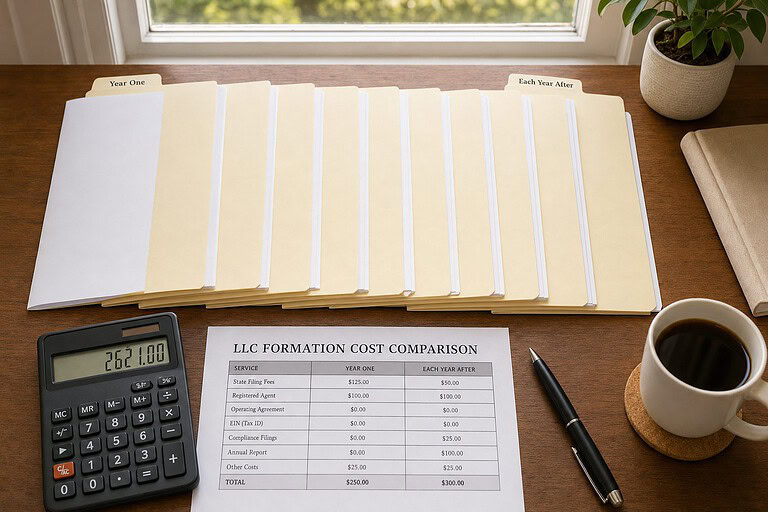


Filing the Articles of Organization in New Hampshire officially establishes your LLC, protecting your personal assets and giving your business legal recognition. Here’s a quick overview of the process:
- Cost: $100 filing fee.
- Processing Time: 1–3 business days for online filings; mail filings take longer.
- Key Requirements:
- Unique LLC name with "LLC" or "Limited Liability Company."
- Principal office address (no P.O. boxes).
- Registered agent with a physical New Hampshire address.
- Specific business purpose description.
- Management structure (member-managed or manager-managed).
After approval, you can apply for an EIN, open a business bank account, and start operations. Stay compliant by filing an annual report ($100) between January 1 and April 1 and submitting a BOI report to FinCEN within 30 days of formation.
Filing online is faster and reduces errors. Follow these steps to set up your LLC smoothly and ensure compliance.
What Are Articles of Organization?
In New Hampshire, the Articles of Organization – sometimes called a Certificate of Formation – are the official documents that establish your LLC. These articles create your LLC as a separate legal entity, distinct from its owners.
While an operating agreement outlines how your LLC will function on a daily basis, the Articles of Organization are what legally bring your LLC into existence. Filing them is a mandatory step, while creating an operating agreement is optional.
To complete this filing, you’ll need to include specific details about your LLC, such as:
- The LLC name, which must include "Limited Liability Company", "LLC", or "L.L.C."
- The principal office address in New Hampshire.
- The name and address of your registered agent.
- A detailed statement describing your business purpose. (Note: New Hampshire won’t accept vague phrases like "any lawful business"; you must specify what your LLC will actually do.)
By filing these articles, you initiate the legal framework that governs your LLC and provides critical protections.
Purpose and Legal Requirements
So, why does New Hampshire require Articles of Organization? It’s because these documents serve as the official record that your LLC exists and is authorized to operate in the state. Without filing them, your business has no legal standing. This means you wouldn’t be able to open a business bank account, sign contracts in the LLC’s name, or benefit from the liability protections that make forming an LLC worthwhile.
Once filed and approved, these articles provide a protective barrier – often called the "corporate veil" – that separates your personal assets from your business liabilities. If your LLC faces lawsuits, debts, or other legal issues, only the LLC’s assets are at risk. Your personal assets, like your home or personal bank accounts, remain protected.
However, this protection isn’t automatic. To maintain it, you’ll need to keep your personal and business affairs completely separate. While New Hampshire doesn’t require an operating agreement, creating one and keeping detailed business records are essential steps to uphold this legal shield.
Benefits of Filing
Filing Articles of Organization comes with several important benefits:
- Personal liability protection: This is one of the biggest perks of forming an LLC. If your business faces legal claims or financial troubles, creditors can only go after the LLC’s assets – not your personal property.
- Access to business banking: Once your Articles of Organization are approved, you can open a business bank account. Banks will also require an Employer Identification Number (EIN) to set up the account. A business account not only helps protect your liability shield but also simplifies managing taxes.
- Increased credibility: A formally registered LLC often appears more professional and trustworthy to customers, vendors, and lenders. This credibility can help you secure better deals with suppliers and even qualify for business loans or lines of credit.
- Contract authority: Filing allows you to sign contracts in the name of your LLC rather than as an individual. This distinction protects you personally in case of disputes or contract breaches, as you’re acting on behalf of the business entity.
- EIN eligibility: With your approved Articles of Organization, you can apply for an Employer Identification Number from the IRS. An EIN is necessary for hiring employees, filing business tax returns, and opening business accounts.
- Tax flexibility: LLCs offer several options for taxation. You can choose to be taxed as a sole proprietorship (for single-member LLCs), a partnership (for multi-member LLCs), or even as an S or C corporation. Combined with New Hampshire’s lack of state income tax, this flexibility can make the state particularly appealing for business owners aiming to optimize their tax situation.
These benefits highlight why filing Articles of Organization is such a crucial step in forming your LLC. It’s not just about meeting legal requirements – it’s about setting your business up for success.
Information Required for New Hampshire Articles of Organization
To successfully file your Articles of Organization in New Hampshire, you’ll need to provide specific details. Gathering this information beforehand ensures accuracy and helps you avoid delays in the filing process. Below are the key pieces of information required.
Required Information
When filing a Certificate of Formation in New Hampshire, you must include five essential details to establish your LLC legally:
LLC Name:
Your LLC’s name must be unique and include a required designator such as "Limited Liability Company", "LLC", or "L.L.C." It cannot resemble government entities or use restricted terms. Use the Secretary of State’s business record database to confirm the name’s availability.
Principal Office Address:
Provide a physical street address in New Hampshire. Note that P.O. boxes are not accepted.
Registered Agent Information:
You’ll need to supply the full name and a physical New Hampshire address for your registered agent.
Management Structure:
Indicate whether your LLC will be member-managed or manager-managed.
Business Purpose:
Clearly describe your LLC’s primary business activity. Avoid using vague or overly broad language.
Submitting accurate and complete information is critical. Errors or omissions are one of the most common reasons for filing rejections, which can delay the approval process for your LLC.
Optional Provisions
While not mandatory, you can include additional provisions in your Articles of Organization to address specific operational or governance preferences. These provisions often complement details outlined in a separate Operating Agreement.
Duration or Term:
You can specify an end date for your LLC if it’s intended to operate for a limited time, though most LLCs are set up with perpetual duration.
Additional Management and Governance:
Optional details, such as member transfer restrictions or profit and loss distribution, can be included. However, these are usually better addressed in an Operating Agreement, as it allows for easier updates.
Indemnification and Liability Provisions:
Some LLCs include clauses to protect members and managers from certain liabilities. These provisions are also better suited for an Operating Agreement.
Although an Operating Agreement is not required by law, it’s highly recommended for defining internal governance and operational rules. Once all the necessary information is ready, you can proceed to file your Articles of Organization.
Step-by-Step Filing Process
Here’s a straightforward guide to help you file your LLC correctly and avoid unnecessary delays.
Step 1: Choose an LLC Name
Start by selecting a name for your LLC that complies with New Hampshire’s rules. The state requires every LLC name to include "Limited Liability Company", "LLC", or "L.L.C." to clearly signal the business structure to the public.
Your chosen name must be unique and not conflict with existing business names already registered with the New Hampshire Secretary of State. Use the Secretary of State’s business record database to check name availability before finalizing your decision. This step ensures your name is eligible and avoids issues during the application process.
If your desired name includes restricted terms like "bank", "attorney", or "university", additional documentation will be required, and a certified professional (e.g., a doctor or lawyer) must be listed as a member of the LLC. Also, steer clear of words that could be mistaken for government agencies, such as "FBI", "Treasury", or "State Department."
Double-check your name’s compliance and availability to prevent rejections. It’s wise to have a few backup names ready just in case.
Step 2: Appoint a Registered Agent
Every LLC in New Hampshire must designate a registered agent. This agent acts as the official recipient for legal notices and government correspondence. The registered agent must have a physical address in New Hampshire (P.O. boxes are not allowed) and be available during standard business hours.
You can appoint yourself, another LLC member, or hire a professional registered agent service. Make sure to include the agent’s name and address in your Articles of Organization, as this information becomes part of the public record.
Step 3: Complete the Articles of Organization Form
To officially establish your LLC in New Hampshire, you’ll need to fill out the Certificate of Formation (Form LLC-1). This document requires detailed information, including your LLC’s name (with the correct suffix), the principal office address, the registered agent’s name and address, and a description of your business.
When describing your business purpose, be specific – general statements like "any lawful business" won’t be accepted. Starting in 2025, you’ll also need to provide details about beneficial owners, which include individuals owning 25% or more of the LLC, those with significant control, or those receiving substantial economic benefits. Be prepared to submit each beneficial owner’s name, address, and identifying documents.
Depending on your situation, you might also need to attach an addendum (Form SRA) to your Certificate of Formation. Avoid common mistakes like forgetting the LLC name suffix, leaving out the registered agent’s details, or providing vague business purpose statements.
Step 4: Submit the Filing
You can file your Certificate of Formation either online or by mail. Both methods are available through the New Hampshire Secretary of State.
Online filing is the faster option. Submitting your Certificate of Formation through the state’s website gives you instant confirmation and a processing time of 1–3 business days. If you choose to file by mail, you’ll need to print Form LLC-1, fill it out, and send it with a check or money order. Keep in mind that mail filings typically take longer to process.
Once your filing is approved, you’ll receive confirmation from the state, officially recognizing your LLC as a legal entity in New Hampshire. If your LLC is formed in 2025 or later, you’ll have just 30 days after approval to file your beneficial owner information (BOI) report. Preparing this information ahead of time will help you meet this deadline without stress. Finally, make sure to review the associated fees and processing times detailed in the next section.
Fees and Processing Times
Getting a clear picture of costs and timelines can make forming your LLC in New Hampshire a smoother process. The state keeps things simple with a flat fee structure and predictable processing times.
Filing Fees and Additional Costs
To legally establish your LLC in New Hampshire, you’ll need to pay a $100 filing fee for the Certificate of Formation, regardless of whether you file online or by mail.
There are also optional costs you might encounter depending on your needs. For instance:
- Reserving your LLC name: This costs $15.
- Registering a DBA (Doing Business As): You’ll need to file Form TN-1 and pay $50.
Once your LLC is approved, you’ll need an Employer Identification Number (EIN) from the IRS for tax purposes and to open a business bank account. The good news? Applying for an EIN through the IRS website is completely free – no additional fees required.
New Hampshire also requires LLCs to file an annual report each year, with a filing fee of $100. This report is due between January 1 and April 1. Missing this deadline can lead to the administrative dissolution of your LLC, so it’s important to plan for this recurring expense.
Depending on your business type, you might also need additional permits, such as sales tax or withholding permits. These costs vary based on the specific permit and are separate from the standard LLC formation fees.
With the costs outlined, let’s take a look at how long the processing takes based on your filing method.
Processing Times by Filing Method
How quickly your LLC is formed will depend on the filing method you choose. Both online and mail filings carry the same $100 fee, but the timelines are noticeably different.
- Online Filing: Filing through the New Hampshire Secretary of State’s website is the fastest option. Once you submit your Certificate of Formation online, you’ll receive immediate confirmation, and processing generally takes 1–3 business days. This method is ideal if you’re looking to get your LLC approved quickly.
- Mail Filing: Filing by mail using Form LLC-1 is slower due to the time it takes for physical documents to be processed. While the state doesn’t specify an exact timeline, mail filings consistently take longer than online submissions.
Since both methods cost the same, online filing is the better choice for speed and convenience. By filing online, you avoid delays and can move on to the next steps – like obtaining your EIN, setting up a business bank account, and starting operations – much faster.
Note: You’ll also need to file the BOI report within 30 days of your LLC’s approval. With these timelines in mind, you’ll be well-prepared to handle the next steps efficiently.
sbb-itb-ba0a4be
After Filing: Next Steps
With your LLC officially formed, there are a few key steps to take to ensure your business operates smoothly and stays compliant.
Obtain an EIN
An Employer Identification Number (EIN) is a nine-digit tax ID issued by the IRS. It’s essential for opening a business bank account, hiring employees, and meeting federal tax requirements. Even if you’re a single-member LLC, having an EIN helps maintain a clear distinction between your personal and business finances.
Getting an EIN is straightforward and free when you apply directly through the IRS website. You’ll need your approved Certificate of Formation handy, as it contains the necessary legal details for the application. If you apply online, you’ll usually receive your EIN immediately. For mail applications, processing can take up to two weeks.
Once you have your EIN, you can set up a business bank account to keep your finances organized and separate from personal accounts. For assistance with the EIN application process, services like BusinessAnywhere can provide support.
Create an Operating Agreement
Although New Hampshire doesn’t require LLCs to have an Operating Agreement, drafting one is a smart move. This document lays out how your LLC will function, covering member contributions, profit and loss sharing, management roles, and procedures for major decisions like adding new members or handling a member’s exit.
For single-member LLCs, an Operating Agreement reinforces the separation between personal and business activities. For multi-member LLCs, it helps avoid disputes by clearly defining responsibilities and governance rules. It also strengthens the liability protection your LLC provides.
Your Operating Agreement should include details like your business name, address, registered agent information, purpose, ownership structure, profit-sharing arrangements, and management setup (whether member-managed or manager-managed). It also allows you to establish your own rules instead of defaulting to New Hampshire’s state guidelines. If you need help creating a tailored Operating Agreement, services like BusinessAnywhere can assist.
Meet Ongoing Compliance Requirements
Forming your LLC is just the first step – remaining compliant with state and federal regulations is crucial to keeping your business in good standing.
Annual Report: Every year, you’ll need to file an annual report with the Secretary of State between January 1 and April 1. The fee is $100. This report includes details like member or manager names and addresses, your principal office location, and updates to your registered agent or office. Missing the April 1 deadline could lead to administrative dissolution of your LLC, which would terminate its legal status and require a new formation process.
Beneficial Ownership Information Report (BOIR): Submit a BOI report to FinCEN within 30 days of your LLC’s approval. A beneficial owner is defined as anyone who owns at least 25% of the business, has significant control, or benefits financially from it. For each beneficial owner, you’ll need to provide their name, address, and identification documents. Late filings can result in substantial penalties.
Industry-Specific Permits: Depending on your business type, you may need additional licenses or permits. If your LLC operates outside New Hampshire, you might also need non-resident permits. Businesses using restricted words in their names – like "bank", "attorney", or "university" – may require extra documentation or a certified professional as a member of the LLC.
To simplify compliance, services like BusinessAnywhere can provide reminders for filing deadlines, help with BOIR submissions, and assist with ongoing maintenance tasks to keep your LLC in good standing. Staying on top of these requirements is essential for protecting your LLC’s legal status and ensuring its long-term success. Completing these steps promptly will help you fully activate your New Hampshire LLC.
Common Mistakes to Avoid
Filing your Articles of Organization correctly the first time can save you a lot of time and money. Here are some common missteps to watch for and tips to ensure your filing goes smoothly.
Incomplete or Incorrect Information
Errors related to your LLC’s name are a frequent cause of rejection. Make sure your LLC name includes the required designator – such as "limited liability company", "limited company", or "ltd." – and that it’s unique compared to existing businesses. You can use the New Hampshire Secretary of State’s business name search tool to confirm availability before filing. If you’re not ready to file but want to secure the name, you can reserve it for 120 days by submitting Form 1 and paying a $15 fee.
Be mindful of restricted words like “bank,” “attorney,” or “university.” Using these terms without proper documentation or certified members can lead to rejection.
Another common issue involves registered agent information. The state requires a physical street address for your registered agent – P.O. Boxes are not allowed. Providing incomplete or incorrect details could mean missing important legal notices or compliance deadlines. Verify that your registered agent has a valid New Hampshire street address and has agreed to serve in this role. Be sure to include their full name and address accurately.
Business purpose statements also need attention. A vague description like "retail business" isn’t enough. Instead, provide a clear and specific purpose, such as “retail sale of athletic apparel and equipment” or “consulting services in digital marketing and social media strategy.” Ambiguous statements can delay your LLC formation.
Additionally, ensure that member and manager information is accurate. Misspelled names, incorrect addresses, or missing details can lead to complications down the road, including legal and tax issues. Double-check that all names and addresses match official records.
The filing method you choose matters, too. Filing online through the Secretary of State’s website offers built-in tools that catch missing fields or formatting errors before submission. This immediate feedback can help you avoid common mistakes. On the other hand, filing by mail doesn’t include these checks, and errors might not be noticed for weeks. Plus, online filings are processed faster – typically 1-3 business days – compared to the longer wait times for mail submissions.
Missed Deadlines
After forming your LLC, staying on top of deadlines is key to avoiding compliance issues. One of the most critical deadlines is the annual report. New Hampshire requires LLCs to file an annual report between January 1 and April 1 each year, along with a $100 filing fee. Missing this deadline could result in administrative dissolution, meaning your LLC loses its legal status and liability protection.
If your LLC is administratively dissolved, you’ll need to go through the entire formation process again, which can be costly and time-consuming. To avoid this, set up a compliance calendar and mark the April 1 deadline at least 30 days in advance. You might also consider using a business compliance service to automate reminders.
The annual report includes key details about your LLC, such as the names and addresses of members or managers, the principal office address, and any updates to your registered agent or office.
Another critical deadline is for the Beneficial Ownership Information Report (BOIR). This report must be submitted to FinCEN within 30 days of your LLC’s approval. Missing this deadline can result in hefty penalties, and many new business owners overlook this requirement or assume they have more time than they do.
Don’t forget about business license and permit renewals. While New Hampshire doesn’t require a general business license for all LLCs, industry-specific permits and local requirements may have their own renewal schedules. Missing these can result in fines or even prevent you from operating legally.
Lastly, if there are any registered agent changes, update this information immediately. Whether your agent moves, changes their address, or becomes unavailable, failing to file an amendment could mean missing important legal notices. This not only jeopardizes your liability protection but can also lead to missed deadlines for other compliance obligations. Staying current with these updates is essential to maintaining your LLC’s legal standing.
Conclusion
Filing your Articles of Organization officially turns your business idea into a New Hampshire LLC. In this guide, we’ve walked through everything you need to know – from selecting a compliant LLC name and appointing a registered agent to completing the filing process and staying compliant. Taking care of each step with precision can save you both time and money in the long run.
Accurate and timely filing is key to avoiding costly delays or rejections. Small mistakes, like forgetting to include the proper LLC designator in your business name or providing an incorrect address for your registered agent, can lead to significant setbacks. Filing online through BusinessAnywhere can help avoid these issues. Their platform not only speeds up processing to 1-3 business days but also helps identify errors before submission, making it a practical choice for most entrepreneurs. Keep in mind, compliance doesn’t stop after filing – missing the annual report deadline (April 1) could result in administrative dissolution, which means losing your LLC’s legal protections and having to start over.
BusinessAnywhere simplifies the entire process, allowing you to focus on growing your business. They handle everything from preparing your Articles of Organization and offering registered agent services (free for the first year) to sending reminders for critical compliance deadlines. With upfront pricing starting at $0 plus state fees, you get professional assistance without hidden costs.
"I opened up two new businesses in July that needed to be domiciled in a state that I wasn’t a resident. BusinessAnywhere has been so easy to use and their staff has been great." – Eric Ness
Now that you’ve reviewed the essential steps, you’re ready to move forward with confidence. Whether you’re a digital nomad, remote entrepreneur, or starting your first business, forming your New Hampshire LLC doesn’t have to be complicated. File accurately, stay compliant, and set your LLC on a path to success.
FAQs
What mistakes should I avoid when filing Articles of Organization in New Hampshire?
When submitting Articles of Organization in New Hampshire, careful attention to detail can help you avoid common errors that might slow down the process or even lead to rejection.
- Double-check your information: Ensure every detail is accurate, from your LLC name and registered agent information to your business address. Even small mistakes can cause delays.
- Follow naming rules for your LLC: Your LLC name must meet New Hampshire’s requirements. This includes adding "LLC" or "Limited Liability Company" and steering clear of restricted or misleading terms.
- Pay the correct filing fee: The filing fee is $100. Missing or incorrect payments could halt your application.
- Sign the form correctly: The organizer or an authorized individual must properly sign the document as required.
A thorough review of your application before submission can save you from unnecessary delays and extra effort.
What are the requirements for choosing a compliant LLC name in New Hampshire?
To make sure your LLC name meets New Hampshire’s rules, it needs to stand out from any existing business names in the state. The name must also include a legal identifier such as "LLC", "L.L.C.", or "Limited Liability Company" to reflect its structure. Be cautious about using restricted terms like "bank" or "insurance" unless you’ve secured the necessary permissions. To confirm if your desired name is available, use the New Hampshire Secretary of State’s business name search tool.
What should I do after my Articles of Organization are approved to stay compliant and maintain my LLC’s legal standing?
Once your Articles of Organization are approved, there are several important steps to keep your LLC compliant and in good standing:
- Get an EIN (Employer Identification Number): An EIN is essential for tax purposes, hiring employees, and opening a business bank account. You can easily apply for one through the IRS.
- File Your Annual Report: In New Hampshire, LLCs must file an annual report to keep business details current. Submit this on time to avoid any penalties.
- Maintain a Registered Agent: Your LLC must have a registered agent in New Hampshire to handle legal documents and official communications.
- Stay on Top of Taxes: Make sure you’re meeting both state and federal tax requirements, such as sales tax, income tax, or any other applicable taxes.
- Update Your Records: If your LLC experiences changes – like a new address or ownership adjustments – file the necessary updates with the state.
These steps will help ensure your LLC remains compliant and legally protected.