LLC

LLC vs Sole Proprietorship (2026): Liability, Taxes and Costs Compared
Explore the differences between sole proprietorships and LLCs to find the best business structure for freelancers and side hustlers.

Explore the differences between sole proprietorships and LLCs to find the best business structure for freelancers and side hustlers.
Learn essential guidelines for naming your LLC, including legal compliance, prohibited terms, and how to check name availability.

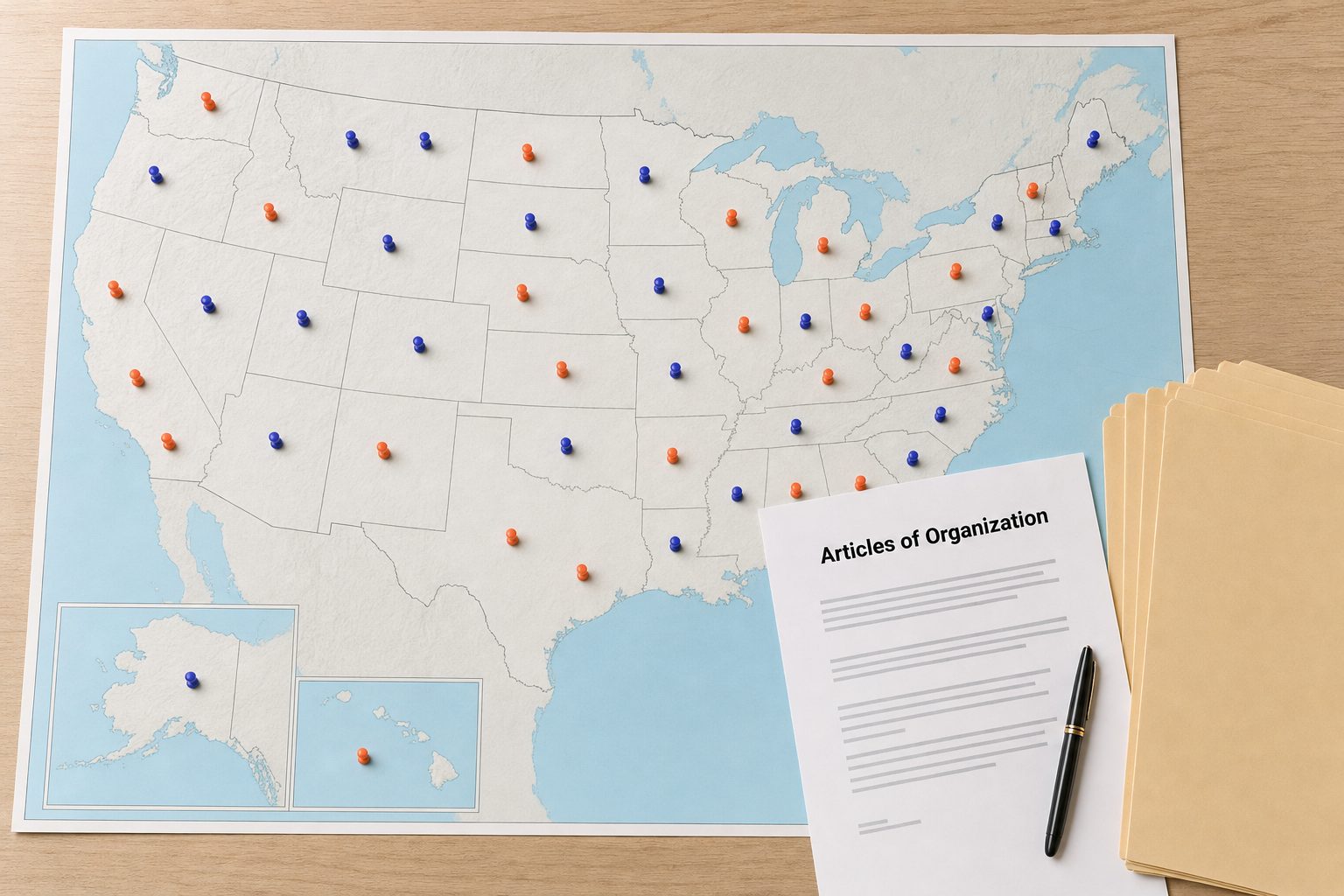
To start an LLC, you choose a compliant business name, appoint a registered agent, file Articles of Organization with your state, draft an operating agreement, obtain an EIN from the IRS, and register for any required state and local taxes. State filing fees range from $50 to $500 depending on the state, and most entrepreneurs complete the full process in 1 to 2 weeks. An LLC separates your personal assets from business debts and lawsuits while offering more tax flexibility than a sole proprietorship, making it the standard structure for digital entrepreneurs and remote business owners. This guide covers each step in detail, including exact costs, timelines, and state-specific requirements.

Proof of LLC ownership is a document that shows who owns your limited liability company and what share each member holds. Banks, lenders, landlords, the IRS and courts ask for it when you open an account, apply for credit, sell
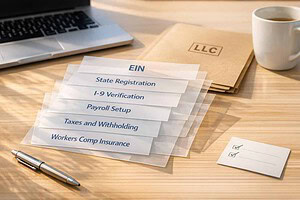
LLC hiring guide: get an EIN, register with state agencies, verify eligibility, set up payroll, and meet taxes & insurance requirements.

Today, out of millions of small businesses in the US, 43% of them are limited liability companies (LLCs). There’s a reason why almost half of small business owners choose this structure: the company’s debts and liabilities are separate from the