
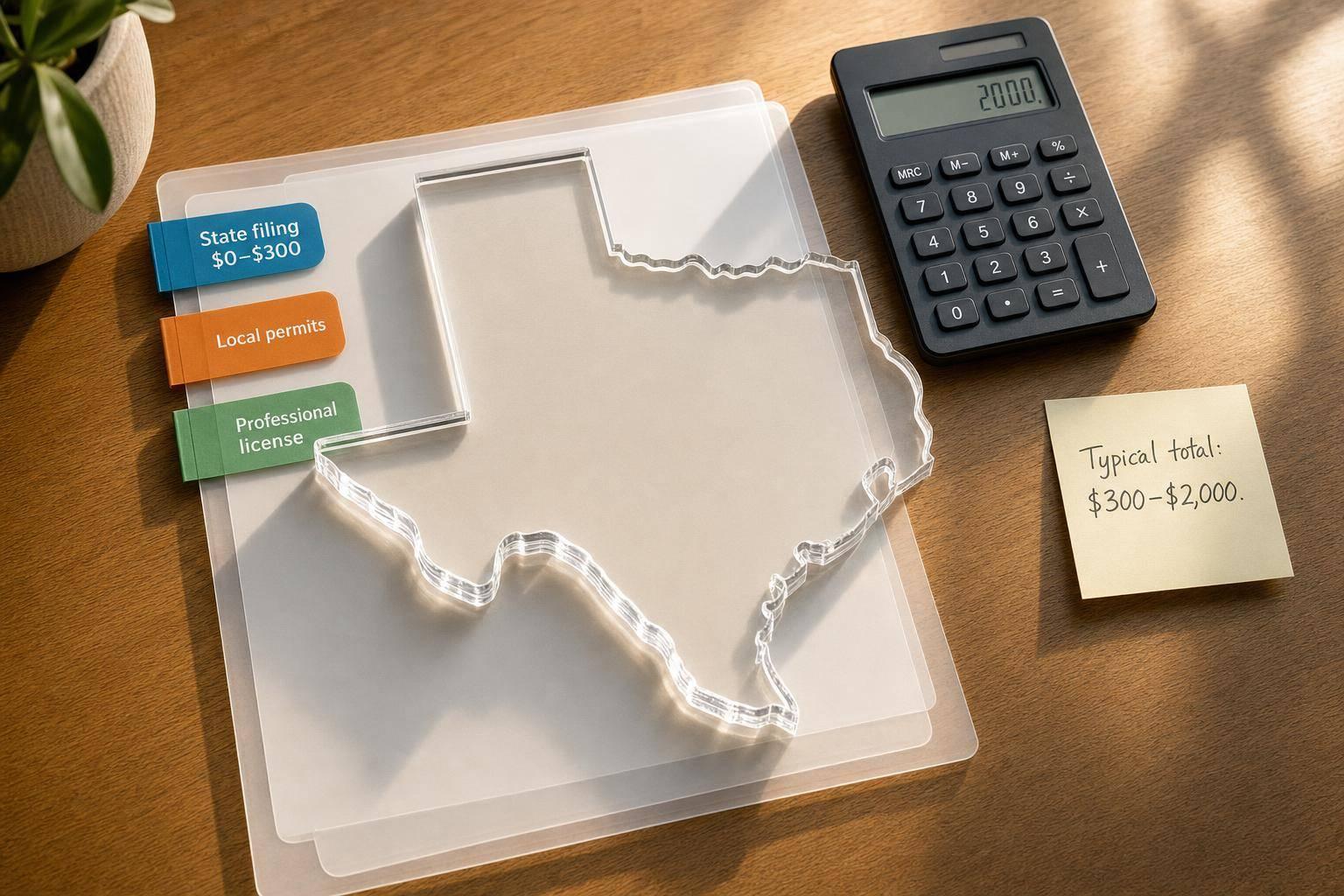
In Texas, there is no single statewide business license fee. What you pay usually starts at $0 to $300 at the state level, then goes up based on your city, county, and industry.
If I had to boil it down, most people in Texas deal with these costs first:
- LLC or corporation filing: $300
- Texas sales tax permit: $0
- DBA filing: about $15 to $25 at the county level, or about $25 at the state level
- Local permits: often $25 to $300
- Professional licenses: often $50 to $1,000+
That means many small businesses spend about $300 to $2,000 to get set up. A home-based business may stay near the low end. A retail shop, food business, or state-licensed business can pay much more.
Here’s the short version:
- If you form an LLC, expect the base filing cost to be $300
- If you sell taxable goods or services, your sales tax permit is free
- If you use a name different from your legal name, you may need a DBA
- If you open a physical location, local permits can add hundreds of dollars
- If you work in a regulated field, license fees and renewals can push total costs past $1,000
The big point: your Texas business license cost depends less on one fee and more on how many separate filings your business needs.
The Main Cost Categories for a Texas Business License
Start with state filings. Then layer on local permits and, if your field is regulated, board-issued license fees.
State Filing Costs: LLC Formation, Sales Tax Permit, and DBA Filings
State filings are the starting point. In Texas, the Certificate of Formation costs $300 for both LLCs and corporations.
A Texas sales tax permit is required if you make taxable sales, but the filing fee is $0.
If you plan to use a business name that’s different from your legal entity name, you’ll also need a DBA. A State DBA filing (Form 503) costs about $25, and a County DBA filing usually adds $15–$25.
Local License and Permit Fees from Cities and Counties
This is where costs can swing the most. City and county rules vary a lot, and a basic local business registration often falls between $25 and $300, depending on the municipality.
Storefront businesses tend to pay more because they often need several local approvals. That can include certificates of occupancy, health permits, fire inspections, and sign permits, each with its own fee. Home-based or online businesses usually spend less. In some cases, all they need is a home occupation permit or zoning clearance.
Professional and Industry License Fees
If your business sits in a regulated field, board fees go on top of everything else. Most professional license fees land between $50 and $500, though fields like legal, medical, and engineering can go past $1,000.
Many of these licenses renew every year or every two years, and renewal fees often apply. Those costs come from the issuing board, so it makes sense to budget for them separately.
| Cost Category | Estimated Fee | Renewal Cycle |
|---|---|---|
| Certificate of Formation (LLC/Corp) | $300 | One-time |
| Texas Sales Tax Permit | $0 | One-time |
| State DBA filing (Form 503) | ~$25 | One-time |
| County DBA filing | $15–$25 | One-time |
| Local Business Registration | $25–$300 | Often annual |
| Professional/Industry License | $50–$1,000+ | Annual or biennial; renewal fees apply |
sbb-itb-ba0a4be
What Different Texas Businesses Typically Pay
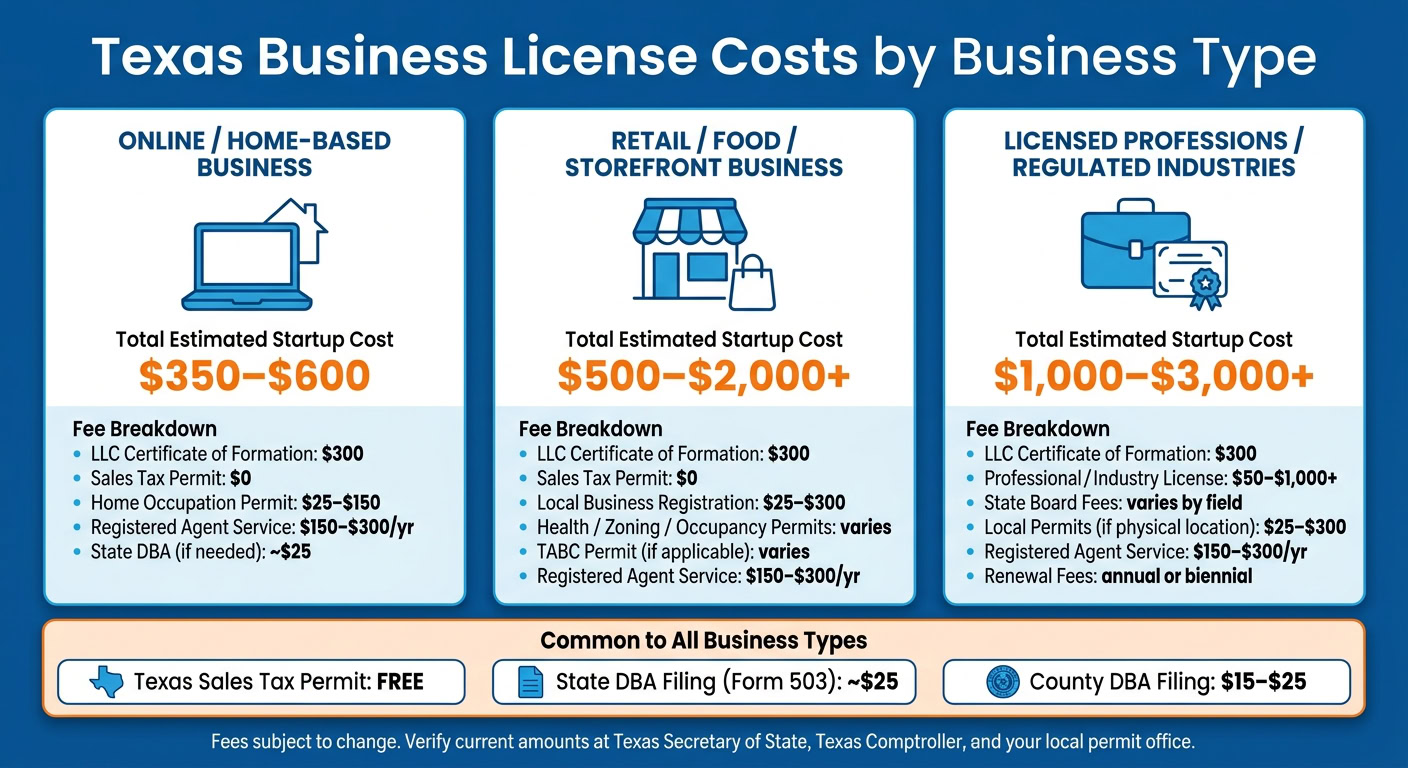
These costs change a lot based on the type of business you run.
Online and Home-Based Businesses: Often $350–$600 to Start
Online and home-based businesses usually have the lowest startup costs. In most cases, the total comes down to local permit rules and a few optional add-ons.
For example, a home occupation permit in cities like Austin or Dallas can cost $25–$150, depending on local rules. And if you don’t want your home address listed in public records, a registered agent service usually costs $150–$300 per year.
Put those together, and many home-based founders end up spending about $350–$600 in the first year.
If you’re running a business without staff, you’ll usually land near the low end. Once you add a storefront or enter a field with tighter rules, costs tend to climb.
Retail, Food, and Storefront Businesses: Often $500–$2,000 or More
Physical locations come with more red tape. Beyond the base LLC filing, storefront businesses often need building, health, and zoning permits, and each one may come with its own fee from the city or county.
Those local approvals can vary a lot by city. A business in Houston may face a different setup than one in Dallas or Austin. And if you’re opening a food or beverage business, you may also need state-level permits, including permits from the Texas Alcoholic Beverage Commission (TABC), depending on what you serve.
Once those costs start stacking up, it’s common for a retail or food business to spend $500–$2,000 before opening day.
Businesses under state oversight often end up paying more than that.
Licensed Professions and Regulated Industries: Often $1,000–$3,000 or More
If your business operates in a regulated field, the total usually jumps fast. A Texas business license in one of these industries often means paying several separate fees to different agencies.
Medical, legal, and engineering professionals may need to pay fees to their state boards. If the business also has a physical location, building, health, and zoning permits may add more costs at the local level. On top of that, registered agent service and renewals can push the total higher still.
That’s why businesses in regulated industries often spend $1,000–$3,000 or more in startup fees.
It’s not just one big charge. It’s a pile of smaller fees that adds up fast.
The next step is figuring out which licenses your business actually needs.
How to Find Out Which Licenses You Actually Need
Figuring out which licenses apply to your business can feel like a maze. But it usually comes down to three things: what you sell, where you operate, and whether your industry is regulated.
Start by Reviewing Your Business Activity, Location, and Tax Obligations
Start with the work your business actually does. If you’re in a regulated field like medicine, law, or engineering, check with the right state board. If you sell taxable goods or services, register for a Texas sales tax permit.
Local rules can shift from one place to the next, so look into zoning, occupancy, and permit rules for your business address. A shop downtown may face different rules than a home-based business across town.
Your business structure matters too. If you form an LLC or corporation, you need to file a Certificate of Formation with the Texas Secretary of State. Sole proprietors don’t file that form, but they may still need local permits.
Once you have those three pieces nailed down, it’s much easier to match each filing to the cost ranges above.
Use Official Texas and Local Sources to Confirm Current Fees
Before you file, check the exact fee on the official site. Fees can change, and this is one of those cases where a quick check can save you time and money.
| Requirement | Official Source |
|---|---|
| Entity formation (LLC/Corp) | Texas Secretary of State – SOSDirect |
| Sales tax permit & franchise tax | Texas Comptroller of Public Accounts |
| Professional/industry licenses | TDLR or relevant state board |
| Alcohol-related permits | Texas Alcoholic Beverage Commission (TABC) |
| Local zoning & business permits | Your city or county permit office |
It also helps to check filing deadlines early. That way, startup costs don’t turn into avoidable late fees. For example, franchise tax filings in Texas are due May 15, and missing that deadline can lead to a $50 late fee.
How BusinessAnywhere Can Simplify Your Startup Process
If dealing with multiple agencies and filings sounds like a headache, BusinessAnywhere can help. It handles LLC formation, registered agent service, EIN applications, and virtual mailbox support in one place – so you can spend more time estimating startup costs and less time chasing paperwork.
Conclusion: Building a Realistic Texas Business License Budget
For most small businesses in Texas, startup compliance costs usually come from a handful of places: state filings, DBA filings, local permits, professional licenses, and renewals. A common budget range is $300 to $2,000 for a small business that’s ready to open.
Where you land in that range depends a lot on how the business is set up. A DIY online or home-based LLC will often stay near the lower end. A storefront usually costs more because zoning, occupancy, and health permits can add up fast.
If you work in a regulated field, plan for higher costs. Board-issued licenses and renewal fees can push your total well above what a basic business setup might cost.
Renewals matter too. Registered agent services often cost $150 to $300 per year, and professional renewal fees depend on the board. If you miss the May 15 PIR deadline, Texas charges a $50 late fee, and your LLC can lose good standing.
Before you launch, make a simple list of every filing, permit, and renewal your business needs. That makes costs far easier to plan for and helps you avoid nasty surprises later.
FAQs
Do I need a business license in Texas?
Yes. Most Texas businesses need some type of license or permit to operate legally. Starting an LLC doesn’t replace those rules.
What you need depends on what you do and where you operate. In many cases, that can include:
- a general business license from your city or county
- a sales tax permit if you sell taxable goods or services
- industry-specific or home occupation permits, depending on your business
What licenses do I need for a home-based business in Texas?
A home-based business in Texas may still need local licenses and permits, even if you work only from home. Start by checking with your city or county to see if you need a general business license, a home occupation permit, or zoning approval.
You may also need a Texas sales tax permit, an assumed name certificate if you use a different business name, and any professional or health permits tied to regulated industries. The exact rules depend on where your business is located and what kind of work you do.
Are Texas business licenses and permits renewed every year?
Not always. Renewal depends on the specific license or permit.
Some local permits and professional licenses need to be renewed every year or on a set cycle. Others last much longer and follow a different timeline.
For example, Texas assumed name certificates (DBAs) are often valid for up to 10 years before you need to renew them.
Because the rules can change by city, county, and industry, check the renewal terms for each permit you hold.