

Starting a tech business no longer requires coding expertise or hefty budgets. With no-code tools, outsourcing, and lean strategies, you can launch and grow a business for under $10,000. Here’s how:
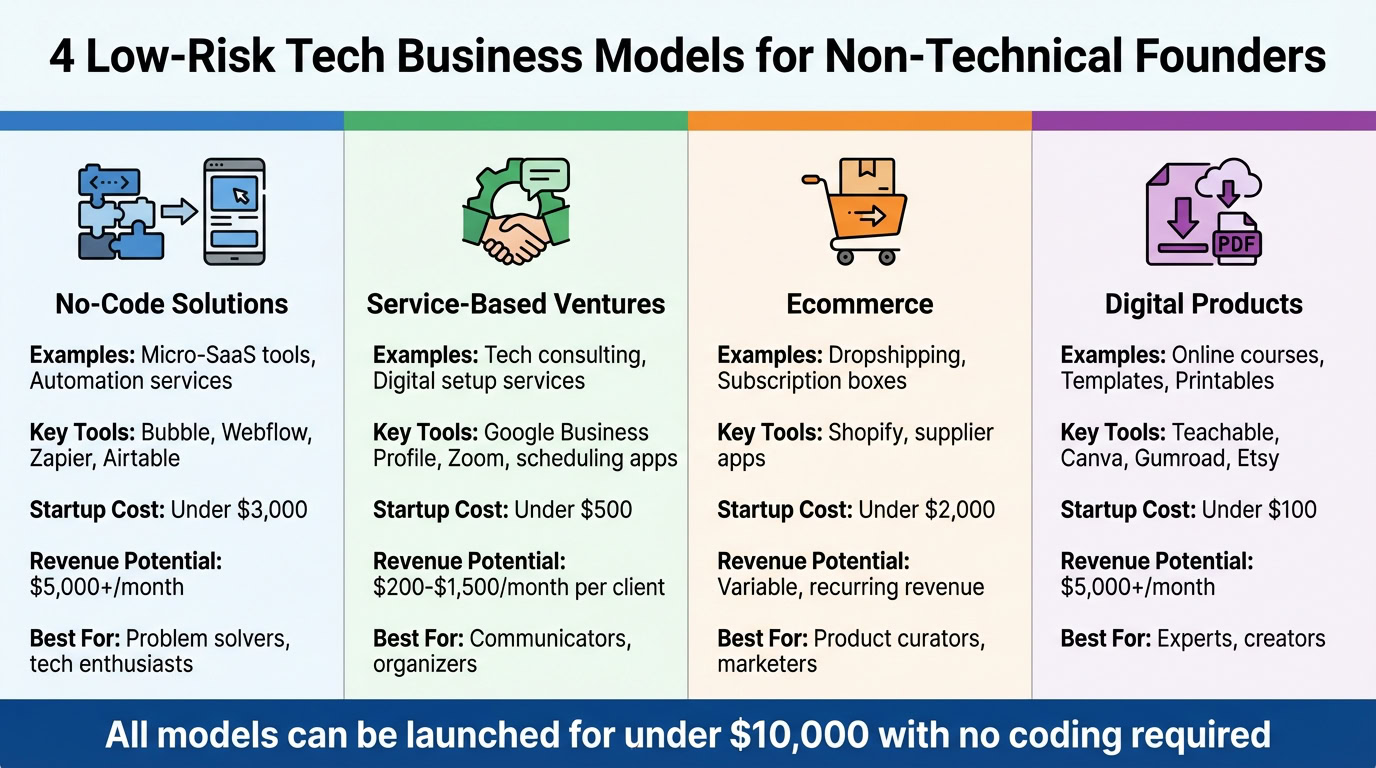
- No-Code Tools: Platforms like Bubble, Webflow, and Zapier help you build apps, automate tasks, and create workflows without writing code. Example: A GPT-powered HR tool scaled to $5,000/month with just $3,000 upfront.
- Service-Based Ventures: Offer digital setup services (websites, booking systems) or consulting for small businesses using tools like Google Business Profile or scheduling apps.
- Ecommerce: Start a dropshipping store or subscription box business with platforms like Shopify, focusing on lightweight, fast-shipping products.
- Digital Products: Create and sell online courses, templates, or printables using platforms like Teachable or Canva.
The key is starting small, testing ideas, and solving specific problems. These approaches minimize risk while allowing you to focus on customer needs and revenue growth.
1. No-Code Solutions
Build Micro-SaaS Tools for Niche Markets
Sometimes, the best ideas come from focusing on a narrow market with a specific problem. Think about tools like scheduling software tailored for dog groomers or a simple CRM designed for freelance photographers. Platforms such as Bubble or Glide let you create fully functional apps without needing to write a single line of code. Starting small, with a free or low-cost tier, gives you the chance to test the waters with a small group of early adopters before diving in deeper.
You can even piece together multiple no-code tools to build a complete solution. For instance, use Webflow to create a polished marketing site, Bubble for the main app functionality, and Zapier to handle workflow automation and notifications. This combo keeps your costs low while you figure out if customers are willing to pay for your product. Plus, documenting your process now can make it easier to transition to custom development later if your idea takes off. No-code platforms also make it easier for non-technical founders to experiment and build solutions without a huge upfront risk.
Launch Automation Services for Small Businesses
Small businesses often spend too much time on repetitive tasks like data entry, sending appointment reminders, or managing social media posts. With tools like Zapier or Airtable, you can design custom automation workflows to handle these tasks – and turn that into a service. This approach solves real problems for businesses without requiring deep programming knowledge.
Start with industries you’re familiar with. For example, you could automate lead capture from Facebook ads directly into a CRM or set up inventory alerts for local retailers. Offer a setup package along with a recurring maintenance fee, helping you generate steady income while saving your clients time and hassle. Many platforms even provide pre-built templates, so you can go from idea to implementation quickly and efficiently. It’s a win-win: businesses get more done, and you build a sustainable revenue stream.
2. Service-Based Ventures
These types of businesses let you lean on your organizational and communication skills rather than technical know-how, making them a straightforward and low-risk option.
Tech-Enabled Consulting for Local Businesses
Small businesses often struggle to improve their online presence, and that’s where you can step in. By offering consulting services, you can help them enhance their digital footprint using tools like Google Business Profile, website builders, and email marketing platforms. The focus here is on guiding them strategically, not on coding.
Start by picking a niche you’re familiar with – like wellness centers, local shops, or professional services such as dental practices or accounting firms. Use tools like Zoom for consultations, Google Docs for creating strategies, and scheduling apps to stay organized. To gauge interest, offer discounted initial sessions to a few clients in exchange for feedback and testimonials. As your client list grows, you can outsource any technical tasks to freelancers while you remain the face of the strategy.
You can even expand this offering by providing full-service digital setups, taking the burden off your clients entirely.
Done-For-You Digital Operations for Small Businesses
Plenty of businesses need basic digital tools, like websites, booking systems, or email newsletters, but don’t have the time or skills to set them up. That’s where you come in. Offer a "Digital Setup & Management" service that takes care of everything using no-code tools.
For example, you could create a package that includes a simple website, a booking system, a Google Business Profile, and an email newsletter. Charge a one-time setup fee of $500–$1,500, and then offer ongoing management for $200–$500 per month. This approach not only provides steady income but also keeps the technical demands low. Your role would center on working directly with clients, managing projects, and handling routine tasks – no coding required.
3. Ecommerce
Ecommerce offers a way to dive into online sales without getting bogged down by complex technical setups. Thanks to modern platforms, much of the heavy lifting is already done for you, leaving you free to focus on what matters most: choosing great products and building strong customer relationships. Let’s look at some ecommerce strategies that are simple to implement and deliver solid results.
Dropshipping Store for U.S. Lifestyle Accessories
Dropshipping is one of the easiest ways to break into ecommerce. Why? It removes the biggest challenge of traditional retail: managing inventory. With dropshipping, you list products online, and when a customer places an order, your supplier ships it directly to them. That means no warehouse costs, no unsold stock, and no need to handle products yourself. It’s a streamlined model that minimizes upfront risks.
To start, focus on niches like phone accessories, home organizers, or fitness gear – items that are lightweight, ship quickly within the U.S., and have decent profit margins. Platforms like Shopify make it simple to set up your store with their drag-and-drop builder. You can also integrate supplier apps that automatically sync product listings and process orders for you.
Entrepreneur Kamil Sattar advises starting small: “Stick to 5–10 low-cost products and use TikTok or Instagram for organic marketing before investing in paid ads.”
Your main responsibilities will revolve around choosing the right products, setting competitive prices, and ensuring excellent customer service – all without needing any coding skills.
Curated Monthly Subscription Box
Subscription boxes are another exciting ecommerce model, offering the advantage of predictable recurring revenue. The idea is simple: curate themed product bundles and send them to subscribers every month. The best part? You don’t need to manufacture anything. Instead, you can source existing products from suppliers or partner with local makers.
Choose a niche you’re passionate about or knowledgeable in – whether it’s self-care kits for busy professionals, toys and treats for new dog owners, or craft beer accessories for homebrewers. To keep your upfront investment low, source products in small quantities from wholesalers or work out consignment deals with local artisans. Platforms like Shopify make it easy to handle recurring billing and renewals in USD.
Start small by launching one box design and testing it with 20–30 subscribers. Use their feedback to fine-tune your offerings and adjust your product selection. This method allows you to gauge demand and refine your approach without committing to large inventory purchases upfront.
sbb-itb-ba0a4be
4. Digital Products
Digital products are a fantastic way to start a tech business with minimal risk. Once created, they can be sold repeatedly without worrying about inventory, shipping, or storage. This makes them especially appealing for non-technical founders, as modern no-code tools simplify the creation process. Like no-code apps and service-based businesses, digital products offer a scalable and low-risk opportunity.
Online Courses: Turn Knowledge Into Income
If you’re knowledgeable in a specific field – whether it’s digital marketing, budgeting, or even a creative pastime – you can package that expertise into an online course. Platforms like Teachable make it easy to create and host courses without needing any technical skills. They provide drag-and-drop tools to upload video lessons, PDFs, and quizzes, making the process straightforward.
Online courses also have the potential to generate passive income. Once a course is up and running, it can continue to bring in revenue over time. Pricing typically falls between $27 and $97, depending on the depth and perceived value of your content. Before diving into production, it’s smart to validate your idea with a quick survey using tools like Google Forms. This ensures there’s demand for your course and aligns well with the goal of building accessible, low-risk ventures.
Templates and Printables: Simple Products, Big Potential
Beyond courses, templates and printables are another great option for generating revenue. These could include items like productivity planners, budget trackers, social media templates, or business proposal documents. You don’t need formal design skills – platforms like Canva or Google Docs make creating these products simple and intuitive.
Selling these digital downloads is easy with platforms like Gumroad or Etsy, which handle payments and delivery automatically. Individual templates can be priced between $7 and $27, or you can bundle several together to offer more value. Startup costs are often under $100, making this a budget-friendly option. For example, one entrepreneur used no-code tools to build a library of templates, earning over $5,000 in monthly recurring revenue. It’s an excellent way for new entrepreneurs to test the waters and refine their approach.
Conclusion
Starting a tech business has never been easier. With no-code platforms, outsourcing options, and service-based models, you can launch a venture with minimal upfront investment. These tools and strategies take the complexity of coding off your plate, letting you focus on what truly matters – understanding your customers and driving growth. The ideas explored in this article show how low-risk approaches can help you break into the tech world without overwhelming financial commitments.
Take Kamil Sattar (The Ecom King), for example. He built a thriving dropshipping business on Shopify and TikTok by selling just 5–10 affordable products, all without managing inventory. His success highlights an important point: low-risk doesn’t mean low-reward. It’s about making smart, calculated decisions that minimize financial risks while maximizing opportunities.
The secret lies in starting small and learning as you go. By using no-code tools and outsourcing, you can move faster and adapt to feedback. Whether you’re working on a no-code app, an ecommerce store, or a digital service, tools like the Business Model Canvas can help you map out your idea and test it with real users. Delegate technical tasks to experts or use no-code platforms to create your minimum viable product (MVP). These strategies make it possible to bring your vision to life without a steep learning curve or hefty upfront costs.
Even if you don’t have a technical background, that’s no obstacle. Today’s business infrastructure – from setup to payment processing – is ready to support your goals. Focus on what you’re good at, whether that’s marketing, building customer relationships, or spotting gaps in the market. With the right tools and mindset, there’s no better time to take your first step into the tech world.
FAQs
How can no-code tools help non-technical entrepreneurs start a tech business?
No-code tools open the door for non-technical entrepreneurs to bring their tech ideas to life – no programming skills required. These platforms rely on user-friendly drag-and-drop interfaces and ready-made templates, making it simple to create websites, apps, and workflows.
By removing the need for coding, no-code tools cut down on startup costs, speed up development timelines, and streamline the launch process. This means entrepreneurs can spend more time fine-tuning their business ideas and growing their ventures, all without needing a tech background.
What are some easy-to-start, low-risk service businesses for beginners?
If you’re looking to start a service-based business with low risk, consider options like virtual assistant services, social media management, or online tutoring. These types of businesses usually require little upfront investment and can often be run entirely from home, making them an excellent starting point.
You might also explore freelance graphic design, content creation, or digital marketing consulting. Thanks to no-code tools and the ability to outsource technical work, these businesses are accessible even if you don’t have a tech-heavy background. The key is to choose a service that aligns with your skills or passions, as this increases your chances of building something successful.
Why is dropshipping a low-risk option for starting an e-commerce business?
Dropshipping offers a straightforward way to break into e-commerce without the financial risks tied to upfront inventory purchases. Instead of stocking products in advance, you only buy items after customers place orders. This approach cuts down on initial expenses and eliminates the worry of being stuck with unsold items.
What’s more, dropshipping lets you experiment with various products and target markets without needing significant capital. With no storage or inventory management to deal with, it’s a flexible option for entrepreneurs aiming to keep startup costs low while testing the waters in e-commerce.