


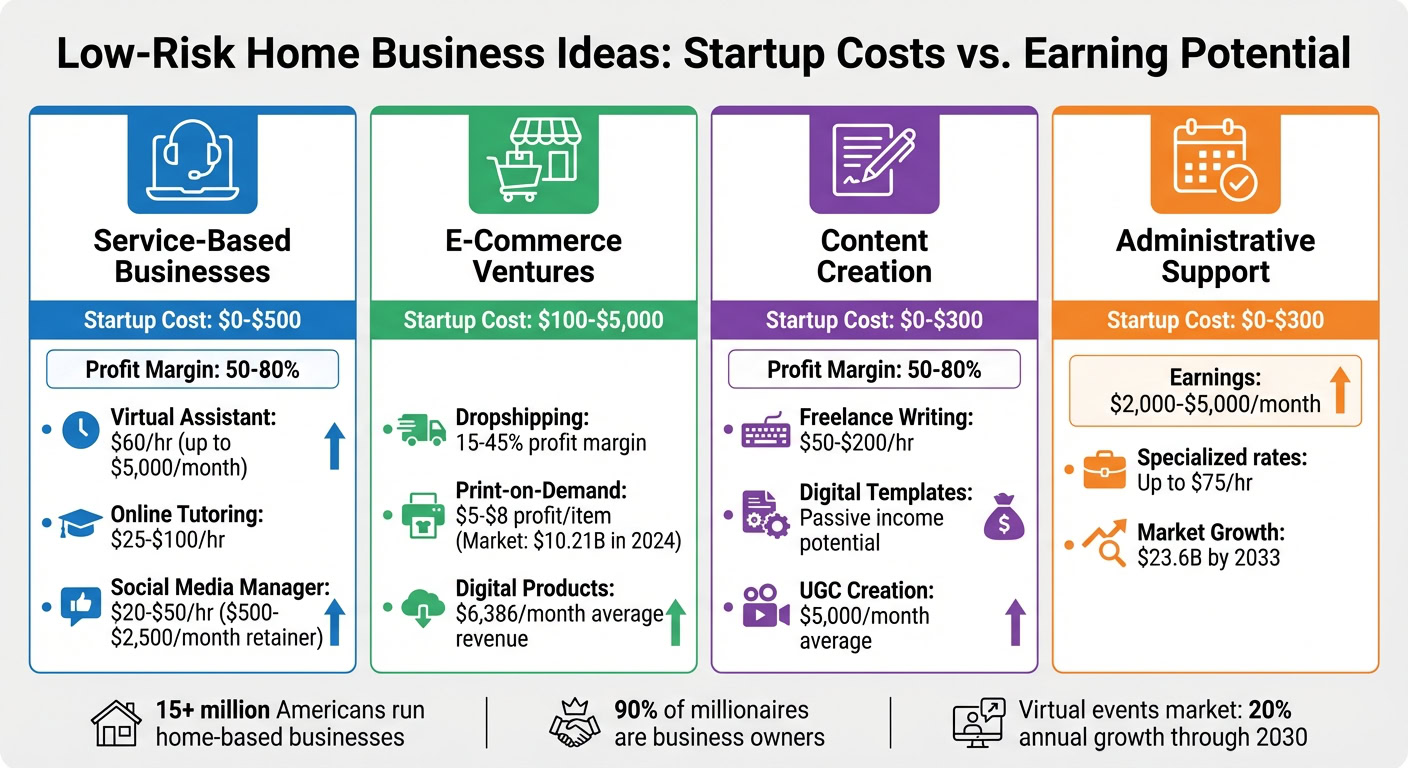
Starting a home-based business is easier and cheaper than ever. With just a computer, internet, and a few hours a week, you can launch a business for $0–$500. Over 15 million Americans already run businesses from home, cutting costs and enjoying flexible schedules. Popular options include:
- Service-Based Work: Virtual assistants ($60/hr), online tutors ($25–$100/hr), or social media managers ($20–$50/hr).
- E-Commerce: Dropshipping (startup: $100–$5,000), print-on-demand (profit/item: $5–$8), or digital products (average revenue: $6,386/month).
- Content Creation: Freelance writing ($50–$200/hr), selling templates, or creating user-generated content ($5,000/month).
- Administrative Support: Virtual assistants can earn $2,000–$5,000/month by managing tasks like scheduling and invoicing.
These ventures are low-risk, scalable, and don’t require significant upfront costs. Start small, validate your idea, and grow at your own pace.
1. Service-Based Businesses
Starting a service-based business is a smart way to dive into entrepreneurship without a hefty upfront investment. These ventures typically require little more than your skills and a few basic tools, making them a low-risk option. With profit margins often ranging between 50% and 80%, they can become highly lucrative once you establish a steady client base.
To get started, all you need is a computer, reliable internet, and occasionally some specialized software. Platforms like Upwork, Fiverr, and LinkedIn make it easy to connect with clients worldwide without spending much on marketing. Building credibility is straightforward – offer your services to friends, family, or local nonprofits to gather testimonials. From there, word-of-mouth referrals and local social media groups like Nextdoor and Facebook can help you grow. Let’s take a closer look at a few specialized service niches.
Virtual Assistant
Virtual assistants provide remote administrative support, handling tasks like email management, scheduling, data entry, and customer service. Pay rates can reach up to $60 per hour, depending on your skills and areas of expertise. Being organized and familiar with basic project management tools can set you up for success. Specializing in a specific field, such as assisting real estate agents or e-commerce businesses, can make you more competitive and allow you to charge higher rates.
Online Tutoring
If you’re knowledgeable in a particular subject, online tutoring is a flexible and potentially high-earning option. Hourly rates usually range from $25 to $75, but for specialized subjects like advanced math or test preparation, you could earn $100 or more per hour. The demand for online tutoring is expected to grow significantly through 2030. To thrive in this space, you’ll need a quiet workspace and reliable video conferencing tools like Zoom. Platforms like Tutor.com and Skooli can help you connect with students, while local Facebook groups are another great way to reach families in your area.
Social Media Management
As businesses increasingly value a strong online presence, the demand for social media managers continues to rise. In this role, you’ll handle tasks like creating content, scheduling posts, engaging with followers, and analyzing performance metrics. While the median pay is around $30 per hour, experienced managers often charge between $20 and $50 per hour or secure monthly retainers ranging from $500 to $2,500 per client. Tools like Canva and Buffer keep your startup costs low, and focusing on specific niches – like restaurants or fitness studios – can help you stand out and build expertise.
sbb-itb-ba0a4be
2. E-Commerce Ventures
E-commerce offers an accessible way for aspiring entrepreneurs to sell products without the hefty costs of a physical storefront. With minimal upfront investment and the ability to automate many processes, it’s a flexible option for those looking to work from home. The challenge lies in picking a business model that suits your budget and the time you can commit. Let’s dive into a few popular e-commerce models that align with this low-risk approach.
Dropshipping
Dropshipping is a well-known e-commerce model that allows you to sell products without managing inventory. Instead, suppliers handle storage and shipping for you. Start-up costs typically range from $100 to $5,000, and profit margins hover between 15% and 45%. While many dropshippers see profits within six months, only 10% to 20% of businesses succeed. To increase your chances, focus on products with consistent demand – tools like Google Trends can help identify these – and work with suppliers who have domestic fulfillment centers for quicker shipping times. Shopify, a popular platform for dropshipping, offers basic plans starting at $29 per month.
Print-on-Demand
Print-on-Demand (POD) is another low-risk option, perfect for selling custom items like t-shirts, mugs, and phone cases. With this model, products are created only after an order is placed, eliminating the need for inventory. Profit margins are modest, with each item typically earning between $5 and $8. The global print-on-demand market is booming, valued at $10.21 billion in 2024 and projected to hit $102.99 billion by 2034. Platforms like Printify (free to use) and Printful integrate seamlessly with Shopify and Etsy, automating the fulfillment process. To succeed, focus on niche markets rather than generic designs, and always order samples to ensure the quality of your products before listing them.
Digital Products
Selling digital products like ebooks, courses, or templates is another lucrative option. These products come with no recurring production costs and can generate consistent monthly revenue, averaging around $6,386. Once created, they require minimal maintenance, making them a largely passive income stream. You can sell digital products on your own website using platforms like Shopify or through marketplaces like Etsy. While the initial effort lies in producing high-quality content, the payoff can be long-term, steady earnings.
3. Content Creation
Content creation is a fantastic way to turn your creativity into income, much like service-based or e-commerce ventures. It requires minimal upfront investment – usually just a computer and internet connection – and offers profit margins ranging from 50% to 80%. Success comes down to picking the right niche and building a strong portfolio. Whether you focus on writing, digital products, or video content, each path has its own way to help you monetize your skills.
Freelance Writing and Blogging
Freelance writing is a low-cost way to start earning quickly. For example, a tourism blog brought in $205,642 in ad revenue in 2021 by leveraging SEO and affiliate marketing. With 71% of small businesses running websites, there’s a steady demand for web content and copywriters. Writers who specialize in niches like technical writing for finance can charge $50 to $200+ per hour. If you want to showcase your work, basic web hosting for your portfolio or blog costs just $4 to $16 per month. Beyond articles, you can also create and sell digital products like templates, which offer scalable income potential.
Digital Products and Templates
Selling digital products like templates and planners is another way to earn, with no ongoing production costs. Take Shelby Ashworth, for instance – her Etsy shop, PaperDotInkDesigns, earned $2,494 in sales in 2021 by offering handwritten prints and digital templates. What’s great about this approach is that once you’ve created a product, you can sell it repeatedly without extra effort. Focus on solving specific needs for niche audiences, such as digital planners for teachers, website templates for coaches, or budgeting tools for new parents.
User-Generated Content (UGC) Creation
Brands are increasingly turning to user-generated content for authentic marketing. In March 2023, Giselle González reported earning an average of $5,000 per month creating video ads for beauty and wellness brands on Instagram and TikTok. The best part? You don’t need a massive social media following to get started – just the ability to make engaging, short-form videos. Start by building a small portfolio of sample videos, then pitch your work to smaller brands looking for affordable and genuine content.
4. Financial and Administrative Support
Expanding on earlier opportunities in services and content creation, financial and administrative support provides a way to offer crucial operational help with low startup costs.
Virtual Assistant Services
Starting a virtual assistant business can cost as little as $0–$300, requiring just a laptop and a reliable internet connection. With these basic tools, you can handle tasks like email management, scheduling, billing, invoicing, and basic bookkeeping. No formal degree is necessary – most of these skills come from everyday office experience.
Virtual assistants can earn between $2,000 and $5,000 per month, with more specialized tasks commanding rates of up to $75 per hour. The global market for virtual assistant services is expected to grow significantly, reaching $23.6 billion by 2033. Cynthia Franklin, Director at the Berkley Center for Entrepreneurship at New York University, highlights the growing demand:
"We’re seeing this whole shift to remote working and appreciation for the ability to have teams that are dispersed, so virtual assistants are very hot".
This approach fits well with other business models by focusing on essential back-office functions that keep operations running smoothly. For example, Aubree Malick, a former teacher, successfully transitioned into virtual assistance and earned $105,735 in a year.
To reduce risks, it’s smart to draft clear contracts, use tools like Trello or Asana to track tasks, and offer retainer packages – such as $1,500 per month for managing calendars. Specializing in fields like legal or medical support can also allow you to charge higher rates for your expertise.
Conclusion
Starting a home-based business today is more accessible than ever. You don’t need a hefty budget or years of preparation to get started. With millions of thriving home-based businesses already out there, you’re stepping into a well-trodden path that offers both flexibility and the chance to build something profitable. From service roles like virtual assistance to e-commerce options like dropshipping, or even creative pursuits such as content creation, the key is to choose a business model that matches your skills and lifestyle.
The success stories speak for themselves. Take Tamara Mayne, for example. In 2013, she launched Brooklyn Candle Studio from her small apartment using a simple candle-making kit. Within just a year, she left her full-time job to focus entirely on her growing business. Or consider Genna Tatu, who shifted her labor-intensive crochet business into selling digital crochet patterns. This pivot not only created a steady stream of passive income but also allowed her to scale without burning out.
Whether you’re exploring virtual assistance, e-commerce, or another niche, low-risk strategies can help you gain traction. Start small: validate your idea with a simple landing page or through social media. Keep your finances organized by opening a separate business checking account. In the early months, focus on delivering outstanding service, refining your processes, and setting the groundwork for future growth. As your business evolves, consider automation to scale beyond trading your time for money.
The potential is immense. For instance, the global secondhand market is projected to hit $367 billion by 2029, while the virtual events market is expected to grow by 20% annually through 2030. And here’s a compelling fact: nearly 90% of millionaires are business owners, many of whom started with simple, low-cost ventures like the ones discussed here.
So, what’s next? Pick a business idea that aligns with your interests and skills. Validate the demand for it, and take action. With the right focus and resources, you can launch your business within the next 30 days. The opportunity is yours – seize it.
FAQs
What are some profitable and low-risk small business ideas for stay-at-home entrepreneurs?
Starting a small business from home can be both profitable and low-risk, especially when focusing on services or digital products that don’t require a big upfront investment. Some of the most popular options include virtual assistance, online tutoring, or freelance work like graphic design and copywriting. These businesses tap into skills you already have, need nothing more than a computer and an internet connection, and can pay anywhere from $25 to $75 per hour – or even more.
Other lucrative paths include bookkeeping, mobile notary services, or tax preparation. These fields come with minimal startup expenses but offer high earning potential, often surpassing $50 an hour. If you’re looking for passive income, consider selling digital products like templates, e-books, or stock media. This approach eliminates inventory risks while allowing you to earn money over time.
For those interested in e-commerce, dropshipping and affiliate marketing are solid choices. Dropshipping lets you sell products without dealing with inventory, while affiliate marketing helps you monetize niche blogs or websites with a small initial investment. Another creative idea is reselling vintage clothing or carefully curated second-hand items, which can bring in significant profits without requiring much storage space. These flexible business models are ideal for building a scalable, home-based enterprise in the U.S.
What are some cost-effective ways to market my home-based business?
Marketing your home-based business on a tight budget means making the most of free or affordable tools. Start by setting up a Google Business Profile – this helps local customers find you quickly and boosts your visibility. Combine this with an active presence on social media platforms like Facebook, Instagram, TikTok, and LinkedIn. Share fun and engaging content, such as short videos, helpful tips, or behind-the-scenes glimpses of your business. Don’t forget to use relevant hashtags to connect with your target audience.
Happy customers can be your best marketers! Encourage them to leave positive reviews and share their experiences – word-of-mouth referrals can be incredibly powerful. You can also create blog posts or how-to guides that answer common questions in your niche. Use basic SEO strategies to make these posts easier for people to find through search engines. Lastly, explore local community boards or neighborhood groups to promote your services and build connections with nearby customers. With a little creativity and consistent effort, you can grow your business without overspending!
What are the essential tools for starting a home-based business?
To get your home-based business off the ground, having the right tools is crucial for smooth operations. Start with a website builder to create a professional online presence. Look for options that provide custom domains, e-commerce capabilities, and user-friendly templates to make setup simple.
Next, an email marketing platform is essential for staying connected with customers. These tools let you send automated campaigns and updates, helping you build lasting relationships with your audience.
You’ll also want to explore freelance marketplaces or job boards to find clients and expand your network. These platforms are perfect for promoting your services and connecting with potential customers. Lastly, don’t forget to invest in accounting and payment tools to manage your finances and stay on top of tax requirements. Together, these tools create a solid framework for running a flexible, low-risk business from home.