
If I were starting a trucking business, I’d form the LLC first in most cases. It puts the business name, EIN, insurance, and FMCSA filings under one setup from day one. That helps me avoid name mismatches, policy updates, and extra paperwork later.
Here’s the short version:
- LLC first = asset separation first, cleaner filings, fewer fixes later
- Authority first = lower day-one cost, but more changes later
- MC authority costs $300
- BOC-3 is often under $100
- LLC filing fees often range from $50 to $500
- Commercial trucking insurance often runs $10,000 to $15,000+ per year
- Insurance down payments are often 10% to 25%
If I need to start hauling as fast as possible and cash is tight, I might file authority first. But if I want a cleaner setup from the start, I’d form the LLC first and then apply for authority under that business.
Quick Comparison
| Factor | LLC First | Authority First |
|---|---|---|
| Liability | Business shield starts first | Personal exposure lasts longer |
| FMCSA filings | Filed under one business name | Often need updates later |
| Insurance | Policy starts in LLC name | Policy may need to be rewritten or changed |
| Upfront cost | Higher on day one | Lower on day one |
| Later admin work | Lower | Higher |
| Best fit | Long-term setup | Short-term cash pressure |
For most owner-operators, the simple rule is: set up the truck driver LLC first, then file for trucking authority.
sbb-itb-ba0a4be
1. Form the LLC First, Then Apply for Trucking Authority
Liability Protection
Forming the LLC first puts a legal shield in place before your first load ever hits the road. That matters.
An LLC can cut down risk, but it doesn’t erase personal exposure. If you sign a personal guarantee for a loan or equipment deal, you’re still on the hook for that debt. And if your bookkeeping is sloppy, the LLC won’t do much to help. The fix is simple, at least on paper: keep separate bank accounts and keep your business records clean.
Filing Alignment
Once the LLC is set up, your federal filings and insurance paperwork can all point to the same business from the start.
That means your USDOT registration, MC authority application, BOC-3, insurance policy, IFTA, and IRP registrations can all use the same legal name and EIN on day one. That kind of consistency helps you avoid mismatched names or tax IDs, which can slow down authority activation or cause headaches during reviews or audits.
Startup Speed and Cost
Going the LLC-first route may add a few days at the front end. But in many cases, it saves time later because you won’t have to fix name or tax-ID issues across FMCSA, insurance, and permit filings.
State LLC filing fees usually fall between $50 and $500, with many states landing in the $100 to $300 range. For one truck with a clean record, commercial auto liability insurance often costs $10,000 to $15,000+ per year. Most carriers also want a down payment of about 10% to 25% when the policy starts.
Scalability and Admin Changes
Starting with an LLC can also make growth less messy.
If you add a second truck, you can update your insurance and your IRP/IFTA accounts while keeping the same USDOT and MC numbers under the LLC. If you bring in a partner, you can amend the operating agreement and add that person as a member without changing the carrier entity.
The downside is pretty plain: LLC-first adds one more filing step before you apply for authority. That’s the main reason some owner-operators go the other way.
2. Apply for Trucking Authority First, Then Form an LLC Later
Some owner-operators get their authority first and wait to form the LLC until cash flow feels more stable. That approach is allowed. FMCSA does not require an LLC to issue authority. So if forming an LLC up front feels too slow or too expensive, authority-first is the other route.
The tradeoff is pretty simple: move faster now, deal with more cleanup later.
Liability Protection
This is the biggest downside. If you operate as a sole proprietor, your personal assets can be exposed if claims, crashes, or DOT fines go past your coverage.
Filing Alignment
If you form the LLC later, you’ll need to update FMCSA records, BOC-3, insurance, IRP/IFTA, and broker paperwork so the carrier name, EIN, and policy all line up. When records don’t match, claims can get delayed, and it can become unclear who the carrier of record is.
Startup Speed and Cost
Authority-first can get you on the road with less paperwork at the start. The required costs are the $300 MC operating authority application fee and a BOC-3 filing that is usually under $100.
That means you can push the LLC filing fee to later, once the business is bringing in money. For a new owner-operator with tight startup cash, that can make a big difference.
But there’s a catch. If you form the LLC later, you’ll likely pay again to update registrations and insurance policies that could have been set up under the right business name from day one.
Scalability and Admin Changes
Authority-first can work fine for a one-truck setup. Once the business starts growing, though, it gets messier. Switching to an LLC in the middle of growth – while adding equipment, hiring drivers, and working with brokers – creates admin overlap and makes compliance mistakes more likely.
If you add trucks or drivers before making the LLC switch, the cleanup gets bigger. It can still be done, but you need a clear plan for the change.
That tradeoff stands out most when you put the lower upfront cost next to the filing updates that come later.
Costs, Tradeoffs, and Pros and Cons of Each Path
It helps to split this into two cost buckets: LLC setup costs and authority costs. The LLC usually adds a few hundred dollars up front. Authority brings the $300 MC fee plus insurance either way. So the main choice isn’t just cost. It’s whether you want cleaner filings from the start or less to pay on day one.
In most states, going LLC first adds only a few hundred dollars up front. That path costs more at the start, but going authority first often leads to update costs and extra admin work later.
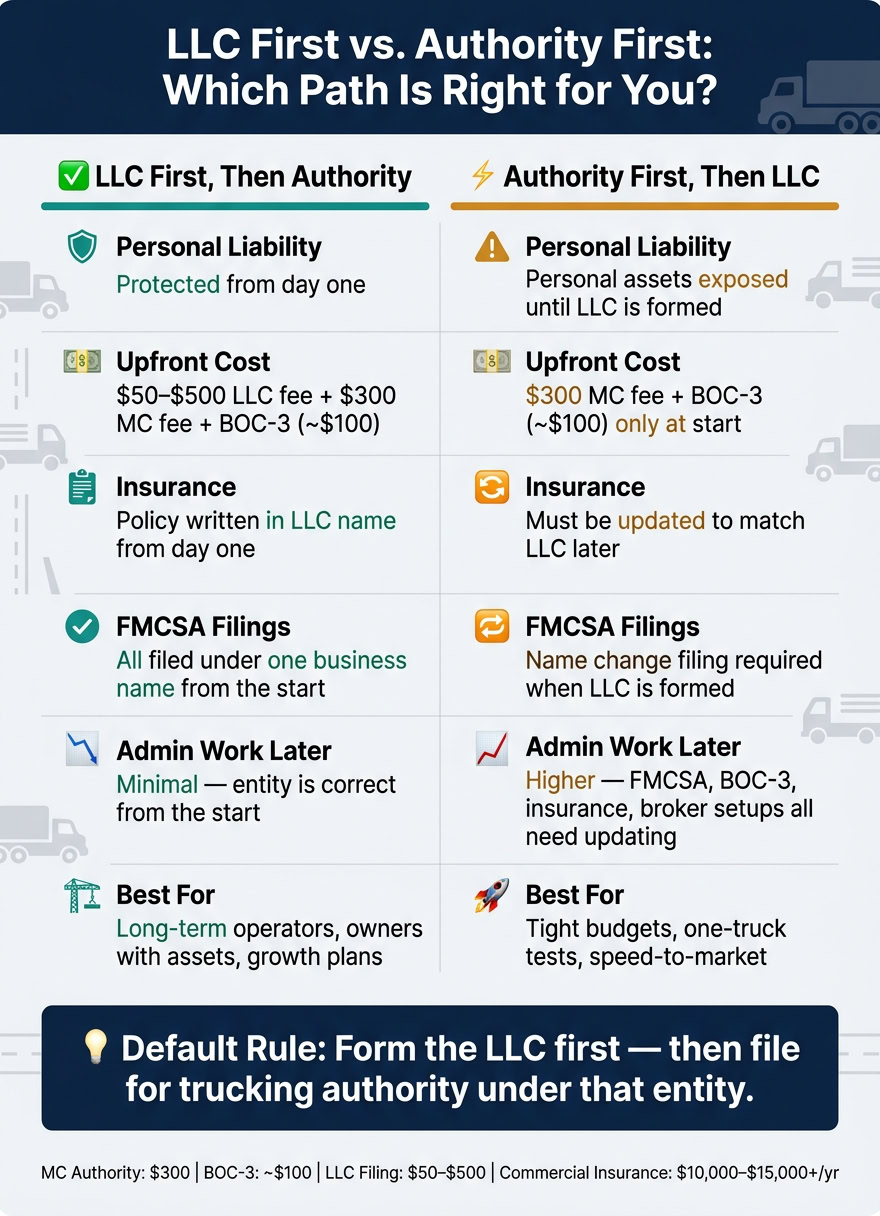
Here’s how the two paths stack up side by side:
| Factor | LLC First, Then Authority | Authority First, Then LLC |
|---|---|---|
| Personal Liability | Protected from day one of operations | Personal assets exposed until LLC is formed |
| Tax Identity & Bookkeeping | EIN and LLC name used across all filings from the start | Starts under the owner’s name; records must be updated after LLC formation |
| Setup Cost & Speed | State filing fee ($50–$500) + registered agent; a few days to file the LLC | No entity cost upfront; same fees paid later, plus possible update fees; FMCSA application can begin immediately |
| FMCSA Application Flow | Authority issued under LLC name; no changes needed later | Authority issued to individual; name change filing required when LLC is formed |
| Insurance | Policy written in LLC name from day one | Policy written to individual; must be updated to match LLC later |
| Paperwork Changes Later | Minimal – entity is correct from the start | Higher – FMCSA records, BOC-3, insurance, and broker setups all need updating |
| Best For | Long-term operators, owners with assets, growth plans | Tight budgets, one-truck tests |
There’s also a compliance angle that’s easy to miss. The FMCSA’s new entrant safety audit process flags mismatched business details, like name, EIN, and address differences across FMCSA, IRS, and state filings, as a compliance risk. That means switching entities later can add friction during an audit, which is about the last time you want extra paperwork headaches.
So the tradeoff is pretty clear: less startup friction now or cleaner compliance from day one. The next section turns that tradeoff into one final recommendation.
Conclusion
For most owner-operators, the best default is simple: form the LLC first.
It gives you liability protection from the start and keeps your filings tied to one legal entity. That means less mess later and a cleaner setup from day one.
There is one exception. Filing authority first can make sense when speed matters more than a clean entity setup. If you need to start hauling right away and you’re okay dealing with entity changes later, that route can work.
The basic rule is straightforward: form the LLC first, then file authority under that entity.
FAQs
Do I need an EIN before I apply for trucking authority?
Yes. You need an EIN before applying for trucking authority.
When you register for your USDOT and MC authority with the FMCSA, your LLC’s exact legal name and EIN need to match your other business records. If your FMCSA filing, insurance records, and EIN details don’t line up, approval can get delayed.
The safest path is simple: form your LLC first, get your EIN next, then use both when you apply.
Can I switch my authority from myself to my LLC later?
You can do it that way, but it’s highly recommended to form your LLC first instead of changing your trucking authority later.
Here’s why: if you get federal motor carrier credentials as an individual and then set up an LLC, you’ll likely need to pay for those licenses and permits again under the new company name. Forming the LLC first can help you avoid extra costs and duplicate filings.
What should I file first if I need to start hauling fast?
You need to form your LLC first.
That’s the starting point because your business name and records must be set up at the state level before you apply for federal credentials like a USDOT number or MC authority.
Once your LLC is in place and you have your EIN, you can move on to the federal filings:
- Register for your USDOT number
- Apply for MC authority
- Complete the BOC-3 filing
- Set up your insurance
You can’t legally haul freight for hire until those federal requirements are filed.