

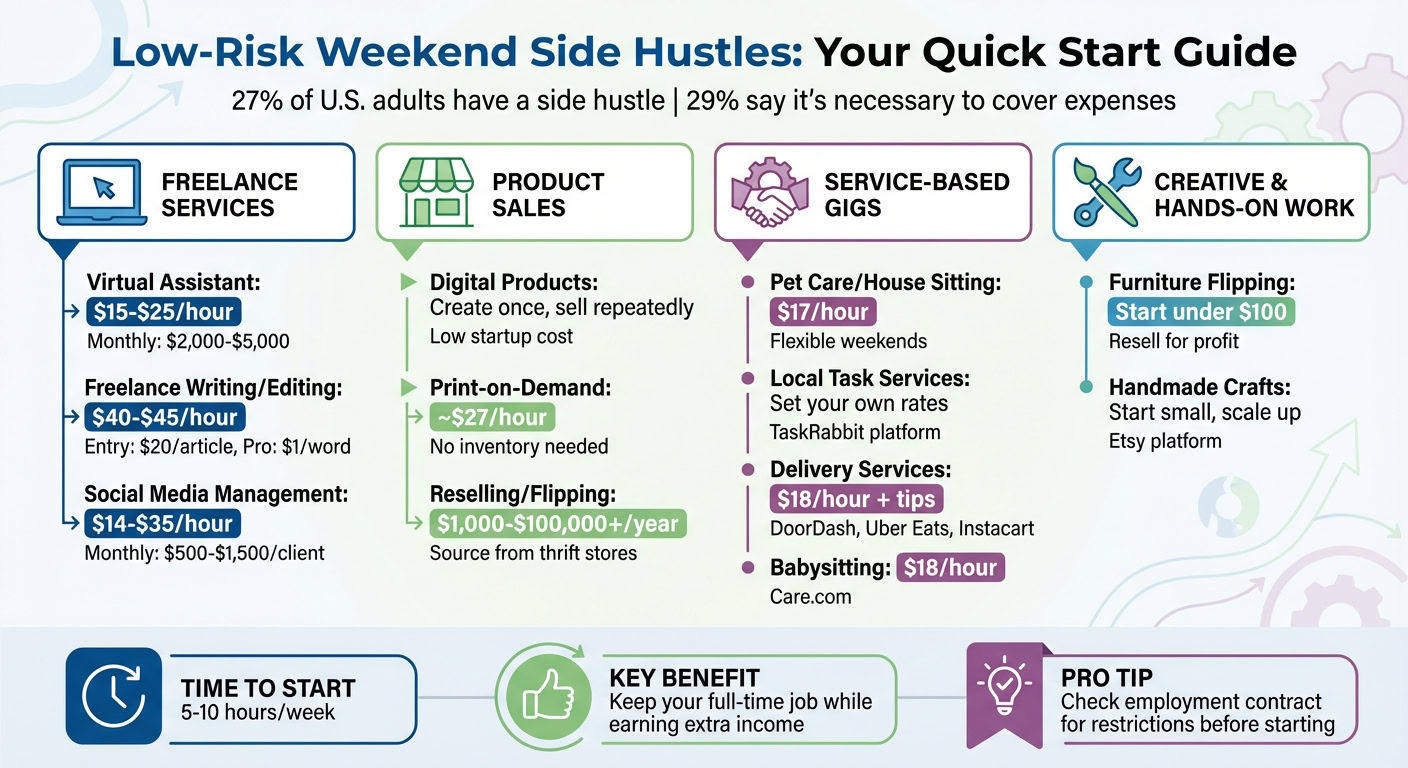
Looking to make extra money without quitting your job? Weekend side hustles are a great option. In 2025, 27% of U.S. adults had a side hustle, and nearly 29% of them said it was necessary to cover expenses. These gigs offer flexibility, low startup costs, and the chance to earn while keeping your full-time job.
Here’s a quick breakdown of ideas you can start this weekend:
- Freelance Services: Offer skills like virtual assistance, writing, editing, or social media management. Freelance writers can earn $40–$45/hour, while virtual assistants make $15–$25/hour.
- Product Sales: Sell digital goods (e-books, templates) or use print-on-demand services for custom items. Reselling thrifted items can also bring in steady profits.
- Service-Based Gigs: Pet sitting, house sitting, or local tasks like yard work are easy to start. Platforms like Rover or TaskRabbit can help you find clients.
- Creative Work: Flip furniture or sell handmade crafts on Etsy. Start small with minimal upfront costs and scale as demand grows.
These side hustles take 5–10 hours a week to start and can grow over time. Choose one that matches your skills, and remember to check your employment contract for restrictions. Start small, test the waters, and watch your extra income grow.
1. Freelance Services
Freelancing is a fantastic way to turn your skills into extra income over the weekend. Many clients prioritize dependability and clear communication over years of experience, making it an excellent option for beginners. Plus, freelancing offers flexibility – you can work from anywhere, set your own rates, and pick projects that fit your schedule. Here are some freelance roles that can help you make the most of your weekends.
Virtual Assistant
Virtual assistants help entrepreneurs and small businesses tackle administrative tasks remotely. This can include managing emails, scheduling appointments, starting a bookkeeping business, or organizing digital files. The beauty of this work is its flexibility – you can batch tasks over the weekend and even automate certain duties.
Take Annalisa Abell, for example. She started her virtual assistant business, Elevated Assist, in 2019 while holding down a full-time job. By 2021, she was generating six-figure revenue by helping small businesses with administrative needs. Virtual assistants typically earn $15 to $25 per hour, but with experience, monthly earnings can climb to $2,000 to $5,000. Platforms like Upwork make it easy to connect with clients looking for part-time or weekend help.
Freelance Writing and Editing
If you’ve got a knack for grammar or storytelling, freelance writing and editing could be your go-to. This work might include writing blog posts, proofreading documents, or crafting resumes. Entry-level writers can earn about $20 per article, while seasoned professionals may charge up to $1 per word. On average, freelance writers and editors earn $40 to $45 per hour.
Jaime Hollander is a great example of how freelancing can grow into something bigger. She began as a copywriter on Upwork after working in media for a decade. Over time, she increased her rates and built a client base that evolved into a six-figure marketing agency. Another emerging opportunity is refining AI-generated content – businesses are hiring freelancers to ensure the quality and consistency of their brand voice. Proofreaders, in particular, average $28 per hour.
Social Media Management
Small businesses often need help managing their social media accounts, and this can be a perfect weekend gig. Tasks include creating and scheduling posts, responding to comments, and tracking performance metrics. Tools like Canva or Trello make it easy to batch content creation. Specializing in a niche – like “TikTok marketing for restaurants” – can help you charge premium rates.
Social media managers typically earn between $14 and $35 per hour, with monthly earnings ranging from $500 to $1,500 per client.
"Many people have skills that they may not realize would be very much attractive to someone else."
- Cynthia Franklin, Director at the Berkley Center for Entrepreneurship, NYU
sbb-itb-ba0a4be
2. Product Sales
Selling products is another low-risk way to make extra money on weekends. Like freelance services, it offers flexibility and the chance to generate income without requiring a huge time commitment. Once your product listings are live, many options can bring in earnings with minimal ongoing effort. The trick is to focus on items that don’t need a lot of upfront investment or storage space.
Digital Products
Digital products are a great option because they’re created once and can be sold repeatedly. Think e-books, planners, templates, or even printable wall art. Tools like Canva make it easy to design these items, and platforms like Etsy or Gumroad allow you to sell them to a wide audience. If photography is your thing, you can license your stock photos on sites like Shutterstock for a steady income stream. This approach keeps costs low while offering plenty of scalability, making it an appealing side hustle.
Print-on-Demand
Starting a print-on-demand business lets you sell custom-designed products like T-shirts, mugs, or stickers without needing to handle inventory. Platforms such as Printify and Amazon Merch on Demand take care of printing and shipping once an order comes in, so you don’t have to worry about upfront costs. Some sellers report earning around $27 per hour. You can start by experimenting with trending designs to see what resonates with buyers, then expand your offerings based on demand.
Reselling and Flipping
Reselling is all about finding low-cost items and selling them for a profit. You can source items from garage sales, thrift stores, or clearance racks and focus on niches with high demand, such as vintage clothing, collectibles, or furniture that can be spruced up with a bit of effort. Successful resellers have been known to earn anywhere from $1,000 a year to six figures, depending on their dedication. Platforms like eBay, Poshmark, and Craigslist make it easy to list items for local or nationwide sales, making this a practical and low-risk option for weekend income.
3. Service-Based Gigs
Service-based gigs are an excellent way to make the most of your weekends, offering flexible options to earn extra cash without requiring a big upfront investment. These gigs allow you to leverage your skills and time, especially since many of them are in high demand on Saturdays and Sundays. With the help of local platforms, you can get started quickly and often receive fast payouts.
Pet Care and House Sitting
If you enjoy spending time with animals, pet care might be the perfect weekend gig for you. Dog walking and pet sitting can bring in around $17 per hour, and platforms like Rover make it easy to connect with pet owners in your area. House sitting is another laid-back option, where your responsibilities might include watering plants, collecting mail, and taking care of pets while homeowners are away. Building trust is key in these roles – sending photo updates and meeting clients beforehand can help you secure repeat bookings.
Local Task Services
For those who prefer hands-on work, local task services like furniture assembly, yard work, or even tech support are great options. Platforms such as TaskRabbit connect you with neighbors who need help with these types of jobs. You can set your rates and availability, making it easy to fit these gigs into your weekend schedule. Even simple services like starting a lawn care business or gutter cleaning can be promoted through local groups, allowing you to start earning with little to no upfront cost.
Delivery and Errand Services
Food and grocery delivery gigs through apps like DoorDash, Uber Eats, and Instacart are another popular choice. Drivers typically earn about $18 per hour plus tips, and these roles offer the flexibility to work as much or as little as you want during weekends. Babysitting is another rewarding option, with an average pay of $18 per hour. You can find babysitting opportunities on platforms like Care.com or through local community groups, making it easy to connect with families in need of weekend help.
4. Creative and Hands-On Work
Adding a personal and tactile touch to your weekend side hustle can be both rewarding and profitable. Take furniture flipping, for example – it’s a fantastic way for creative individuals to earn extra cash. The idea is simple: find inexpensive or even free furniture through local groups or thrift stores (keeping your initial costs under $100), then give those pieces a new life with some paint and updated hardware. Once refurbished, these items can fetch a decent profit when resold. It’s a low-cost, flexible venture that works perfectly for weekends.
Handmade crafts offer another great option. Whether it’s custom jewelry, homemade soaps, candles, or knitted accessories, these projects let you start small and grow at your own pace. Platforms like Etsy make it easy to test the waters—once you know how to make an Etsy shop – list a few items, set prices that cover materials and shipping, and see how the market responds. This way, you’re in control of your investment, starting with just a few pieces before scaling up.
"I think the reason I love thrifting so much is because of the thrill of the hunt – you never really know what you’re going to find." – Nica Yusay, Founder of FashioNica
Both furniture flipping and handmade crafts share a key advantage: they’re low-risk, require minimal upfront costs, and are perfect for turning your creative energy into extra income over the weekend.
Conclusion
Starting a low-risk side hustle on weekends is a smart way to take control of your finances without jeopardizing your full-time job. With 27% of U.S. adults already involved in side gigs as of July 2025, you’re stepping into a growing trend where flexibility and financial stability go hand in hand. Weekend hustles are designed to fit into your life seamlessly – you choose the hours, set your rates, and decide which projects align with your goals.
The ideas highlighted here share a common strength: they require little time to get started and have room to grow. Whether you’re freelancing, flipping furniture, or working as a virtual assistant, many of these options need only 5–10 hours a week to kick off. Plus, they often help you build valuable skills, like digital marketing or graphic design, that can open doors for future opportunities. With these scalable options, the next step is deciding where to begin.
Start by picking something that aligns with your skills and interests. Commit to one or two small projects to test the waters before expanding. As Soraya Ivette shared, "Once I set up my profile on Fiverr, I started getting job requests within a couple of weeks, eventually building consistent monthly income". Her story shows how starting small can lead to steady growth over time.
Before diving in, take a moment to review your employment contract for any non-compete or conflict-of-interest clauses. Once you’ve confirmed there are no restrictions, choose a platform that matches your schedule and abilities. Getting started is often the toughest part, but the rewards – financial stability, new skills, and a sense of independence – make the effort worthwhile. Your weekend side hustle is waiting for you to take that first step.
FAQs
What are the best low-risk side hustles to start on weekends?
If you’re searching for low-risk side hustles that fit seamlessly into your weekends, there are plenty of options that require little upfront investment and make use of skills you already have. Service-based gigs like babysitting, pet-sitting, or tutoring can be a fantastic choice, often paying between $20 and $40 per hour. These roles are easy to arrange through local connections or online platforms, making them both convenient and rewarding. Freelance writing is another great avenue. By focusing on niches like tech, travel, or lifestyle, beginners can potentially earn $200–$500 over a single weekend.
For those who prefer flexibility, gig economy jobs such as driving for rideshare apps or delivering food can bring in around $150–$300 in just one day. If passive income sounds appealing, consider selling digital products like print-on-demand designs or reselling thrifted items on platforms like eBay. These options are simple to start, beginner-friendly, and won’t interfere with your weekday routine, making them perfect for boosting your income.
How can I make sure my side hustle doesn’t interfere with my full-time job?
To keep your side hustle from clashing with your full-time job, the first step is to review your employment agreement or your company’s policies. Many workplaces have specific rules about outside work, such as restrictions on using company time, resources, or confidential information. If anything is unclear, reach out to HR for clarification to ensure you’re staying within the guidelines.
Schedule your side hustle during your off-hours, like weekends or evenings, and maintain a clear boundary between the two. Tools like calendars or time-tracking apps can help you manage your availability and avoid any overlap. Picking a side hustle that matches your current skills – such as writing, graphic design, or tutoring – can also make things easier by reducing the time you need to learn new tasks.
Keep an eye on how your full-time job is going. If you start feeling drained or see your productivity slipping, consider scaling back your side hustle or focusing more of its tasks on your days off. Staying organized and setting firm boundaries are key to juggling both roles effectively.
What are some easy-to-use platforms to start a service-based side hustle?
If you’re eager to kick off a service-based side hustle without much hassle, a few platforms can help you get started quickly. Freelance marketplaces like Upwork, Fiverr, and PeoplePerHour are excellent choices, especially for beginners. These sites let you showcase your skills, connect with potential clients, and start earning extra cash with minimal effort.
All you need to do is set up a profile that highlights your expertise, choose competitive rates, and apply for gigs that align with your abilities. Whether your talent lies in writing, graphic design, or virtual assistant work, these platforms provide a straightforward way to dive in, even if you only have weekends to spare. They’re a great option for building a flexible side hustle on your own schedule.