


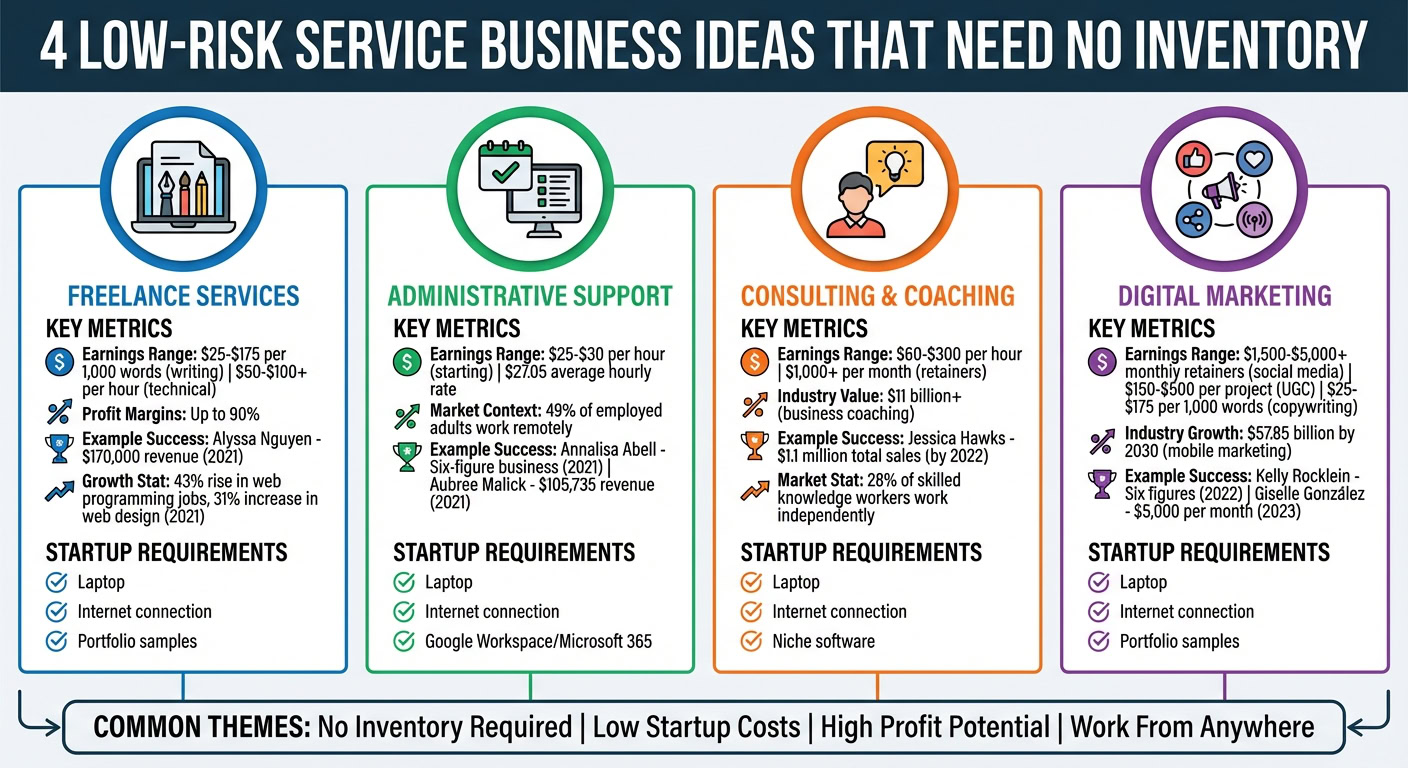
Starting a business doesn’t have to be expensive or complicated. Service-based businesses let you sell your skills and time instead of physical products, avoiding the hassle of inventory, shipping, and storage. These businesses are cost-effective, flexible, and can be started with just a laptop and internet connection. Here are four low-risk service business ideas:
- Freelance Services: Writing, graphic design, or web design can bring in high profit margins with minimal startup costs.
- Administrative Support: Virtual assistants and bookkeepers are in demand, especially with remote work on the rise.
- Consulting/Coaching: Share your expertise in business, career growth, or personal skills to earn income through one-on-one or group sessions.
- Digital Marketing: Manage social media, create user-generated content (UGC), or write copy to help businesses grow online.
These options let you start small, test the market, and grow at your own pace. With no inventory to manage, your focus stays on providing value and earning a higher share of profits.
1. Freelance Services
Freelance services offer a flexible way to start small, working with part-time clients, and grow rapidly without the hassle of managing physical inventory. What’s great about freelancing is that it can begin as a side hustle and evolve into a full-time career – completely on your terms. Below are some standout freelance niches that highlight these advantages.
Freelance Writing
Freelance writing is one of the easiest ways to break into the service industry. Writers craft content for blogs, websites, and marketing campaigns. Depending on your expertise, blog posts can bring in anywhere from $25 to $175 per 1,000 words, while technical writing jobs may pay $50–$100 or more per hour. Specializing in niches like finance, healthcare, or SaaS can significantly boost your earning potential compared to generalist writers.
Even if you don’t have clients yet, you can build a portfolio by creating sample pieces that showcase your skills and expertise. Platforms such as Upwork, Fiverr, and ProBlogger are great places to find your first gigs. With minimal marketing expenses, freelance writing can deliver profit margins of up to 90%. Similarly, other creative services like graphic design operate on a straightforward digital delivery model.
Graphic and Web Design
Graphic and web design give visually inclined freelancers a chance to turn their creativity into income. Designers work on projects like logos, branding, websites, and marketing materials. To thrive in this space, mastering tools like Adobe Creative Suite, HTML, CSS, and WordPress is essential.
Take Alyssa Nguyen, for example. After starting her design business in 2020, she generated approximately $170,000 in revenue by 2021, focusing on branding and design services for companies owned by women and people of color. Her success underscores the value of tailoring your services to a specific audience, which can lead to premium pricing. Supporting this trend, Upwork reported a 43% rise in web programming jobs and a 31% increase in web design gigs in 2021.
sbb-itb-ba0a4be
2. Administrative Support
Administrative support services turn organizational skills into a profitable business, much like freelance work. With nearly 49% of employed adults now working remotely most or all of the time, the demand for remote administrative help continues to grow. Here are two key opportunities in this field.
Virtual Assistant Services
Virtual assistants handle a variety of tasks for professionals and small businesses, including managing calendars, responding to emails, and tracking projects. In the United States, the average hourly rate for virtual assistants is $27.05, though this can vary based on experience and specialization. If you’re just starting out, aim to charge between $25 and $30 per hour to ensure your business remains sustainable.
Focusing on a specific niche – such as real estate, e-commerce, or wellness – can make it easier to attract clients, as many prefer working with specialists rather than generalists. For example, Annalisa Abell, the founder of Elevated Assist, built a six-figure business by offering administrative support to small businesses. She started her venture in 2019 while still working full-time and reached her milestone in 2021. Similarly, Aubree Malick transitioned from teaching elementary school in 2018 to running her own virtual assistant business, earning $105,735 in revenue by 2021. Starting a virtual assistant business requires very little overhead – just a laptop, a reliable internet connection, and tools like Google Workspace or Microsoft 365.
Another thriving administrative service in the digital space is starting a bookkeeping business.
Bookkeeping Services
Bookkeeping involves managing invoices, tracking expenses, and preparing financial reports using cloud-based tools like QuickBooks or FreshBooks. This service allows businesses to stay organized and meet tax obligations without hiring full-time staff. You can structure your pricing in various ways: charge hourly, offer monthly retainers for ongoing support, or set project-based fees – for instance, $300 to set up an online filing system. Since bookkeeping is entirely digital, it doesn’t require physical products or storage, making it a low-risk and efficient service to offer.
3. Consulting and Coaching
Consulting and coaching allow you to turn your knowledge and skills into income without dealing with physical products. The business coaching industry alone is valued at over $11 billion. On top of that, nearly 28% of skilled knowledge workers now work independently. These services often rely on virtual sessions for strategy and guidance, offering low overhead costs and plenty of flexibility. Much like freelancing or administrative support, consulting and coaching let you monetize your expertise directly.
Business Consulting Services
Business consulting focuses on helping companies tackle challenges – whether it’s launching campaigns or improving operations. Consultants in this field typically charge between $60 and $300 per hour. For example, digital marketing consultants earn $75 to $150 per hour, while IT and cybersecurity experts can command rates ranging from $100 to $250 per hour.
A standout example is Jessica Hawks, who started a coaching platform in 2020 for aspiring virtual assistants and social media professionals. After her TikTok content gained traction, she scaled her business to $1.1 million in total sales by 2022, teaching others how to start freelance careers. To launch a consulting business, all you need is a laptop, a stable internet connection, and some niche software. The key to attracting high-paying clients is addressing pressing, high-value problems like adapting to new regulations or integrating AI tools into their operations.
While business consulting focuses on company-wide solutions, skills and career coaching hones in on individual growth.
Skills and Career Coaching
Skills and career coaching helps individuals sharpen specific abilities or transition into new roles. Many life coaches and niche specialists have found success, earning $60,000 annually or generating over $6,000 per month through tailored programs.
The secret to thriving in consulting and coaching is to teach from experience. As Jessica Hawks explains:
"In order to teach people or guide people, you have to have done exactly what you’re helping them do".
You can offer your services through hourly sessions, project-based packages, or monthly retainers, with ongoing support often starting at $1,000 per month. Since these services don’t require physical materials, your main investment is your time and expertise.
4. Creative and Digital Marketing
Creative and digital marketing services make it possible to turn your expertise into income without needing to sell physical products. Take the mobile marketing industry, for example – it’s expected to hit a staggering $57.85 billion by 2030. With just a laptop and internet connection, you can offer your skills to clients from virtually anywhere.
Social Media Management and UGC Creation
Social media management is all about helping brands maintain a strong online presence. This includes creating content, scheduling posts, and engaging with followers. For these services, monthly retainers typically range from $1,500 to $5,000 or more, depending on the scope of work. Another growing opportunity in this space is User-Generated Content (UGC). Unlike social media influencers, UGC creators focus on producing authentic-looking videos and photos for brands, and you don’t need a massive personal following to succeed.
Take Kelly Rocklein, for instance. In 2022, she earned six figures with her UGC side hustle, UGC Pro, all while holding down a full-time corporate job. Similarly, UGC creator Giselle González reported earning about $5,000 per month in early 2023 by crafting video ads for small beauty and wellness brands on Instagram and TikTok. Her strategy? Reaching out to decision-makers on LinkedIn and showcasing a portfolio of sample work featuring products she already owned. UGC creators typically charge between $150 and $500 per project.
Whether you’re managing social media accounts or creating persuasive content, these services can deliver measurable results for businesses.
Copywriting and Content Creation
Copywriting involves crafting persuasive text for websites, ads, email campaigns, and blog posts. For example, a 1,000-word article can pay anywhere from $25 to $175, with specialized niches often commanding higher rates. Platforms like Fiverr are excellent places to market your skills, especially if you focus on a specific niche.
To stand out, shift the focus from what you deliver to the results you bring – such as increased web traffic or improved conversion rates. Highlighting outcomes can help you justify premium fees. If you’re just starting out, build a portfolio by creating sample work, like mock blog posts or ad campaigns, to showcase your abilities. On freelancing platforms like Upwork, digital marketing professionals earn median hourly rates between $15 and $45, and those with expertise in specialized areas often earn significantly more.
Conclusion
Starting a no-inventory service business is an excellent way to keep startup costs low. All you really need to get going are your skills, a laptop, and a reliable internet connection. Many entrepreneurs begin with just these basics and a simple website to showcase their services.
Since there’s no inventory to manage, you eliminate the risks associated with unsold products. Instead, you can focus on honing your expertise, which often leads to higher profit margins over time. Plus, this type of business offers flexibility, allowing you to adapt quickly to market trends as they evolve. As you grow, scaling can involve turning your expertise into digital products like courses or templates, adding another layer of revenue potential.
The best way to start is by leveraging what you already know. Match your skills to current market needs. Before diving into professional branding efforts, test the waters through freelance platforms or social media to gauge demand. Narrowing your focus to a specific niche can also make your marketing efforts more effective while reducing competition. This step-by-step approach sets the stage for long-term, profitable growth.
With approximately 28% of skilled knowledge workers now freelancing, there’s no better time to seize these opportunities. Choose a service that aligns with your strengths and interests, start small, and build from there. The growth potential is enormous, and the barriers to entry are as low as they’ve ever been.
FAQs
What key skills do you need to start a freelance service business?
To thrive in a freelance service business, you’ll need a blend of key skills to attract clients, deliver top-notch work, and keep your operations running smoothly. Clear communication is a must – it’s how you understand what clients want, pitch your ideas effectively, and share results in a way that resonates.
Equally important are time management and organizational skills. Juggling multiple projects, meeting deadlines, and staying efficient can make or break your workflow. On top of that, self-discipline is critical when you’re working solo – it keeps you focused and productive without the structure of a traditional office.
You’ll also want to be comfortable with basic tech tools like email, scheduling apps, and invoicing software. These tools streamline your processes and help you stay on top of the day-to-day. And let’s not overlook the importance of personal branding and marketing. Building a strong portfolio, setting competitive prices, and promoting your services are key to standing out and growing your client base.
Mastering these skills sets the stage for a business that’s low-risk, easy to manage, and doesn’t require inventory. It’s all about laying the groundwork for success.
How do I choose the best niche for my virtual assistant business?
To carve out the right niche for your virtual assistant (VA) business, start by reflecting on the tasks you genuinely enjoy and excel at. Are you great at managing schedules, organizing emails, or offering specialized services like bookkeeping or real estate support? Focusing on areas where your skills and passions overlap will not only keep you motivated but also allow you to consistently deliver top-notch work.
Next, dig into market demand. Explore job boards, freelance websites, and industry-specific forums to identify services that are in high demand. Look for industries – like tech startups or healthcare – that are willing to invest in premium VA services. Pay close attention to common challenges businesses face, such as lead generation or navigating compliance tasks, and think about how your skills could provide solutions.
Once you’ve narrowed down a niche, test the waters by offering a trial package or discounted services to a handful of clients. Gather their feedback to fine-tune your offerings, and evaluate your success based on client satisfaction and the income you generate. This approach will help you zero in on a niche that matches your strengths, meets market needs, and sets you up for a steady, rewarding business.
How can I attract high-paying clients for my consulting business?
To attract well-paying consulting clients, start by establishing yourself as an expert in a specific niche. Identify a problem you can solve effectively and demonstrate how you deliver measurable results. Build trust by featuring client success stories, glowing testimonials, and clear examples of ROI on your website and LinkedIn profile. A strong value proposition that speaks directly to your target audience’s challenges and goals will set you apart.
Be visible where high-value clients spend their time. Share insightful content – like blog posts, industry reports, or webinars – that showcases your expertise and offers solutions to pressing issues. LinkedIn is a powerful tool for connecting with decision-makers. Personalize your outreach by addressing their unique pain points or acknowledging recent achievements. When pitching your services, craft tailored proposals that focus on delivering results and solving their specific problems.
Don’t overlook the power of referrals and partnerships. Satisfied clients can open doors to new opportunities by introducing you to their network. Partnering with businesses that offer complementary services can also help you expand your reach. Consider implementing a structured referral program to encourage introductions and keep a steady stream of premium clients coming your way.