
I can answer common virtual mailbox questions fast: international package forwarding works when I check three things first – item rules, shipping cost, and customs details. If I skip any of them, I risk delays, extra fees, or a returned package.
Here’s the short version:
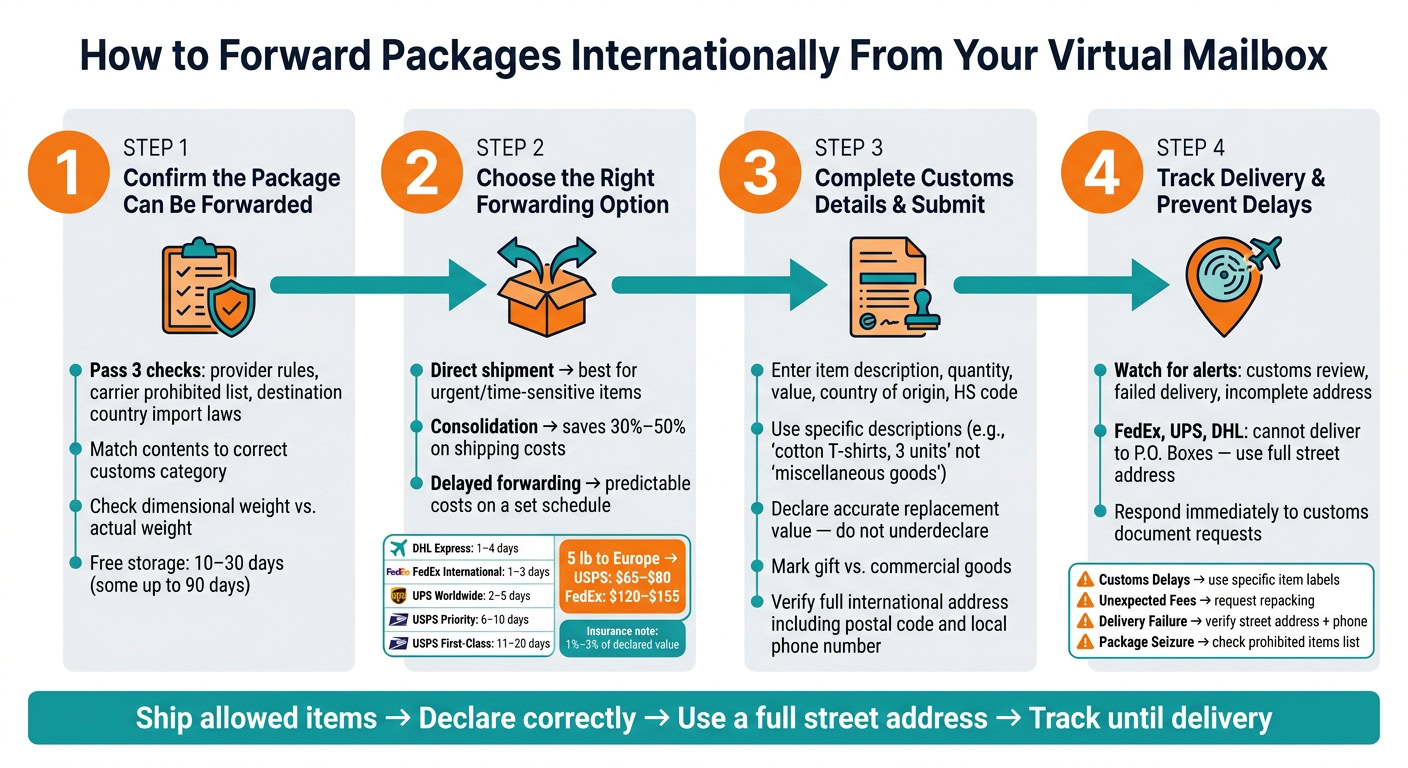
- I confirm the item can be shipped based on how my virtual mailbox works, carrier, and destination country rules
- I compare direct forwarding, storage, and consolidation
- I use consolidation to cut shipping costs by 30% to 50% when I have multiple packages
- I check dimensional weight, because a large light box can cost more than a smaller heavy one
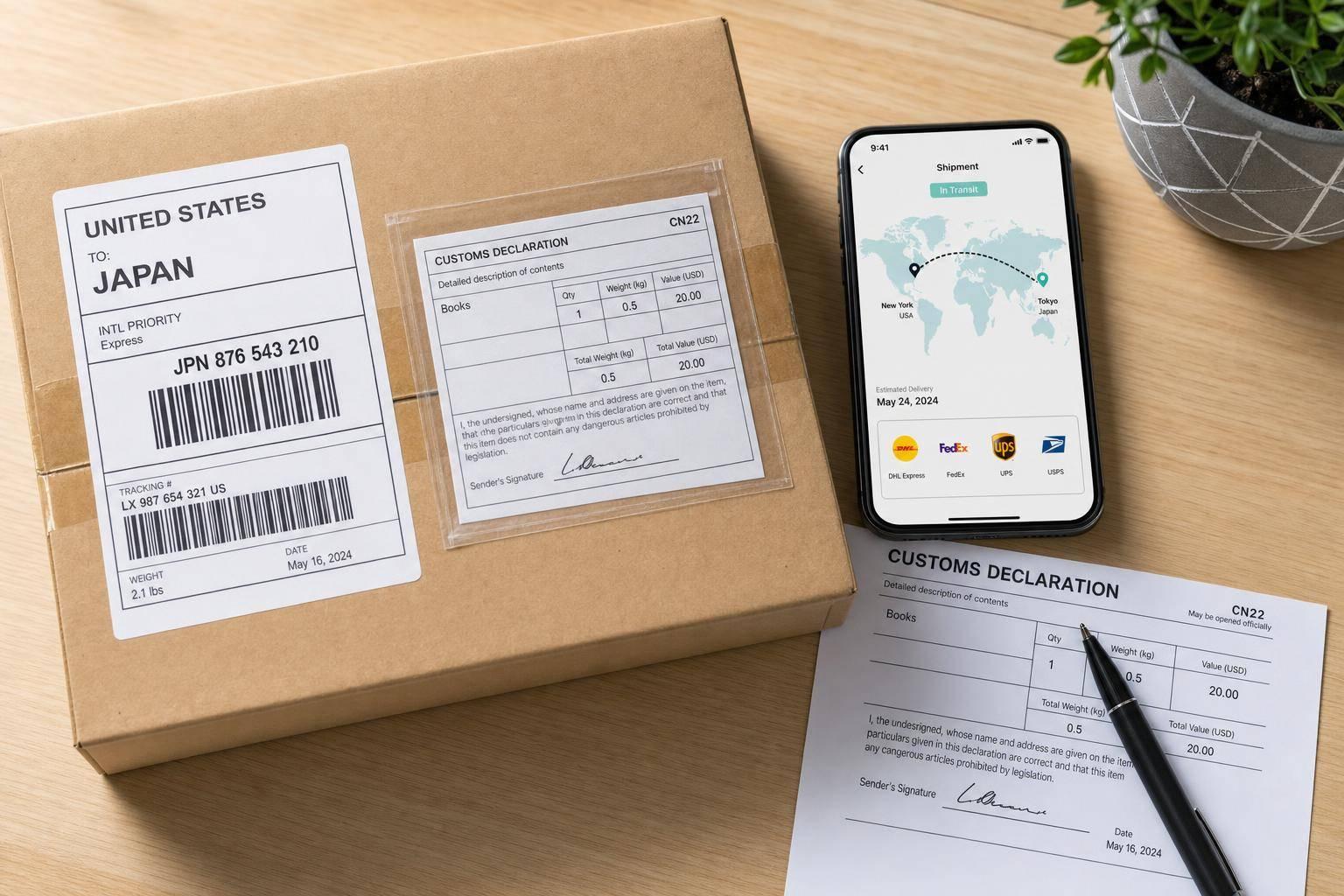
- I fill out customs forms with clear item descriptions, value, origin, and HS codes
- I pick a carrier based on price, speed, and tracking
- I track the shipment closely to catch customs holds or address issues early
A few numbers stand out. Many providers give 10 to 30 days of free storage, and some offer up to 90 days. Insurance often costs 1% to 3% of declared value. And for a 5 lb package to Europe, I may pay around $65 to $80 with USPS Priority Mail International or $120 to $155 with FedEx International Priority.
If I want fewer problems, I keep the process simple: ship allowed items, declare them correctly, use a full street address, and watch tracking until delivery.
Step 1: Confirm the Package Can Be Forwarded
Start by making sure the package can legally and practically be forwarded. If you skip this part, the shipment can get rejected, held, or sent back.
Check provider, carrier, and destination restrictions
Every international mail forwarding request has to pass three checks: your virtual mailbox provider’s rules, the carrier’s prohibited-items list, and the destination country’s import laws.
Your virtual mailbox provider will refuse hazardous, illegal, or perishable items. The carrier has its own prohibited-items list for dangerous goods and restricted materials. Then there’s the destination country. Import laws can vary a lot, and some items allowed in the U.S. may be restricted or banned in another country. If an item sits in a gray area, check the destination country’s customs authority website before you send it.
Match the shipment type to the contents
If the item is allowed, the next step is to match the contents to the right customs category. The declared customs category needs to match what’s actually in the package. Be specific. A clear description works better than vague labels like "miscellaneous goods", which can slow down customs clearance.
You should also check the destination country’s de minimis threshold before declaring the value. If the shipment falls below that limit, it may enter duty-free.
Confirm weight, dimensions, and storage timing
Shipping carriers charge by actual weight or dimensional weight, whichever is higher. That means a big, lightweight box can cost more to ship than a smaller, heavier one. If repackaging can cut down the weight or box size, ask for it.
It also helps to check how long your provider will store the package for free before you wait to combine it with other orders. Most providers give 10 to 30 days of free storage, and some go as long as 90 days. After that, daily or monthly fees may kick in. That deadline matters because it helps you decide whether to ship now or hold off for more packages.
sbb-itb-ba0a4be
Step 2: Choose the Right Forwarding Option
Once a package qualifies, the next move is picking the best way to send it out. Some shipments need to move fast. Others need to stay cheap. And sometimes the main goal is keeping risk low. The right choice depends on how urgent the package is, how many items you’re sending, what you want to spend, and how much risk you’re willing to take.
Direct shipment, consolidation, storage, or delayed forwarding
Direct shipment works best for time-sensitive items, like a signed contract or a replacement part. If speed matters most, this is usually the way to go.
Package consolidation makes more sense when several items are arriving around the same time. Your forwarding provider packs them into one box, which can trim shipping costs. In many cases, this cuts international shipping costs by 30% to 50%.
Delayed forwarding groups outbound shipments on a set schedule, such as every two weeks. That makes costs easier to predict and plan for.
Choose a carrier and service level
Your carrier choice affects delivery speed, tracking quality, and the final price. In plain English: the cheapest option isn’t always the best fit, and the fastest one can hit your budget hard.
| Carrier | Best For | Typical Speed | Key Tradeoffs |
|---|---|---|---|
| DHL Express | Asia, Africa, Middle East | 1–4 business days | Higher cost; strong global reach and customs expertise |
| FedEx International | Europe, Japan, Canada | 1–3 business days | Premium pricing; excellent tracking and reliability |
| UPS Worldwide | North & Latin America | 2–5 business days | Higher cost; very predictable for commercial shipments |
| USPS Priority | Budget-conscious, non-urgent | 6–10 business days | Economical; slower delivery and more likely customs delays |
| USPS First-Class | Canada, lightweight (<4 lbs) | 11–20 business days | Lowest cost; basic tracking |
For a 5 lb shipment to Europe, USPS Priority Mail International usually costs $65 to $80, while FedEx International Priority usually lands between $120 and $155. That gap adds up fast, so it’s worth matching the service level to the package instead of paying top dollar by default.
After you pick the carrier and service level, use that information to finish customs details and checkout in Step 3.
When to add shipping insurance
Standard carrier coverage is often limited. If you’re sending electronics, jewelry, or professional equipment, extra insurance is strongly recommended.
Extra insurance usually costs 1% to 3% of the item’s declared value. Be careful here: declare the value accurately. Claims are usually paid based on the declared customs value, so if you underdeclare, your payout may be lower than expected.
Once coverage is in place, the shipment is ready for customs entry and approval.
Step 3: Complete Customs Details and Submit the Forwarding Order
Prepare accurate customs information
Open the package in your dashboard and finish the customs form before checkout. After you pick the carrier and service level, enter each item’s description, quantity, value, country of origin, and HS code. If it’s a business shipment, you’ll also need a commercial invoice to help move the package through clearance faster.
Be specific with item descriptions. Generic labels can slow things down at customs. For example, write cotton T-shirts, 3 units instead of something broad and vague.
Use the item’s actual replacement value from the receipt. Don’t lower the value just to cut duties. That can be treated as customs fraud and may lead to seizures or fines.
You’ll also need to mark whether the shipment is a gift or commercial goods, since duty thresholds can change based on the category.
Estimate shipping cost and delivery time before paying
Before you approve the shipment, check the live quote in your dashboard. The final cost is based on the destination, actual weight vs. dimensional weight, service level, and any consolidation fees. Duties and taxes come from the destination country’s customs authority, not your mailbox provider.
It also helps to check the destination’s duty-free threshold before you pay. If the shipment goes above that limit, import duties may apply.
Enter the international address and approve the shipment
Once your customs details are done and you’ve looked over the cost, choose the package or consolidated bundle in your dashboard and enter the recipient’s international address exactly as the destination country requires. That includes the right province or state field, postal code, and local phone number.
Address mistakes are one of the most common reasons packages run into delivery exceptions or failed delivery attempts.
After that, review everything one more time, add insurance if you want it, and approve payment to submit the shipment. Once it’s approved, you can move to tracking and follow customs status and delivery in Step 4.
Step 4: Track Delivery and Prevent Delays, Fees, and Failed Deliveries
Monitor tracking, customs holds, and address issues
After you approve the forwarding order, tracking becomes your main job until the package arrives. Once the label is created, you’ll get a tracking number. Keep an eye on it all the way through delivery.
FedEx, UPS, and DHL usually post scan updates at each checkpoint. USPS is different. Tracking often stops once the parcel is handed off to the local postal service.
Pay close attention to status alerts like customs review, request for supporting documents, failed delivery attempt, and incomplete address. These updates are your early warning signs. If customs holds the package, send the commercial invoice, receipts, or item details right away to the carrier or customs authority.
If a shipment is marked undeliverable, one common reason is the delivery address. FedEx, UPS, and DHL cannot deliver to P.O. Boxes. Use a verified street address and include a local recipient phone number.
Avoid extra charges on future shipments
Tracking alerts help you spot trouble early, before it turns into a failed delivery or added fees.
| Issue Type | Common Cause | How to Prevent |
|---|---|---|
| Customs Delays | Vague descriptions like "personal items" or missing invoices | Use specific item labels and include accurate commercial invoices |
| Unexpected Fees | Dimensional weight exceeding actual weight | Ask for repacking to remove excess retail packaging |
| Delivery Failure | Incomplete address or P.O. Box restriction | Check the full street address and include a local phone number |
| Package Seizure | Prohibited items (e.g., standalone lithium batteries, aerosols) | Review carrier and destination country prohibited item lists before shipping |
The pattern is pretty simple: most shipping problems start with vague paperwork, bad address details, or items that should never have been shipped in the first place. Catch those issues early, and you avoid a lot of back-and-forth later.
Conclusion: A Simple Workflow for Reliable International Forwarding
When you handle the process the right way, forwarding becomes much more predictable. Accurate customs data, the right carrier, and active tracking help cut delays, fees, and failed deliveries. For remote business owners, digital nomads, and international clients, that turns international forwarding into a repeatable part of running a remote business.
FAQs
How do I know if my package can be shipped internationally?
Check the general shipping rules first, then look at the rules for your destination country. That second step matters more than many people think. Every country has its own list of prohibited and restricted items, along with size, weight, and service limits.
Before you send anything, review the International Mail Manual’s Individual Country Listings and USPS Publication 52. Then confirm that your carrier is currently accepting shipments to that country and check for any international service disruptions that could affect delivery.
When should I consolidate packages instead of shipping right away?
Consolidate packages when you have items coming in from different retailers. It can cut international shipping costs by 30% to 60% and help you avoid extra handling fees and dimensional weight charges that can pile up fast.
That said, consolidation isn’t always the right move. If you need one item ASAP, waiting for the rest will slow everything down. And if one product is very fragile or much heavier than the others, sending it on its own may be the safer call.
What customs details do I need before forwarding a package?
Before you forward a package, fill out the customs details with care. Bad or vague info can lead to delays, fines, or even seizure.
Include:
- a specific, honest description of each item
- the declared value in USD for each item
- the country of origin
- the correct HS tariff code for commercial goods
- confirmation that the items aren’t restricted or prohibited in the destination country
“Gift,” “sample,” or “parts” usually won’t cut it. Customs wants clear, exact details about what’s in the box and what it’s worth.
Related Blog Posts
- Step-by-Step: Forwarding USPS Mail to Your Virtual Mailbox Without Missing a Letter
- Virtual Mailbox in Rockville, Maryland: Mail Scanning, Forwarding and a Real Street Address
- Virtual Mailbox in Inglewood, California: Mail Scanning, Forwarding and a Real Street Address
- How to Set Up a Virtual Mailbox While Living Abroad