
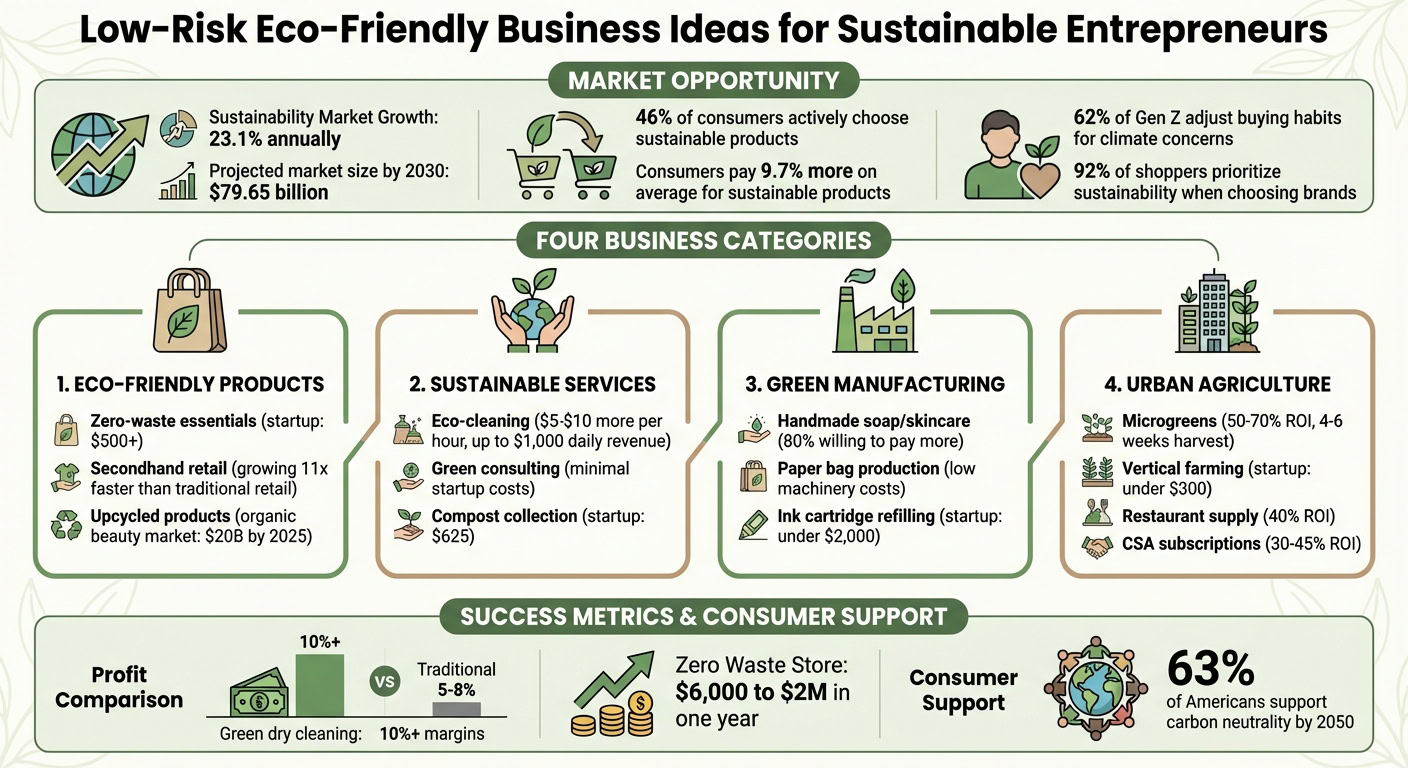
Want to start a business that’s good for the planet and your wallet? Eco-friendly ventures are booming, with the sustainability market projected to grow at 23.1% annually, reaching $79.65 billion by 2030. Consumers are driving this shift – 46% actively choose sustainable products, paying nearly 10% more on average. Younger generations are even more invested, with 62% of Gen Z adjusting their buying habits to address climate concerns.
Here’s a quick breakdown of low-risk ideas you can start today:
- Eco-Friendly Products: Sell zero-waste essentials, secondhand items, or upcycled goods with minimal upfront costs.
- Green Services: Offer eco-cleaning, sustainability consulting, or compost collection – all requiring low startup investments.
- Small-Scale Green Manufacturing: Create handmade soaps, biodegradable paper bags, or refill ink cartridges using simple equipment.
- Urban Agriculture: Grow microgreens or herbs in small spaces for high returns, supplying local markets or restaurants.
These ideas are affordable to launch and tap into a growing demand for eco-conscious solutions. Whether you’re selling or providing services, starting small and focusing on quality can lead to success.
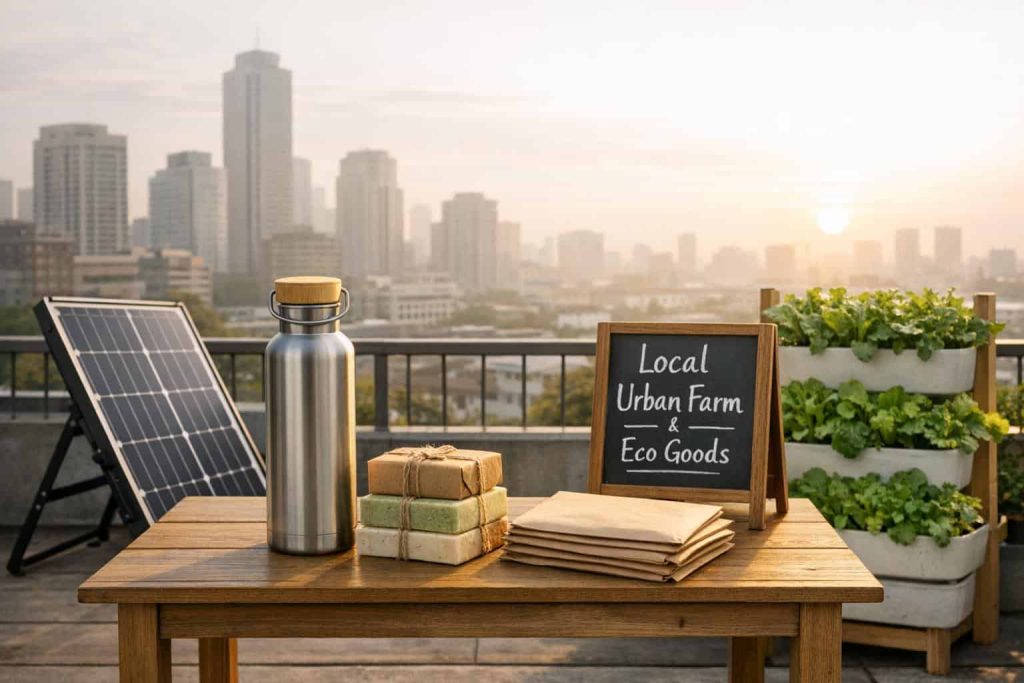
1. Eco-Friendly Product Sales
Selling eco-friendly products is a practical way for entrepreneurs to step into the green business world while addressing the demand for sustainable everyday items. Here are three effective models – zero-waste essentials, secondhand retail, and repurposed products – that offer low-risk opportunities to start.
Zero-Waste Household Essentials
Everyday items like cleaning supplies and personal care products are a great starting point, requiring relatively little upfront investment. Products such as plastic-free cleaning supplies and refillable cleaning tablets have helped companies like Zero Waste Store and Blueland grow from humble beginnings to multi-million-dollar ventures. You can launch a similar business with startup costs as low as $500.
Secondhand and Consignment Retail
Reselling pre-owned items is a smart way to minimize inventory risks while keeping products out of landfills. This approach works particularly well for fashion, furniture, and home decor, where the principles of the circular economy are gaining traction. With minimal capital, you can source items through donations or consignment agreements and sell them online using platforms like Etsy or Shopify, avoiding the expenses tied to physical retail spaces. Notably, the secondhand fashion market is expanding 11 times faster than traditional retail.
Upcycled and Repurposed Products
Turning waste into something valuable is another exciting avenue. Take My Skin Feels, for example. Founded by Danielle Close, the company transforms food byproducts destined for waste into premium skincare products, tapping into the organic beauty market projected to hit $20 billion by 2025 . By using free or inexpensive raw materials – like fabric scraps for home goods, wood pallets for furniture, or vegetable pulp for snacks – you can reduce waste while meeting the growing demand for sustainable alternatives.
sbb-itb-ba0a4be
2. Sustainable Services
Service-based green businesses offer a smart way to dive into eco-conscious entrepreneurship without breaking the bank. These ventures often require minimal upfront costs – sometimes just a laptop and a few basic tools – and cater to recurring customer needs. Plus, they align with the growing demand for environmentally responsible options.
Eco-Friendly Cleaning Services
Starting an eco-friendly cleaning service is surprisingly affordable, with startup costs under $500. Instead of using harsh, chemical-laden products, these services rely on plant-based alternatives, appealing to health-conscious households and businesses. The best part? You can charge $5 to $10 more per hour than traditional cleaning services. With the right team, daily revenue can hit as much as $1,000. To stand out even more, consider earning certifications like Green Seal, which can help build trust and avoid accusations of greenwashing.
Green Business Consulting
If you’re knowledgeable about sustainability practices, green business consulting could be a great fit. The startup costs are minimal – think business registration fees and a laptop. As companies increasingly look for ways to become more eco-friendly, they need help with tasks like energy audits, supply chain improvements, and regulatory compliance. Sustainability consultant Barbara Englehart notes that businesses are actively seeking this kind of guidance. Focusing on a specific niche can help you carve out a unique space in the market, allowing you to charge higher rates with relatively low financial risk.
Compost Collection and Processing
A compost collection service is another low-cost venture with big potential. For about $625 – including $550 for commercial-grade bins and some basic tools – you can start a subscription-based service to collect food waste from homes and restaurants. Revenue comes from two streams: subscriber fees and selling the finished compost to gardeners and landscapers. It’s a win-win – diverting organic waste from landfills while creating recurring income. And with 62% of consumers aged 18 to 34 adjusting their habits to combat climate change, there’s clear demand for such services.
These service-based models aren’t just about sustainability – they’re practical, low-risk opportunities to meet the growing market for eco-friendly solutions.
3. Green Manufacturing
Green manufacturing doesn’t have to involve massive factories or complex machinery – it can start small, using simple equipment and sustainable materials that resonate with today’s eco-conscious consumers. These business ideas show how environmentally friendly manufacturing can be both manageable and scalable.
Handmade Soap and Skincare
Handmade organic soap and skincare products are a great way to dip your toes into green manufacturing. With natural ingredients, you can create small test batches and sell them at local markets or online platforms to gauge demand. Considering that 80% of consumers are willing to pay more for sustainable products, chemical-free, organic alternatives are a perfect fit for this growing market. This approach allows you to scale production gradually, avoiding the risks of overstocking or large upfront investments.
Paper Bag Manufacturing
If you’re looking for a slightly larger operation, biodegradable paper bag production is a solid option. With the global push to phase out plastic bags, these eco-friendly alternatives are in high demand among retailers and restaurants. Starting costs are relatively low, with affordable machinery available for cutting and folding. Plus, raw materials like kraft paper are inexpensive. This business naturally lends itself to scaling up – you can begin by supplying local businesses and expand as demand increases. The growing number of plastic bans worldwide only adds to the opportunity, making this a timely and practical venture.
Ink Cartridge Refilling
For a more niche but equally sustainable option, consider launching an ink cartridge refilling service. With startup costs of less than $2,000, this business reduces landfill waste while offering customers a budget-friendly alternative to buying new cartridges. It’s a straightforward process that doesn’t require specialized facilities or equipment, and the profit margins are attractive. Customers benefit from the cost savings and environmental impact, while you enjoy a steady stream of repeat business.
These examples highlight how sustainable manufacturing can be both financially rewarding and low-risk, proving that going green doesn’t have to mean going big.
4. Urban Agriculture
Urban agriculture is a fantastic addition to eco-friendly products, sustainable services, and green manufacturing. It opens up a low-risk opportunity for entrepreneurs looking to combine sustainability with profitability.
Microgreens and Vertical Farming
You don’t need sprawling farmland to dive into urban agriculture. In fact, a mini-farm can thrive in as little as six square feet. Microgreens are a standout option here – they’re quick to grow and offer a solid return on investment (ROI). Typically, microgreens can be harvested in just 4 to 6 weeks, compared to the months traditional crops often require. With an ROI of 50–70%, they’re a smart choice for beginners.
Starting a mini-farm is surprisingly affordable. A vertical rack system, complete with metal shelving, LED grow lights, trays, and a timer, can be set up for under $300. This makes it an excellent option for urban entrepreneurs working with limited space. To keep things simple, start with fast-growing crops like basil, arugula, lettuce, or radishes. These are forgiving plants that allow you to learn and minimize risks as you go.
Automation can make your setup even more efficient. For example, an irrigation system that syncs with real-time weather data can cut your water usage by up to 30%, saving money and reducing your environmental footprint. If you’re working with urban soil, test it for contaminants like lead. If contamination is an issue, raised beds or hydroponic systems are safe and effective alternatives.
Urban agriculture offers a variety of ways to generate income. You can supply local restaurants with custom herb mixes (40% ROI), create CSA (Community Supported Agriculture) subscriptions with weekly produce boxes (30–45% ROI), or even launch flower subscription services from rooftop gardens (35–55% ROI). Building relationships with local chefs, grocery stores, and farmers’ markets early on can help you identify demand and fine-tune your crop selection. On top of that, many urban farms qualify for city sustainability grants, which can further reduce your financial risks. With its diverse revenue opportunities and eco-conscious appeal, urban agriculture is a smart, sustainable venture for modern entrepreneurs.
Conclusion
Sustainable businesses aren’t just good for the planet – they make financial sense too. With 46% of consumers actively seeking out sustainable products and willing to pay an average of 9.7% more for them, the demand is undeniable. This growing market underscores the potential of the eco-friendly ventures discussed earlier.
From selling green products and offering sustainable services to exploring urban agriculture and eco-conscious manufacturing, the opportunities are both impactful and profitable. Take green dry cleaning, for example – these businesses often see profit margins of 10% or more, compared to the 5% to 8% margins of traditional dry cleaners. Or consider the success of Zero Waste Store co-founders Sarah Cieslinski and JJ Follano, who scaled their annual sales from $6,000 to $2 million in just one year by focusing on plastic-free and compostable products.
These examples prove that starting a green business is achievable. Whether you’re selling eco-friendly goods or diving into urban farming, the key is to start small, test your idea with real customers, and prioritize sustainability from the outset. Look into tax incentives and grants designed for green businesses, earn certifications to build trust, and focus on addressing real needs in your market.
The momentum toward sustainability is only growing. With 63% of Americans backing the goal of carbon neutrality by 2050 and 92% of shoppers prioritizing sustainability when choosing brands, aligning your business with environmental values isn’t just a trend – it’s a smart long-term strategy. Whether you’re creating upcycled products, offering eco-consulting, or launching a vertical farm, there’s no better time to turn your sustainable idea into a thriving business.
FAQs
What are the typical startup costs for an eco-friendly business?
Starting a green business can be budget-friendly or demand a more substantial investment, depending on your approach. If you’re leaning toward service-based ideas like eco-consulting, upcycled crafts, or green cleaning services, you might only need about $500 to get started. This amount typically covers essentials like setting up a website, creating branding materials, and purchasing basic supplies.
On the other hand, product-based businesses – think handmade goods or upcycled items – often require a bit more, with startup costs running into a few thousand dollars. If you’re planning something more ambitious, like renewable energy installations or small-scale manufacturing, you could be looking at an investment of $20,000 to $30,000 to cover equipment, permits, and initial materials.
To keep expenses under control, consider starting with a minimal viable product, focus on digital marketing to reach your audience, and make use of existing tools to build your business step by step.
What are the best ways to market eco-friendly products effectively?
To successfully market eco-friendly products, it’s essential to blend sustainability-focused messaging with strategies that connect with environmentally aware shoppers – without breaking the bank. Research indicates that many U.S. consumers are open to paying a bit more for sustainable goods. Highlight your product’s green perks, like reduced carbon footprint, recycled materials, or zero-waste packaging, to justify higher prices and establish credibility.
Connect with your audience by sharing honest, engaging content. For instance, create short videos or social media posts that walk viewers through your product’s lifecycle. You can also invite customers to share their own eco-friendly habits and tag your brand for a chance to be featured on your platforms. Boost your online presence further with blog posts targeting search-friendly phrases like "eco-friendly [product type] USA." Pair this with email campaigns to tell your product’s story, offer time-sensitive promotions (like "10% off with code GREEN10"), or share details about local events and workshops.
Don’t overlook the power of e-commerce platforms equipped with marketing tools. Features like social media integrations and discount code generators can help you track results and tweak your campaigns for better performance. By pairing compelling sustainability narratives with smart digital marketing tactics, you can effectively engage eco-conscious consumers and grow your brand while keeping costs manageable.
What are some profitable and eco-friendly business ideas for sustainable entrepreneurs?
Profitable businesses that prioritize eco-friendly practices often find success by combining high market demand with manageable startup costs. For instance, renewable energy services – like installing residential solar panels or offering energy storage solutions – are booming as more people and companies strive to lower their carbon footprints. Similarly, fields like eco-consulting and sustainability auditing are thriving, with businesses seeking expert advice to navigate environmental regulations and enhance their green image.
On the product side, ventures such as upcycled furniture, biodegradable packaging, and organic skincare products can be quite lucrative, especially when targeting environmentally conscious shoppers. Service-based ideas, including compost collection, e-waste recycling, and eco-friendly cleaning, are also gaining traction. These options often require relatively low initial investment while meeting the growing demand for sustainable living solutions.
For entrepreneurs in the U.S. market, these opportunities offer a chance to combine financial success with a commitment to environmental responsibility.