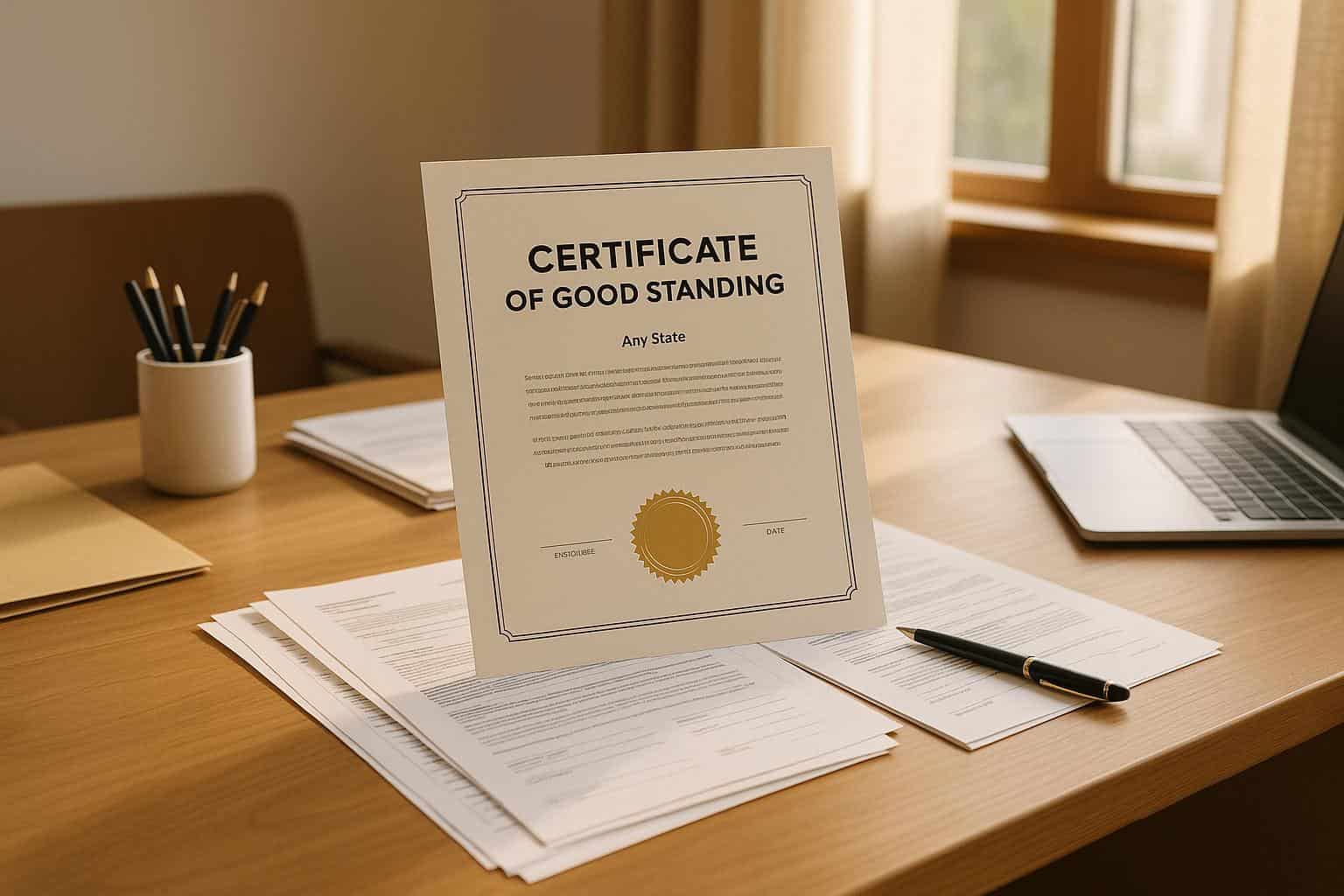

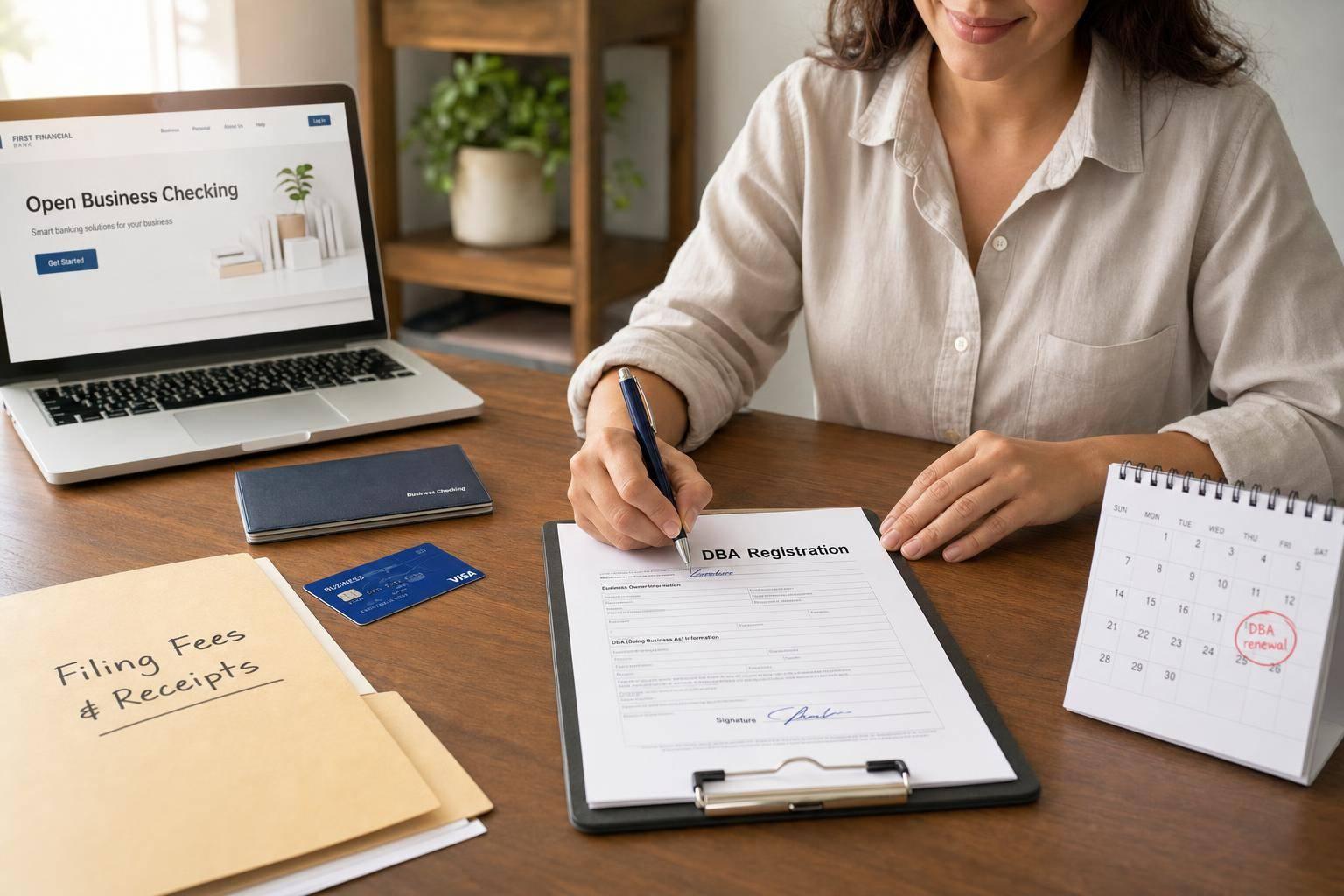
Yes – if I’m a sole proprietor in the U.S., I can file a DBA. A DBA lets me use a business name instead of only my legal name, which can help with branding, invoices, and bank accounts. But it does not form an LLC, and it does not protect my personal assets.
Here’s the short version:
- A DBA is just a registered business name
- I still file taxes as a sole proprietor, usually on Schedule C
- Banks often ask for DBA paperwork if I want an account in my business name
- Fees are often about $10 to $100, based on the state or county
- Rules change by location, and some places require newspaper publication
- Renewals may be due every 1 to 10 years
- A DBA does not give liability protection
- If my business risk is higher, comparing LLCs and corporations may help me find a better fit
If I just want to look more professional and use one business name across my website, payments, and banking, a DBA can be enough. If I want a legal shield between me and the business, it won’t do that.
| Option | What I get | Liability protection | Tax setup | Typical use |
|---|---|---|---|---|
| Sole Proprietor + DBA | Registered business name | No | Pass-through | Freelancers, solo service businesses |
| LLC | Separate legal entity | Yes, in many cases | Pass-through by default | Higher-risk solo businesses |
| Corporation | Separate legal entity | Yes, in many cases | C-Corp or S-Corp | Businesses with more formality |
Bottom line: if I want a business name without changing my business structure, a DBA is often the simplest path.
Why a Sole Proprietor Might Want a DBA
A sole proprietor usually files a DBA for one simple reason: to do business under a business name without changing the business itself.
Use a Brand Name Instead of Your Personal Name
A DBA gives you a business name that fits what you sell and how you want to show up in the market. You can use that name across your website, invoices, and social profiles, so everything feels more consistent. It also keeps your personal name off the materials customers see.
That matters in day-to-day business, too. The same trade name can make it easier to work with banks and vendors under one business name, though you should consider the pros and cons of using a virtual address for banking.
Open a Business Bank Account and Look More Professional
Most banks want DBA paperwork before they’ll open a business checking account in a name other than the owner’s legal name. Once the DBA is on file, you can accept checks made out to your business name and keep business finances apart from your personal accounts, which helps avoid commingling funds.
In plain English, a DBA helps a one-person business show up under one clear business identity. That can make a solo operation look more put together when dealing with customers, banks, and suppliers.
For remote businesses, this often lines up with a cleaner setup on the public side.
Set Up a Professional Business Presence for Remote Work
Many sole proprietors also get an EIN so they can use it on business documents instead of a Social Security number. Remote businesses often use a professional mailing address to keep a home address private.
That combo can help you look more businesslike while keeping some personal details out of public view. Still, a DBA is only a name registration. It can change how you present and run the business, but it does not change your legal structure.
What a DBA Does Not Do: Limits Compared With an LLC or Corporation
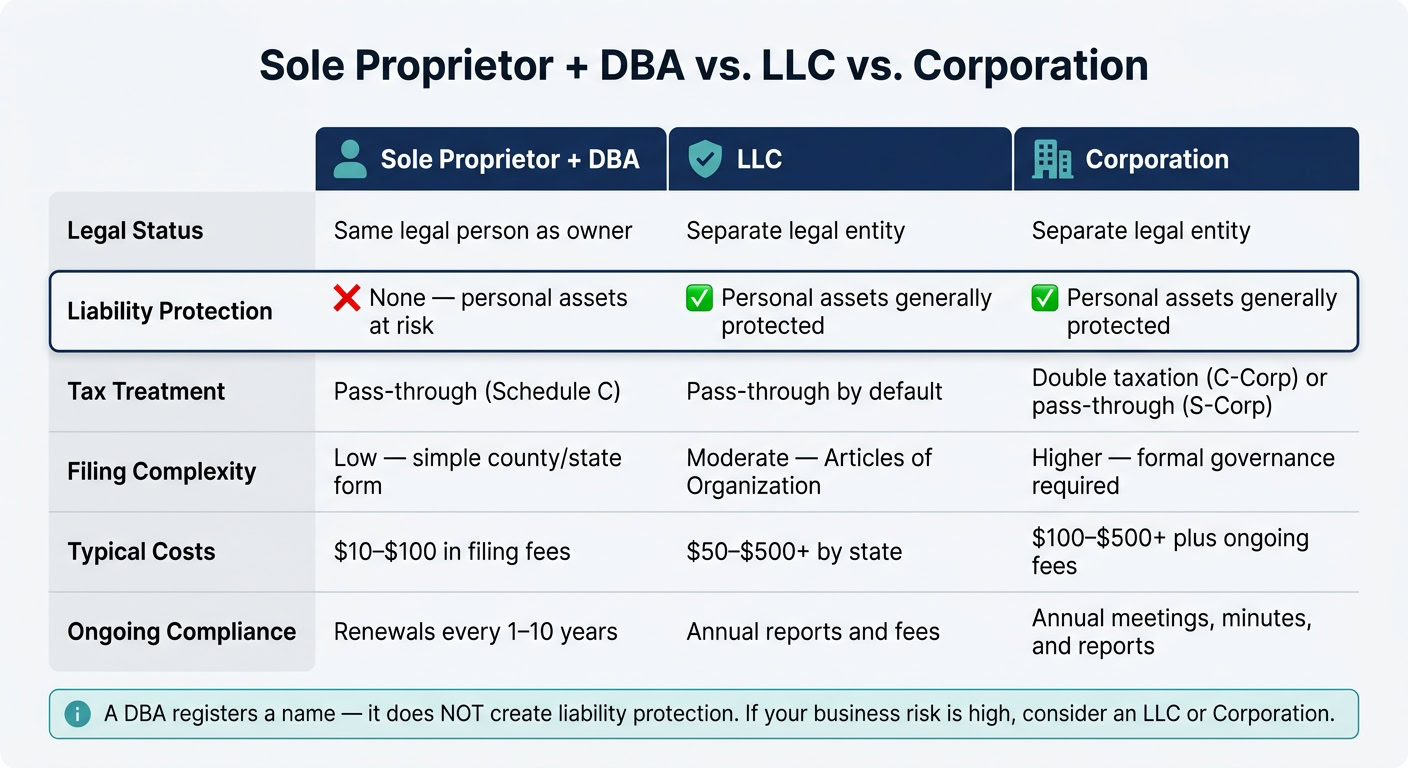
The main tradeoff is pretty simple: a DBA lets you do business under a name, but it does not change your legal exposure.
A DBA Is a Name Registration, Not Liability Protection
A DBA only registers a trade name. It does not create a separate legal entity or shield your personal assets.
If you’re a sole proprietor, you and the business are still the same legal person. So if the business gets sued or can’t pay what it owes, your personal bank accounts, savings, and property may still be on the line. A DBA also does not give you exclusive rights to the name. State filing does not guarantee exclusive use of that name.
Here’s what that looks like in practice.
DBA vs. LLC vs. Corporation: A Side-by-Side Comparison
| Feature | Sole Proprietorship + DBA | LLC | Corporation |
|---|---|---|---|
| Legal Status | Same legal person as owner | Separate legal entity | Separate legal entity |
| Liability Protection | None; personal assets at risk | Personal assets generally protected | Personal assets generally protected |
| Tax Treatment | Pass-through | Pass-through by default | Double taxation (C-Corp) or pass-through (S-Corp) |
| Filing Complexity | Low; simple form | Moderate; Articles of Organization | Higher; corporate formation and formal governance |
| Typical Costs | $10–$100 in state/county fees | $50–$500+ by state | $100–$500+ plus ongoing fees |
| Ongoing Compliance | Renewals every 1–10 years | Annual reports and fees | Annual meetings, minutes, and reports |
The key point is hard to miss: if your business has a lot of risk, a DBA by itself won’t protect your personal assets. An LLC or corporation may make more sense if liability protection is the goal.
If a DBA still matches your setup, the filing steps are fairly simple.
sbb-itb-ba0a4be
How to File a DBA as a Sole Proprietor
If a DBA makes sense for your business, the filing process is usually pretty simple. In most cases, you’re dealing with paperwork, a fee, and a few local rules. The catch? DBA rules change from one state, county, or city to the next, so check with your local filing office before you submit anything.
Choose a Name and Find the Right Filing Office
Start by checking whether your name is available. Search your state business database and the USPTO trademark database before filing.
Then find the office that handles DBA filings in your area. That might be the Secretary of State, but in some places it’s the county clerk or recorder instead. Indiana is a good example: sole proprietors file with the County Recorder in every county where they do business. If you’re not sure where to go, your state’s official business portal or SBA.gov can point you in the right direction.
Fill Out the Form, Pay the Fee, and Meet Publication Rules
Most DBA forms ask for a few basic details:
- Your full legal name
- The DBA name
- Your business address
- Your business structure, which in this case is sole proprietorship
Some offices also ask for ID.
You’ll usually pay a small filing fee, though the amount depends on the jurisdiction. After that, check whether your state or county has a newspaper publication rule. This step can trip people up. In Nebraska, for example, you must submit an affidavit of publication to the Secretary of State within 45 days of registration. Some other jurisdictions have similar rules, so confirm this with the filing office. If you skip it where it’s required, your filing can be delayed or even voided.
Track Renewals and Keep Your Certificate Ready
As soon as your DBA is approved, write down the renewal date. Renewal periods vary by jurisdiction, and if your filing expires, someone else may be able to claim the name.
Also save your DBA certificate right away. Banks often ask for it when you open a business account. If your state requires newspaper publication, keep that affidavit with your records too. And if you don’t want to use your Social Security number on business documents, get an EIN from the IRS.
After filing, the next issue is whether a DBA gives you enough protection or if you should compare a sole proprietorship vs. LLC to better manage your level of risk.
When a DBA Is Enough and When to Move to the Next Step
When a DBA Works Well: Simple Branding for a Low-Risk Sole Proprietorship
Once you understand the filing basics, the next step is simpler: does a DBA match your level of risk?
A DBA makes sense when your main goal is to use a professional business name for marketing and open a dedicated business bank account. If you’re a freelancer, independent consultant, or solo service provider with no employees and low liability risk, forming an LLC can feel like more setup than you need right now.
Use a DBA when you want a brand name and business bank account, and your work carries low legal risk.
When risk goes up, branding alone won’t cover enough ground.
When to Consider an LLC Instead
An LLC starts to make more sense when you hire employees, take on higher-risk contracts, or deal with more liability exposure. The same goes if you want outside investment or need a business structure that lenders and vendors often find easier to work with. If any of that applies now, or is likely to apply soon, an LLC is the smarter next step.
Key Takeaways
Before you file, run through these four checks:
- A DBA is best for branding, banking, and simple solo operations. It lets you use a business name on invoices, signage, and bank accounts instead of your personal name.
- Rules vary by state and county, including publication and renewal deadlines.
- A DBA does not protect personal assets.
- Before filing, check if a business name is taken and note the renewal deadline.
FAQs
Do I need an EIN for a DBA?
No. A DBA and an EIN are separate requirements.
A DBA is simply a registered trade name. If you’re a sole proprietor, you usually don’t need an EIN unless you have employees.
That said, getting an EIN is often a smart move. You can use it in place of your Social Security Number on business paperwork, which helps you avoid putting your SSN on every form. And in many cases, banks ask for an EIN before they’ll let you open a business bank account under your DBA name.
Can I use one DBA in multiple states?
No. One DBA filing does not cover more than one state.
DBA registration happens at the state or local level. So if you do business in more than one state, you need to register that name separately in each one.
And there’s another piece people often miss: a DBA filed in one state does not protect that name in other states.
What happens if my DBA expires?
If your DBA registration expires, it lapses. In plain English, you lose the legal right to do business under that name and need to re-register it if you want to keep using it.
Letting it expire can also create problems with your business bank account if your bank wants proof that the registration is still active. Since renewal timelines vary by state, keep a close eye on your expiration date.