

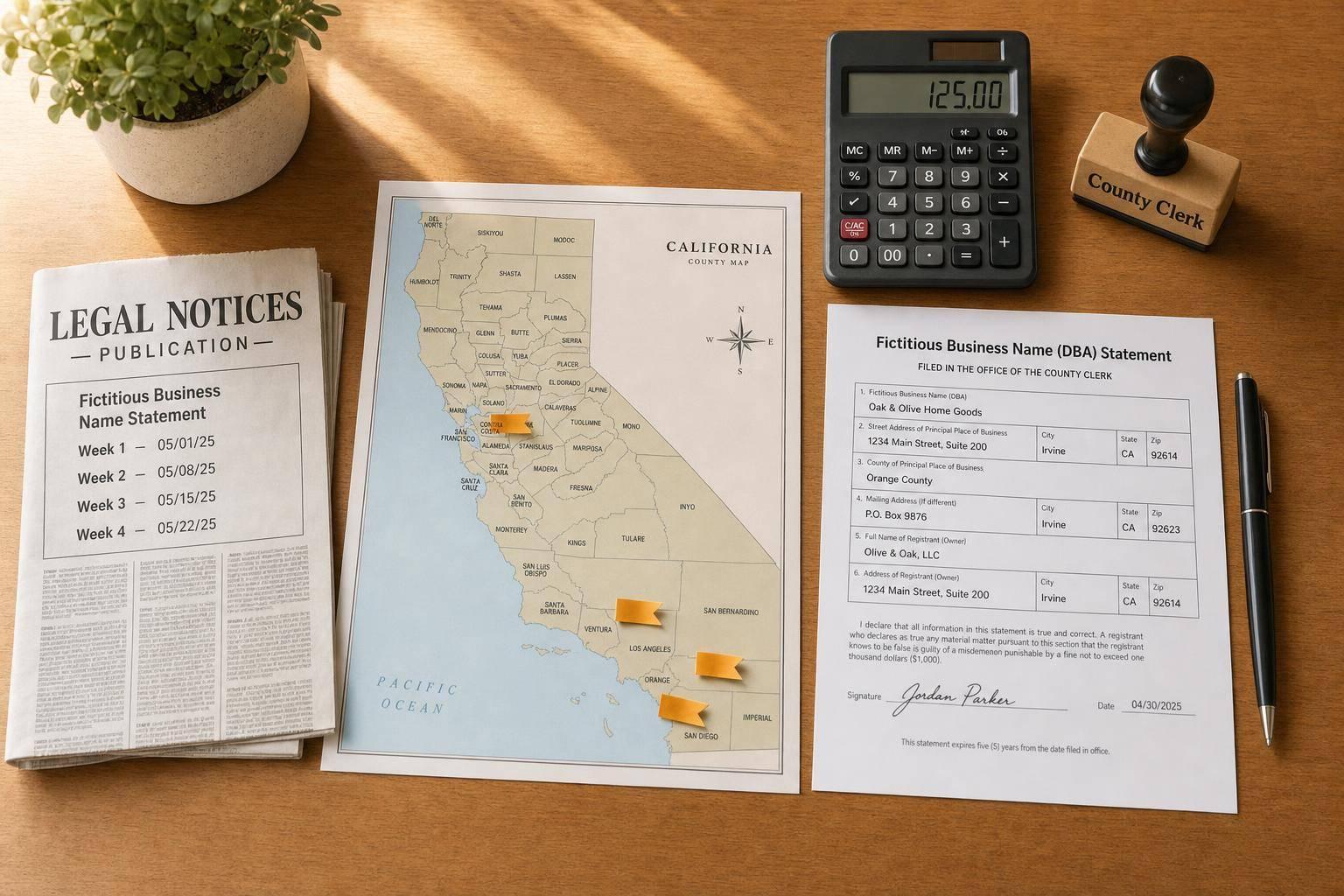
If I file a DBA as a sole proprietorship or LLC in California, I’m dealing with the county clerk, not the state – and my total cost usually lands between $100 and $300.
Here’s the short version: I need to file a Fictitious Business Name (FBN) in the county where my main business address is located, usually within 40 days of first using the name. I’ll pay a county filing fee – often $23 to $67 – then pay a newspaper separately for the required 4-week publication, which often costs $30 to $200.
Before I file, I’d keep these points in mind:
- California has no single statewide DBA filing system
- I file with the county clerk
- The filing is usually valid for 5 years
- Most counties require a physical street address
- Publication must run once a week for 4 straight weeks
- Missing a deadline can mean filing again and paying again
A few county rules can change the price and timing. For example, Los Angeles County starts at $26, San Diego County at $54, and Orange County at $23. Publication timing also differs, with some counties giving 30 days to begin publication and others 45 days.
If I wanted the plain-English takeaway, it would be this: pick the right county, check the California business entity name first, budget for both filing and publication, and track every deadline from day one.
How DBA Filing Works in California
In California, a DBA filing is handled at the county level, not the state level. That means you file your FBN statement with the county office that handles business name filings in the county where your main business address is located.
Before you file, check that county’s rules. Some counties let you file online, some take filings by mail, and some want you to show up in person. The form itself is pretty direct. It asks for the business name, business address, owner details, and the date you started using the name.
The filing form requires:
- The fictitious business name
- The business street address
- Each owner’s legal name
- The business structure
- The date you first used the name
For the business address, you need a physical street address. P.O. Boxes aren’t accepted for that field.
You need to file within 40 days of starting to use the name, and the filing stays valid for 5 years.
File in the County Where Your Business Is Based
Your filing county depends on the physical location of your main business address. If you run the business from home or work remotely, use the address where you actually work. If you do business in more than one California county, you still file in the county where your primary business address is.
If your business doesn’t have a physical location in California, file with the Sacramento County Clerk.
Check Whether the Name Is Already in Local Use
Before you file, search the county’s FBN index to see whether the name is already being used locally. A name that looks open in one county might already be taken in another. That local search can help you avoid a rejection and losing the filing fee.
That said, county name availability is not the same thing as trademark clearance. You should also check the USPTO trademark database before filing.
What a DBA Does and Does Not Do
An FBN lets you operate and sign contracts under a trade name, but it does not give you exclusive rights to that name or protecting your business name and brand through trademarking.
It also matters for banking. Most financial institutions require a certified FBN statement before they’ll let you open a business bank account under a trade name.
California DBA Costs and County-Level Differences
In California, county filing fees and newspaper publication fees are two separate costs. So your total price comes down to three things: the county filing fee, the publication cost, and any add-ons like extra names, extra owners, or certified copies.
That split matters. A filing that looks cheap at first can end up costing more once publication and copy fees are added in.
County Filing Fee Ranges and Extra Charges
Counties can tack on extra charges for more business names, more owners, certified copies, and sometimes card-processing fees.
Los Angeles County is a good example. It charges $26 for the first business name and registrant, plus $5 for each extra name or owner. So if you file two trade names under one statement, your filing fee becomes $31 before anything else is added.
Certified copies can cost extra too, and they often matter more than people expect. Many banks ask for a certified copy when you open a business account.
Los Angeles, San Diego, and Orange County Filing Differences
The clearest county-level differences show up in filing fees, add-on charges, and publication deadlines.
| Feature | Los Angeles County | San Diego County | Orange County |
|---|---|---|---|
| Base Filing Fee | $26 | $54 | $23 |
| Additional Name/Owner Fee | $5 | $5 | $7 |
| Filing Methods | Online, Mail, In-Person | Online, Mail, In-Person | Online, Mail, In-Person |
| Publication Deadline | Within 30 days of filing | Within 45 days of filing | Within 45 days of filing |
A simple way to budget is to treat the county filing fee as your starting point, then add publication fees and any copy charges on top.
Los Angeles County also moves on a tighter clock. Publication must start within 30 days of filing, while San Diego County and Orange County allow 45 days. That means if you’re filing in Los Angeles, it’s smart to contact an approved newspaper right after you submit your form.
Publication Costs Are Separate from Filing Fees
Publication is the second main cost, and it comes after the county filing. Under California law, you must publish a notice of your fictitious business name once a week for four straight weeks in an adjudicated newspaper in your county. That fee is paid straight to the newspaper, not to the county clerk.
Publication fees usually run from about $30 to $200, depending on the county and the paper you choose. That’s a pretty big gap, so it’s worth getting quotes from approved newspapers before you file. Even in the same county, prices can vary a lot.
sbb-itb-ba0a4be
Step-by-Step: How to File a DBA in California
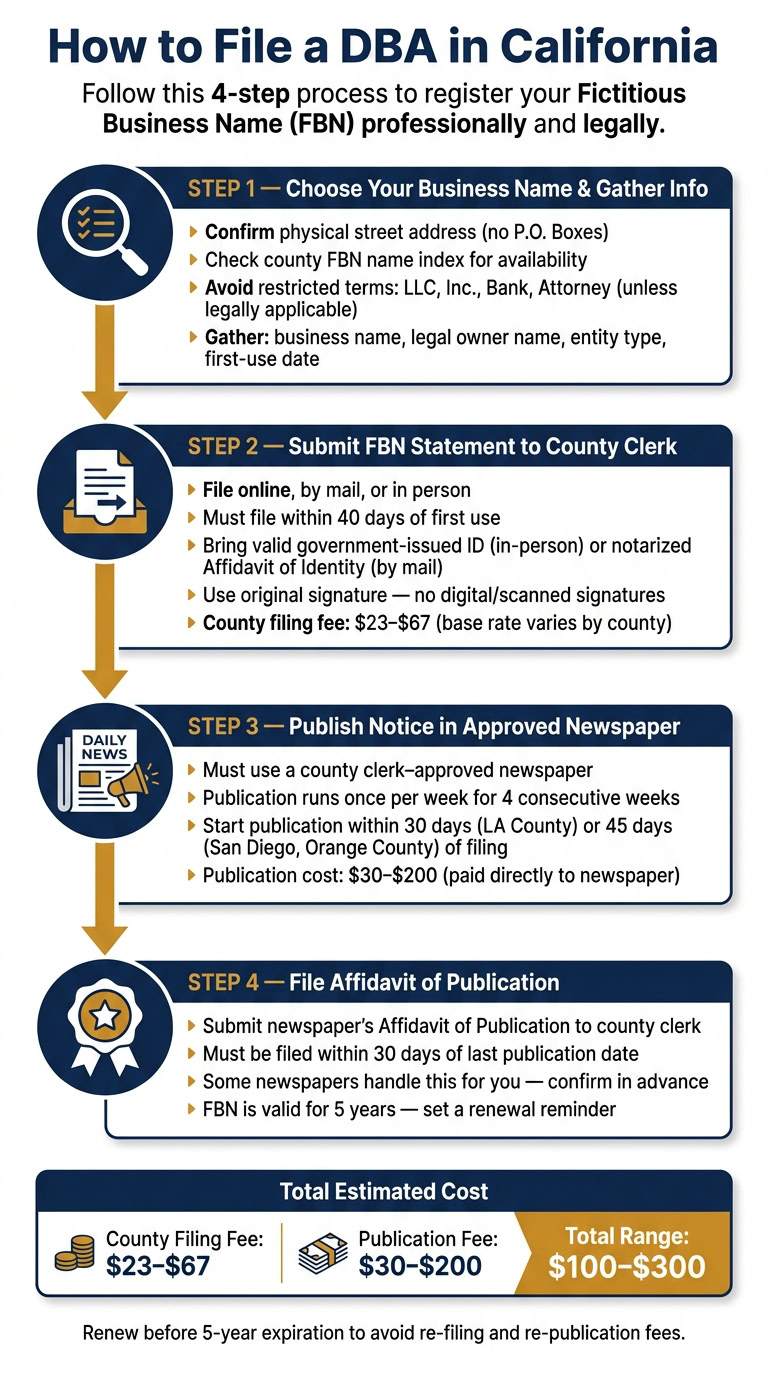
Step 1: Choose the Business Name and Gather Owner Details
Start with the basics: your exact business name, legal name, physical street address, and entity type. The address must be a physical street address. P.O. Boxes aren’t accepted.
Most filing problems come down to two naming rules. First, don’t use "LLC", "Inc.", or "Corporation" unless the business is legally set up that way. Second, terms like "Bank" or "Attorney" are restricted and need the right supporting documents. It also helps to check your county’s name index before you file to make sure the name is still open.
Once you have the name and owner details ready, file the statement with the county clerk.
Step 2: Complete and Submit the Fictitious Business Name Statement
Many counties let you file online, by mail, or in person. The time it takes to process the filing depends on both the county and the method you choose.
The paperwork can vary by filing method. If you file in person, you’ll need a valid government-issued ID, such as a California driver’s license. If you file by mail, some counties require a notarized Affidavit of Identity with the application. Also, use an original signature. Counties may reject digital or scanned signatures.
Timing matters here. You must file within 40 days of first use. If you miss that window, you may have trouble enforcing contracts under that business name.
After the county accepts your filing, move to the publication step right away.
Step 3: Pay the Fee and Keep Your Stamped Copy and Receipt
After the county clerk accepts the filing, you’ll get a stamped copy of the FBN statement and a receipt. Hold on to both for your records.
Once the filing is done, begin publication right away so you can meet your county’s deadline.
Publication, Renewal, and Mistakes to Avoid
How Publication and Proof of Publication Work
Once the county accepts your filing, publication is the next step. In some counties, including Sacramento, it must start within 30 days.
Your notice has to appear once a week for four straight weeks in a newspaper the county approves. This part trips people up more often than it should. If you use a paper that is not on the county clerk’s approved list, the publication doesn’t count.
After the four-week run ends, you need to file the newspaper’s Affidavit of Publication with the county clerk within 30 days. Some newspapers handle this for you, which is handy, but don’t assume they will. Check first.
Here’s the usual post-filing timeline:
| Stage | Action | Deadline |
|---|---|---|
| 1. Initial Filing | Submit FBN Statement to County Clerk | Within 40 days of starting business |
| 2. Start Publication | Begin notice in a county-approved newspaper | Within 30–45 days of filing |
| 3. Publication Run | Notice runs once per week | 4 consecutive weeks |
| 4. File Proof | Submit Affidavit of Publication to Clerk | Within 30 days of last publication |
Renewal Rules and When a New Filing Is Required
Once proof is filed, don’t just forget about it. Put the expiration date on your calendar and track it yourself. Counties do not send renewal reminders.
If you renew before the expiration date, you usually won’t need to publish again. But if you let it expire, the county treats it like a brand-new filing. That means full filing fees and another four-week newspaper run.
Some changes also mean you must file again within 40 days. These include:
- A change in ownership
- A change in your principal business address
- A change in the business name
- A change in the business entity type
Conclusion: Budget for Both Fees, Follow County Instructions, and Track Deadlines
Plan for both parts of the cost: the county filing fee and the newspaper charge. County fees usually range from $23 to $67 for the first name and registrant, while publication often costs $30 to $200, depending on the county and newspaper.
The three biggest trouble spots are simple: missing the publication deadline, picking a newspaper that isn’t approved by the county clerk, and failing to file the Affidavit of Publication with the county clerk. Miss the publication deadline, and you may have to file again and pay again. File in the right county, confirm the paper is approved, send in proof on time, and set a reminder well before the five-year expiration date.
FAQs
Do I need a new DBA if I move to another California county?
Yes. You need to file a separate Fictitious Business Name (FBN) statement in each California county where you do business.
Here’s the key point: California does not have a statewide DBA registry. So if you move your principal office to a different county, or you start doing business in another county, you’ll need to follow that county’s filing, fee, and publication rules.
Can I file a California DBA before I start using the business name?
Yes. You can file a California Fictitious Business Name (FBN) statement before you start using the name.
On the form, enter the date you first began doing business under that name. If you haven’t started yet, say so on the form. Under California law, you must file within 40 days after you begin doing business under the new name.
What happens if my newspaper publication is late or rejected?
If you miss the publication deadline, your fictitious business name (FBN) statement becomes legally ineffective – as if it was never registered. In plain English: if publication is late or never finished, you’ll need to file again and pay the filing fees again.
You must start publication within 30 days of the initial filing. Miss that window, and you may also run into practical problems, like being unable to open business bank accounts or enforce contracts in court.