


If your business doesn’t have a registered agent, you risk legal and financial consequences that could disrupt operations. A registered agent ensures your business receives important documents like lawsuits, tax notices, and compliance reminders. Without one, your business may face:
- Fines and Penalties: States can impose fees for non-compliance, and your business may lose its "good standing" status.
- Missed Legal Notices: You might not be informed of lawsuits, leading to default judgments.
- Administrative Dissolution: The state can revoke your business’s legal status, exposing you to personal liability for business debts.
- Privacy Concerns: Acting as your own agent can make your home address public.
Hiring one of the top registered agent services, typically costing $99–$300 annually, helps avoid these issues by ensuring timely document handling and maintaining compliance with state laws. It’s a small investment compared to the potential costs of reinstating a dissolved business or dealing with legal complications.
The Legal and Practical Case for Having a Registered Agent
State-by-State Legal Requirements
Every state requires LLCs, corporations, nonprofits, and limited partnerships to designate a registered agent. This agent must have a physical street address in the state where the business is registered or operates as a foreign entity. P.O. boxes are not allowed.
The agent – whether an individual or entity – must be available during standard business hours, Monday through Friday, 9 a.m. to 5 p.m. Individual agents must generally be at least 18 years old and legal residents of the state. Some states, like Virginia, add extra qualifications. For instance, Virginia requires an individual agent to either be a member of the State Bar or hold a senior officer or director role within the company.
States also use different terms for this role. While "registered agent" is the most common, Arizona and Ohio use "statutory agent", California refers to an "agent for service of process", and Pennsylvania focuses on the "registered office" rather than naming an individual.
Understanding these legal requirements is only part of the equation – it’s equally important to grasp the day-to-day role of a registered agent.
What a Registered Agent Actually Does
The main task of a registered agent is to receive service of process – official documents like lawsuits, subpoenas, and court orders – and ensure these are promptly forwarded to the business. They also handle other critical mail, including tax notices, annual report reminders, and correspondence from state agencies.
When your business is served, you often have a limited window – usually 20 to 30 days – to respond. Missing this deadline could result in a default judgment. A dependable registered agent ensures you get these documents quickly, often providing same-day digital scans and electronic notifications, giving you the time you need to act.
The importance of this role becomes even clearer when you compare the advantages of using a registered agent versus not having one.
Having a Registered Agent vs. Not Having One
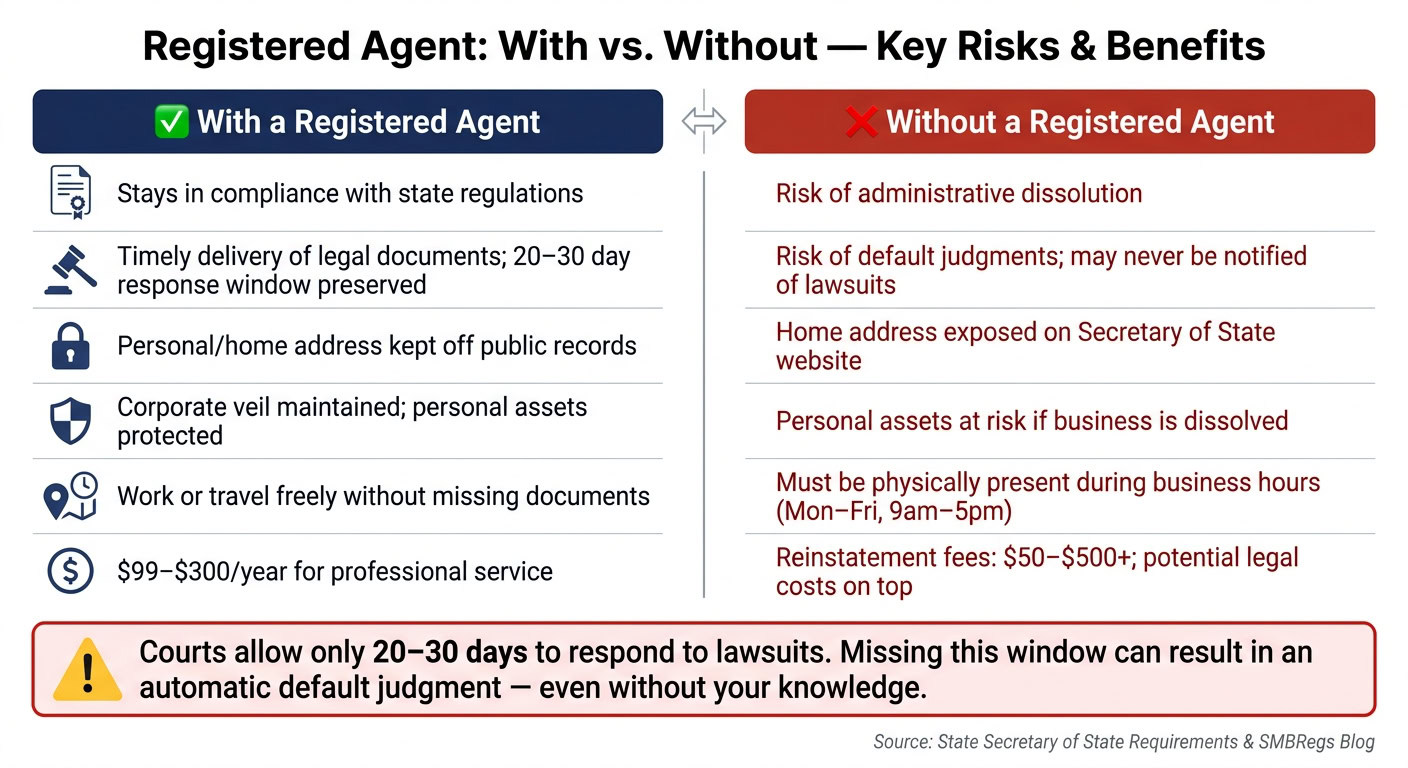
Here’s how the outcomes stack up:
| Feature | With a Registered Agent | Without a Registered Agent |
|---|---|---|
| Legal Standing | Keeps your business in compliance with state regulations | Risk of administrative dissolution due to missed filings |
| Lawsuits | Ensures timely delivery of legal documents | Increases risk of default judgments |
| Privacy | Protects personal/home address by using a professional address | Makes your personal address public on state records |
| Liability Protection | Helps maintain the corporate veil and protect personal assets | May put personal assets at risk |
| Flexibility | Allows you to travel or work remotely without worry | Requires you to always be present to receive documents |
If you choose to act as your own registered agent, your name and home address will appear in public records on the Secretary of State’s website. This can expose your personal information to solicitors, data brokers, and even unwanted visits from process servers. By hiring a professional service, you can keep your personal details off public records.
The cost of professional registered agent services is relatively low – typically ranging from $99 to $300 per year per state. Compare this to the potential expense of reinstating a dissolved business, which can cost anywhere from $50 to $500 or more in fees, and it’s easy to see why using a professional service is a smart investment.
What Happens When You Don’t Have a Registered Agent
Fines, Fees, and Loss of Good Standing
If your business operates without a registered agent, states act quickly by imposing fines and late fees. On top of that, your company could be marked as not in good standing. This status can create major headaches: banks might refuse to open accounts, lenders could deny loans, and government agencies may bar your business from bidding on contracts. To get back on track, you’ll need to pay all accumulated penalties and back fees, which can add up to hundreds of dollars depending on your state’s laws and how long you’ve been out of compliance. And these financial setbacks are just the beginning – they often lead to even bigger legal problems.
Missed Lawsuits and Default Judgments
The absence of a registered agent also leaves your business vulnerable to serious legal risks. Without someone to accept legal documents (like a service of process), you might never be notified of a lawsuit against your company. This could result in a court issuing a default judgment before you even realize what’s happening.
"Without an agent to accept service of process, you may not learn about a lawsuit until a default judgment has already been entered. At that point, the plaintiff wins automatically, and reversing a default judgment is expensive and difficult." – SMBRegs Blog
Legal summonses and subpoenas typically require a response within 20–30 days. If you fail to respond in time, the court can issue a default judgment. In some states, even if you don’t physically receive the documents, leaving them at your registered address counts as valid service.
Administrative Dissolution and What It Means for Your Business
Beyond default judgments, failing to address these issues could lead to administrative dissolution, where the state revokes your corporate charter or LLC status. This action isn’t just a bureaucratic hassle – it has real consequences. When your business is dissolved, you lose your corporate protections, meaning the "corporate veil" is lifted, and you could become personally liable for business debts. Additionally, contracts made during the dissolution period could be deemed unenforceable, and your company won’t have the legal standing to sue until it’s reinstated.
| Consequence | Real-World Impact |
|---|---|
| Loss of Good Standing | Makes it difficult to secure loans, open bank accounts, or bid on contracts |
| Default Judgment | Courts can rule against you automatically if legal notices are missed |
| Administrative Dissolution | Your business status is revoked, and your name may become available to others |
| Personal Liability | Owners could be held personally responsible for company debts |
To regain compliance, you’ll need to file the necessary paperwork, pay any outstanding fees, and appoint a new registered agent.
sbb-itb-ba0a4be
How to Fix a Registered Agent Problem
How to Check Your Current Registered Agent Status
To check your registered agent status, start by visiting your state’s Secretary of State registry. These public records will show the name of your registered agent, their listed address, and your company’s current standing. States like North Carolina, Colorado, and Texas offer searchable online portals for this purpose.
Look out for warning signs such as “Delinquent” or “Not in Good Standing” statuses. These could mean your registered agent information is outdated, the address is invalid, or required reports haven’t been filed. Also, confirm that the address on file is a valid street address, as P.O. boxes are usually not allowed. Many Secretary of State offices provide free email alerts to notify you of status changes, helping you address potential issues early before they escalate.
If you find a problem, act quickly to update your registered agent information and stay compliant.
How to Appoint or Change a Registered Agent
If there’s an issue with your registered agent, fixing it is generally straightforward. The most common way to update this information is by filing a Statement of Change with the Secretary of State. This allows you to update the agent’s name or address at any time, even outside your regular annual reporting schedule.
| Update Method | When to Use It |
|---|---|
| Statement of Change | To update the agent’s name or address anytime |
| Periodic/Annual Report | For routine updates during annual filings |
| Statement of Correction | To fix errors in previous filings |
| Statement Curing Delinquency | To update agent info while regaining good standing |
Filing fees are usually low. For instance, North Carolina charges just $5.00 for a Statement of Change. Fees vary by state, but the process typically involves minimal paperwork. However, delays can lead to expensive penalties. For example, Florida imposes a $500 annual fine for failing to maintain a registered agent.
If you’re switching to a professional service, make sure you have the correct agent name and address for your state before submitting the change form. Processing times generally range from 10 to 14 days.
Many businesses now opt for professional registered agent services for a smoother experience.
Using BusinessAnywhere as Your Registered Agent

BusinessAnywhere offers registered agent services starting at $147 per year, with the first year free when bundled with a new business registration. Available in all 50 states, the service handles document receipt, scanning, and delivery through an online dashboard, ensuring you never miss an important notice.
"Every LLC and corporation is required by law to have a registered agent on file at all times." – BusinessAnywhere
Beyond receiving legal documents, BusinessAnywhere sends compliance alerts to keep you informed about deadlines for annual reports and other state requirements. If your business falls out of good standing, their company maintenance service can help you regain compliance without starting over. Plus, you can manage your registered agent alongside other services – like a virtual mailbox or EIN application – all from one platform.
Updating your registered agent promptly is crucial to keeping your business compliant and prepared to handle legal matters efficiently.
Conclusion: Why Your Business Needs a Registered Agent
Having a registered agent isn’t just a formality – it’s a safeguard that keeps your business in good standing with the state and shields you from unexpected risks. If your business is dissolved, you lose the liability protection that separates personal assets from business debts, leaving you vulnerable.
Courts typically allow only 20–30 days to respond to lawsuits, and missing that deadline can lead to an automatic default judgment. These judgments can happen without your knowledge, and reinstating a dissolved business can cost anywhere from $50 to over $500 in fees – excluding potential legal expenses. This highlights how crucial it is to have a reliable registered agent to avoid such pitfalls.
"Treating registered agent compliance as a protective system rather than a checkbox helps preserve limited liability, access to financing, contract enforceability, and long-term business continuity." – InCorp Services
By using a professional registered agent service, you ensure your business has a valid registered address, receives important documents during business hours, and gets notified promptly when something requires your attention. For less than $150 a year, this service provides peace of mind, helping you avoid costly mistakes tied to missed legal notices or noncompliance.
BusinessAnywhere offers nationwide coverage at $147 per year, with the first year free when you register a new business. Unsure about your current registered agent status? Visit your state’s Secretary of State portal to verify it now – addressing issues today is much simpler than dealing with the consequences later.
FAQs
Can I be my own registered agent?
Yes, you can serve as your own registered agent as long as you meet a few key requirements: you must have a physical address in the state, be available during standard business hours, and be okay with your name and address being part of the public record. That said, it’s worth weighing the responsibilities and potential privacy concerns before committing to this role.
What happens if my registered agent resigns or can’t be reached?
If your registered agent steps down or is no longer available, it’s crucial to appoint a replacement right away. Delays can lead to serious consequences like legal penalties, administrative dissolution, losing your good standing, or even missing important legal notices and lawsuits. Taking quick action helps keep your business compliant and shields you from avoidable risks.
Do I need a registered agent in every state I do business in?
Yes, having a registered agent is mandatory in every state where your business is registered or authorized to operate. Each state requires that this agent has a physical address within its borders to handle legal and official documents on behalf of the business.