
Starting a small business in 2026 has never been more accessible or lucrative. With remote work, AI adoption, and sustainability shaping the market, entrepreneurs can leverage these trends to create thriving ventures. Here’s a quick breakdown of the key opportunities:
- Freelance Digital Services: AI consulting, short-form video production, podcast management, and virtual assistance are in high demand, with monthly earnings ranging from $2,000 to $20,000.
- Home-Based Services: Smart-home installation, senior tech assistance, and mobile pet wellness services offer low startup costs and high profitability.
- E-Commerce: High-ticket dropshipping, print-on-demand, and subscription boxes allow entrepreneurs to tap into a $7.4 trillion global market.
- Wellness & Tech: AI-powered wellness programs, "aging-in-place" solutions, and micro SaaS tools cater to niche markets with growing needs.
Why now? AI tools make starting a business easier and cheaper, while consumer preferences for sustainability and personalization open new doors. Whether you’re interested in tech, services, or e-commerce, the opportunities are abundant. Validate your idea, start small, and focus on recurring revenue to succeed in today’s market.
1. Freelance and Digital Services
The freelance economy is booming. By 2027, freelancers are projected to make up 50.9% of the U.S. workforce. This shift is fueling demand for specialized digital services, giving entrepreneurs the tools to accomplish more without committing to full-time hires. It’s the perfect time to explore opportunities in offering targeted digital solutions.
AI Implementation and Workflow Automation
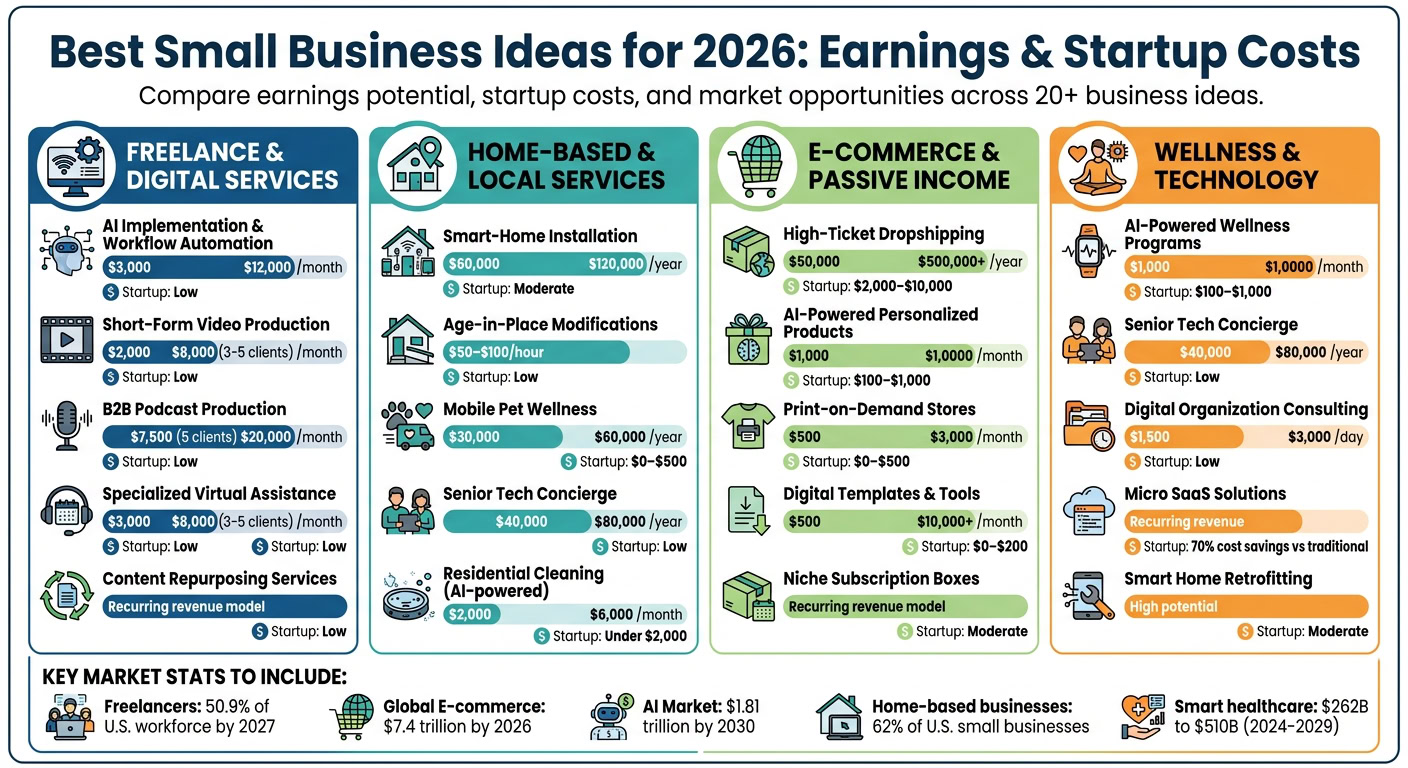
Small businesses are actively seeking guidance to integrate AI into their operations. As an AI consultant, you could help them implement automation tools for remote businesses like Zapier, Make, or Airtable to handle repetitive tasks such as invoice generation or customer follow-ups. This kind of service could bring in $3,000–$12,000 per month. With the global AI market expected to hit $1.81 trillion by 2030 and over 70% of U.S. companies planning to adopt AI automation by 2026, the demand for this expertise is only growing.
Short-Form Video Production
Video content continues to dominate digital engagement. Platforms like TikTok, Instagram Reels, and YouTube Shorts have created a huge demand for short, engaging videos. Specializing in this area could mean managing 3–5 clients and earning $2,000–$8,000 monthly. Considering that the creator economy now includes over 200 million global participants, helping brands maintain a strong video presence is a lucrative opportunity.
B2B Podcast Production
Podcasts are becoming a go-to strategy for companies aiming to build authority and expand their audience. However, many businesses lack the time or expertise to manage production. By offering end-to-end podcast services – covering everything from recording to distribution – you could charge $1,500–$4,000 per month per client. With just five clients, this could translate to monthly earnings between $7,500 and $20,000.
Specialized Virtual Assistance
Virtual assistance has evolved far beyond basic administrative tasks. Today, solo entrepreneurs often need help with project coordination, operational problem-solving, and even strategic support. By providing this kind of specialized assistance to 3–5 clients, you could generate $3,000–$8,000 monthly. As Ed Grasso from Simply Business notes:
AI isn’t replacing solopreneurs, it’s empowering them.
Content Repurposing Services
Many businesses and creators produce long-form content like podcasts, webinars, or YouTube videos but struggle to repurpose it for other platforms. Using tools like Descript, Canva, and CapCut, you can transform a single piece of content into multiple assets – blog posts, social media snippets, or email newsletters. This service works well within a productized model, offering fixed monthly packages for predictable and recurring revenue.
sbb-itb-ba0a4be
2. Home-Based and Local Services
Did you know that over 62% of small businesses in the U.S. operate from home? This sector is thriving, with the global market expected to hit $455 billion by 2026. Service-based businesses, in particular, are a goldmine, often achieving profit margins between 60% and 80%. Why? They typically require low startup costs and no inventory, making them low-cost business ideas with high-profit results for budding entrepreneurs. By combining traditional services with modern technology, these businesses are thriving in today’s economy.
Here are five in-demand local service ideas that blend classic skills with tech-savvy solutions.
Smart-Home Installation Services
As more homeowners invest in smart devices, many struggle with installation and troubleshooting. This has created a booming market, projected to grow from $4.6 billion in 2024 to $22.8 billion by 2032. Specializing in installing smart locks, thermostats, security systems, and EV chargers is a great way to tap into this demand. With moderate technical skills, you could earn between $60,000 and $120,000 in your first year. Adding eco-friendly options like smart thermostats can also help you align with the growing interest in sustainable living.
Age-in-Place Modification Services
As more than 77% of adults over 50 plan to stay in their homes long-term, there’s a rising need for accessibility upgrades. Services like installing grab bars, walk-in showers, wheelchair ramps, and smart safety systems are in high demand. The global home-services market is set to grow by $1 trillion between 2024 and 2029. Starting with basic handyman skills, you could charge $50–$100 per hour and build lasting client relationships through ongoing maintenance services.
Mobile Pet Wellness Services
Pet services are booming, with the North American market expected to reach $11.7 billion by 2030, growing at over 8% annually. Instead of traditional pet sitting, imagine offering mobile grooming, in-home training, or subscription-based wellness plans that include regular health check-ins. Startup costs are minimal – between $0 and $500 – and first-year earnings could range from $30,000 to $60,000. Turning one-time services into monthly memberships can create steady, predictable income.
Senior Tech Concierge
For seniors, navigating the digital world can be overwhelming. Nearly 80% of Americans over 65 own a smartphone, but many need help setting up devices, managing passwords, using telemedicine platforms, and avoiding online scams. As a Senior Tech Concierge, you could provide personalized, in-home support. With low startup costs – mainly for a background check, website, and local networking – you could earn $40,000 to $80,000 annually. Seniors value personal, face-to-face guidance, making this a rewarding and impactful service.
Residential Cleaning with AI Operations
Starting a cleaning business is affordable, with initial costs under $2,000. By integrating smart tools like automated scheduling, 24/7 booking systems, and software that prompts customer reviews, you can save 20–30 hours of manual work per week. This streamlined approach can generate a monthly revenue of $2,000 to $6,000 or more. Combining efficiency with excellent service makes scaling your business much easier.
3. E-Commerce and Passive Income
E-commerce is on a rapid growth trajectory, with global sales expected to hit $7.4 trillion by 2026 and U.S. online retail projected to reach $1.45 trillion. What’s fueling this growth? Low barriers to entry, thanks to fulfillment models that remove the need to manage inventory and AI tools that streamline tasks like design, marketing, and customer support – often at little to no cost. The key is identifying where your skills and interests align with market demand.
Building on advancements in digital tools and efficient operations, e-commerce offers plenty of opportunities for profitable online ventures. By leveraging AI and smart fulfillment systems, these models combine low startup costs with scalability, making them an appealing option for many aspiring entrepreneurs.
Here are five e-commerce models that allow you to start generating income with minimal upfront investment.
High-Ticket Dropshipping
Instead of focusing on low-margin items, high-ticket dropshipping targets premium products priced between $1,000 and $10,000, such as outdoor furniture, commercial equipment, or specialized fitness gear. By partnering with U.S.-based manufacturers, you can avoid issues like tariffs and shipping delays while securing 20–40% profit margins per sale. Trevor Fenner, Founder of Ecommerce Paradise, highlights this approach:
The key is US-based suppliers, which matters even more in 2026 given ongoing tariff and supply chain pressures on overseas-sourced products.
While startup costs range from $2,000 to $10,000 for a professional website and supplier relationships, successful stores can generate annual revenues between $50,000 to $500,000+.
AI-Powered Personalized Products
AI has made it easier and more affordable to create custom products on demand. Think personalized children’s books, custom artwork, or tailored meal and workout plans. The personalized gift market alone is projected to reach $54.1 billion by 2033. With startup costs as low as $100 to $1,000, you can launch a business where products are only created after a sale, eliminating inventory risks. Monthly earnings can range from $1,000 to $10,000.
Print-on-Demand Stores
Starting a print-on-demand business is ideal for selling custom-designed items like t-shirts, mugs, phone cases, and wall art without needing to hold inventory. When a customer places an order, your supplier handles the printing and shipping. This model has startup costs between $0 and $500 and offers beginners the potential to earn $500 to $3,000 monthly. POD is especially appealing for targeting niche markets, such as eco-conscious consumers – 46% of shoppers are actively buying sustainable products and willing to pay a 9.7% premium.
Digital Templates and Tools
If you have expertise in a specific field, you can turn it into reusable templates, guides, or frameworks. Examples include spreadsheet templates for freelancers, design assets for small businesses, or presentation decks for consultants. With minimal startup costs – $0 to $200 for platform fees – these products can bring in $500 to $10,000+ monthly with almost no ongoing effort. Since there’s no need for manufacturing or shipping, profit margins are exceptionally high.
Niche Subscription Boxes
Subscription boxes offer consistent, recurring income. To stand out, focus on specialized niches like pet wellness kits, STEM projects for kids, or professional toolkits. Andrew Feld, Founder of Fresh Patch, advises:
Try and find something that is necessary and needs to be replenished.
4. Wellness and Technology Innovations
The wellness industry is expanding at twice the pace of global economic growth, and thanks to technology, entering this market has never been more accessible. Success in 2026 will hinge on moving away from broad, one-size-fits-all approaches and focusing on highly specific niches enhanced by AI-driven personalization. With 31% of physicians identifying virtual care and digital health as areas with the greatest innovation potential – and the smart healthcare products market expected to jump from $262 billion to $510 billion by 2029 – the opportunities are immense. These emerging ideas blend personalized wellness with advanced technology, aligning with the digital-first trends shaping the future.
Here are five business ideas that merge wellness and technology, offering low startup costs and high market demand.
AI-Powered Personalized Wellness Programs
AI has made it possible to deliver deeply personalized wellness services without breaking the bank. From custom meal plans to tailored workout routines and sleep coaching, AI can analyze individual needs and create programs that were once too expensive to provide. To stand out, focus on a specific niche – like strength training for women over 40 or prenatal fitness – rather than trying to appeal to everyone. Startup costs are relatively low, ranging from $100 to $1,000 for AI tools and scheduling software, while monthly income potential can range from $1,000 to $10,000. While AI handles the data and program creation, your role is to provide the human connection and emotional support that machines can’t replicate.
Senior Tech Concierge Services
By 2030, 73 million Americans will be over 65, with nearly 80% of them owning smartphones. However, many seniors struggle to use digital health platforms, telemedicine tools, and patient apps effectively. Worse, they’re often targeted by sophisticated scams, like AI voice-cloning fraud. A tech concierge service tailored to seniors can bridge this gap. You could assist with setting up telehealth appointments, navigating digital health interfaces, and providing fraud protection. Startup costs are minimal – requiring just a website and a background check – while addressing a critical need in an increasingly digital healthcare landscape.
"Second Brain" Digital Organization Consulting
Executives and professionals are drowning in digital clutter, leading to burnout and mental fatigue. A "Second Brain" consultant helps clients streamline their digital lives, reducing cognitive overload and improving productivity. These services can command daily rates of $1,500 to $3,000. To attract clients, start by offering a free "Digital Health Checkup" to showcase your expertise. Then, focus on structured programs that deliver lasting results instead of one-off sessions.
Micro SaaS for Underserved Wellness Niches
No-code platforms have made it possible to develop small, specialized software solutions without any coding expertise. This opens the door to creating tools for overlooked wellness needs, such as apps for therapists to manage client notes or simple platforms for physical therapists to track patient exercises. Businesses using no-code platforms report up to 70% cost savings compared to traditional software development, which often costs $70,000 or more. This model allows you to launch with minimal investment while building recurring revenue from a niche user base.
Smart Home Retrofitting for Aging-in-Place
As the global population ages, more seniors are looking for solutions that allow them to live independently at home for longer. Smart home retrofitting combines digital health tools with physical home modifications. Think sensor-based fall detection systems, voice-activated safety controls, and integrated telehealth monitoring. By 2030, one in six people worldwide will be aged 60 or older. Partnering with local contractors and tech providers allows you to offer comprehensive "Aging-in-Place" packages, tapping into the growing "Silver Economy".
Conclusion
The business world in 2026 thrives on intentional reinvention, as Ben Angel, Entrepreneur Network Contributor, aptly states:
The future belongs to those who reinvent strategically, not randomly.
This article has explored ideas like AI-powered wellness programs, micro SaaS solutions, and senior tech concierge services – each tapping into trends like AI integration, the normalization of remote work, and the rising need for people-focused services. These shifts reflect the forces shaping today’s market.
As previously mentioned, many successful small businesses today operate on lean, owner-driven models. AI tools have made it easier than ever to cut costs in areas like content creation, marketing, and operations, enabling solo entrepreneurs to launch and grow with minimal expenses. With sectors like the $500 billion wellness economy and the AI industry – expected to reach $1.81 trillion by 2030 – there’s no shortage of opportunities.
But here’s the catch: validate your idea before diving in. Start by securing one or two paying clients through your personal network before making any large investments. Create a focused 90-day plan that outlines your niche, revenue strategy, and the tools you’ll need. Aim for recurring revenue streams, such as flat-fee monthly retainers for productized services, to build a steady income base.
For those looking to simplify the process, platforms like Business Anywhere offer a range of services to help you get started. From $0 business formation (state fees apply) and a free first-year registered agent service to virtual mailboxes starting at $20/month and online notary services at $37 per document, they make managing a U.S.-based business entirely online possible. Their all-in-one dashboard even includes EIN applications and compliance alerts, giving you the tools to run your business from anywhere.
The trends, tools, and demand are all in place. The only question is: which idea will you bring to life first?
FAQs
How do I validate a business idea before investing money?
The first step in validating a business idea is getting to know your target audience. What are their needs, challenges, or desires? Understanding this is crucial. You can gather insights by conducting surveys, interviews, or even casual conversations. This feedback will help you confirm whether there’s genuine demand for your idea.
Once you’ve identified interest, test it out using simple, cost-effective methods. For example, create a prototype, set up a basic landing page, or run a small ad campaign to gauge reactions. These approaches allow you to measure interest without a huge upfront investment.
Don’t forget to research the market and analyze competitors. Tools that provide insights into what others in your space are doing can be incredibly helpful. By validating your idea early, you can ensure it solves real problems and avoid unnecessary risks before committing significant time or money.
Which 2026 business ideas are best for recurring monthly revenue?
In 2026, some of the best business ideas for generating recurring monthly revenue include AI receptionist agencies (boasting profit margins of 80-96%), digital products, micro-SaaS, membership communities, and subscription-based services. These models stand out because they are highly scalable and offer predictable income, making them perfect for entrepreneurs aiming for steady and reliable revenue streams.
What’s the easiest small business to start with little or no experience?
Starting a small business with little experience can be simpler than you think, especially if you focus on service-based or online opportunities. Some of the most accessible options include working as a virtual assistant, offering freelance writing services, tutoring online, or diving into print-on-demand sales.
These ventures often build on skills or hobbies you already have, require minimal tools (usually just a computer and an internet connection), and offer room for growth as you gain experience. They’re perfect for beginners looking to ease into entrepreneurship without a big upfront investment.